
India's chip debut, Coinbase boosts CoinDCX stake


Happy Thursday! India's first commercially packaged multi-chip module was rolled out of a Kaynes facility and shipped to the US. This and more in today's ETtech Morning Dispatch.
Also in the letter:
■ Sebi chief’s quantum warning
■ Paytm’s restructuring
■ Prosus picks Ixigo stake
First India-made chip module sent to US firm AOS

India’s first commercially packaged multi-chip module (MCM) rolled out of Kaynes Semicon’s OSAT facility in Sanand early Wednesday and was shipped to Alpha & Omega Semiconductor (AOS) in California.
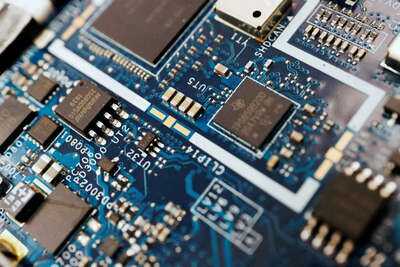
Driving the news: Around 900 intelligent power modules (IPMs) were sent to AOS — a Sunnyvale-headquartered designer, developer and global supplier of a broad range of power semiconductors.
“This is a one-of-its-kind module, with 17 dies inside, six IGBTs, two controller ICs (integrated circuit), six FRDs (fast recovery diode) and three diodes, placing it among the most advanced in this domain,” said Raghu Panicker, CEO, Kaynes Semicon. Production started in April.

Why it matters: Panicker said the company delivered a complex chip, assembled, tested for quality, marked and packaged for AOS. "We have a capacity to do 3,000 pieces per day. We will send another shipment next month,” he said.
The Sanand OSAT was set up under the aegis of India Semiconductor Mission 1.0 (ISM) with an investment of Rs 1,653.5 crore from the Centre.
Tell me more:
Kaynes’ facility in Gujarat is designed to reach a total capacity of 6.3 million chips per day once fully operational.
This delivery marks the start of the commercial production for AOS, with full mass production aimed for January 2026.
AOS is expected to utilise most of the initial capacity, with production ramping up to about 1.5 million chips per day by Q1 2026-27.
Coinbase to raise CoinDCX bet, values Indian crypto exchange at $2.45 billion
 Sumit Gupta, cofounder, CoinDCX
Indian cryptocurrency exchange CoinDCX will receive a fresh capital infusion from its long-time backer, global peer Coinbase, which will raise its stake in the company at a new valuation of $2.45 billion.
Deal details:
What next: Despite a $44 million cyberattack in July, CoinDCX said the loss would be absorbed by its treasury. The platform, founded in 2018, currently claims over 20 million users and 500+ crypto assets.
Alarms go off as Sebi chief warns of a looming quantum apocalypse
 Tuhin Kanta Pandey, chariman, Sebi
Securities Exchange Board of India (Sebi) chairman Tuhin Kanta Pandey has raised a stark warning — quantum computing could trigger a cybersecurity meltdown on the scale of the Y2K crisis.
Warning ahead: Speaking at the Global Fintech Fest, Pandey flagged the threat quantum computers pose to current encryption standards that safeguard banking, communications, and government data.
Yes, and: Quantum machines could render existing cryptographic systems obsolete. Industry insiders believe adversaries are already “harvesting now, decrypting later” — collecting encrypted data today to unlock it in the quantum future. The risks span financial networks, identity-linked databases, and even diplomatic cables.
What next: Pandey’s statement is seen as the first high-level acknowledgment of quantum computing as a cybersecurity threat. Legal and tech experts say India needs a national framework for post-quantum security. Ankit Sahni, partner at Ajay Sahni & Associates said, “A unified national framework or task force for post-quantum readiness could align research, regulation, and infrastructure planning.”
Paytm brings entities under direct ownership to simplify its structure
 Vijay Shekhar Sharma, CEO, Paytm
Paytm’s parent company, One97 Communications, is streamlining its group structure through a series of internal transactions that bring multiple businesses under its direct fold.
Details: As part of the move, Paytm will acquire stakes from founder Vijay Shekhar Sharma and his entities in key subsidiaries, including:
Additionally, Paytm has shifted its offline merchant payments business to Paytm Payments Services Ltd (PPSL), a wholly owned subsidiary. The move consolidates both online and offline merchant payment businesses under one roof (PPSL), which has RBI’s in-principle approval to operate as a payment aggregator.
Other Top Stories By Our Reporters
 (L-R) Rajnish Kumar and Alok Bajpai, cofounders, Ixigo
Prosus buys additional stake in Ixigo: Dutch investment firm Prosus has bought an additional 5.06% stake in Le Travenues Technology, the listed parent of online travel aggregator Ixigo. The shares were acquired from existing shareholders Elevation Capital (1.9%) and Peak XV Partners (3.16%) through off-market transactions, the investment firms said in regulatory filings.
From the FAANG gang to MANGO: For over a decade, the FAANG gang ruled Wall Street. Symbolising the top tech stocks —Facebook (now Meta), Apple, Amazon, Netflix, and Google — these consumer internet overlords had sky-high valuations and a halo around them. But in 2025, the acronym is MANGO.
Koo cofounder Mayank Bidawatka rolls out photo sharing app: Bidawatka has launched an AI-powered mutual photo-sharing app, PicSee, under his new consumer tech venture Billion Hearts. It was soft launched in July with 25 users, has scaled 75 times in under three months
Global Picks We Are Reading
When face recognition doesn’t know your face is a face ( Wired)
Europe needs a better chip strategy ( FT)
AI-powered textbooks fail to make the grade in South Korea ( Rest of World)
Also in the letter:
■ Sebi chief’s quantum warning
■ Paytm’s restructuring
■ Prosus picks Ixigo stake
First India-made chip module sent to US firm AOS
India’s first commercially packaged multi-chip module (MCM) rolled out of Kaynes Semicon’s OSAT facility in Sanand early Wednesday and was shipped to Alpha & Omega Semiconductor (AOS) in California.
Driving the news: Around 900 intelligent power modules (IPMs) were sent to AOS — a Sunnyvale-headquartered designer, developer and global supplier of a broad range of power semiconductors.
“This is a one-of-its-kind module, with 17 dies inside, six IGBTs, two controller ICs (integrated circuit), six FRDs (fast recovery diode) and three diodes, placing it among the most advanced in this domain,” said Raghu Panicker, CEO, Kaynes Semicon. Production started in April.
Why it matters: Panicker said the company delivered a complex chip, assembled, tested for quality, marked and packaged for AOS. "We have a capacity to do 3,000 pieces per day. We will send another shipment next month,” he said.
The Sanand OSAT was set up under the aegis of India Semiconductor Mission 1.0 (ISM) with an investment of Rs 1,653.5 crore from the Centre.
Tell me more:
Kaynes’ facility in Gujarat is designed to reach a total capacity of 6.3 million chips per day once fully operational.
This delivery marks the start of the commercial production for AOS, with full mass production aimed for January 2026.
AOS is expected to utilise most of the initial capacity, with production ramping up to about 1.5 million chips per day by Q1 2026-27.
Indian cryptocurrency exchange CoinDCX will receive a fresh capital infusion from its long-time backer, global peer Coinbase, which will raise its stake in the company at a new valuation of $2.45 billion.
Deal details:
- Coinbase Global is investing an undisclosed amount in CoinDCX.
- The funding will be used to expand CoinDCX's product suite and global reach, including new on-chain use cases tailored for India.
- In April 2022, Coinbase Ventures participated in a $135.9 million funding round that pegged CoinDCX’s valuation at over $2 billion.
- In August 2021, CoinDCX became India’s first crypto unicorn after a $90 million round. Coinbase Ventures, then an existing investor, joined in too.
- This is the first round where Coinbase Global is directly investing.
What next: Despite a $44 million cyberattack in July, CoinDCX said the loss would be absorbed by its treasury. The platform, founded in 2018, currently claims over 20 million users and 500+ crypto assets.
Alarms go off as Sebi chief warns of a looming quantum apocalypse
Securities Exchange Board of India (Sebi) chairman Tuhin Kanta Pandey has raised a stark warning — quantum computing could trigger a cybersecurity meltdown on the scale of the Y2K crisis.
Warning ahead: Speaking at the Global Fintech Fest, Pandey flagged the threat quantum computers pose to current encryption standards that safeguard banking, communications, and government data.
Yes, and: Quantum machines could render existing cryptographic systems obsolete. Industry insiders believe adversaries are already “harvesting now, decrypting later” — collecting encrypted data today to unlock it in the quantum future. The risks span financial networks, identity-linked databases, and even diplomatic cables.
What next: Pandey’s statement is seen as the first high-level acknowledgment of quantum computing as a cybersecurity threat. Legal and tech experts say India needs a national framework for post-quantum security. Ankit Sahni, partner at Ajay Sahni & Associates said, “A unified national framework or task force for post-quantum readiness could align research, regulation, and infrastructure planning.”
Paytm’s parent company, One97 Communications, is streamlining its group structure through a series of internal transactions that bring multiple businesses under its direct fold.
Details: As part of the move, Paytm will acquire stakes from founder Vijay Shekhar Sharma and his entities in key subsidiaries, including:
- Paytm Financial Services Ltd (PFSL)
- Paytm Insuretech
- Paytm Emerging Tech
- Paytm Life Insurance
Additionally, Paytm has shifted its offline merchant payments business to Paytm Payments Services Ltd (PPSL), a wholly owned subsidiary. The move consolidates both online and offline merchant payment businesses under one roof (PPSL), which has RBI’s in-principle approval to operate as a payment aggregator.
Other Top Stories By Our Reporters
Prosus buys additional stake in Ixigo: Dutch investment firm Prosus has bought an additional 5.06% stake in Le Travenues Technology, the listed parent of online travel aggregator Ixigo. The shares were acquired from existing shareholders Elevation Capital (1.9%) and Peak XV Partners (3.16%) through off-market transactions, the investment firms said in regulatory filings.
From the FAANG gang to MANGO: For over a decade, the FAANG gang ruled Wall Street. Symbolising the top tech stocks —Facebook (now Meta), Apple, Amazon, Netflix, and Google — these consumer internet overlords had sky-high valuations and a halo around them. But in 2025, the acronym is MANGO.
Koo cofounder Mayank Bidawatka rolls out photo sharing app: Bidawatka has launched an AI-powered mutual photo-sharing app, PicSee, under his new consumer tech venture Billion Hearts. It was soft launched in July with 25 users, has scaled 75 times in under three months
When face recognition doesn’t know your face is a face ( Wired)
Europe needs a better chip strategy ( FT)
AI-powered textbooks fail to make the grade in South Korea ( Rest of World)
Next Story