
Iran-Israel war: AI-hit tech companies fear slowdown in spends


India’s IT services sector is facing a disruption as the Middle East conflict threatens to slow tech spending and freeze expansion plans in the Gulf region, aggravating the stress on the sector which is already reeling under the impact of artificial intelligence.
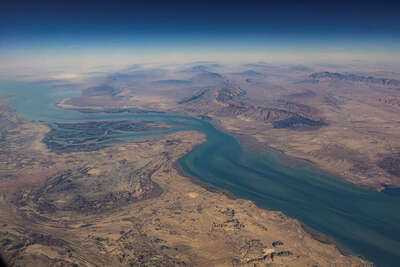
The Strait of Hormuz, through which a third of the world's seaborne oil passes, was temporarily closed following the escalation, rattling global energy markets and threatening a price rise. With approximately 60% of India's oil imports sourced from the Middle East, higher crude prices could weaken US and European growth, forcing enterprises to cut discretionary technology budgets.
"Direct impact will be rising oil prices, slowing down revenues across sectors, impacting world GDP at large," said Gaurav Vasu, CEO of UnearthInsight. "US and Europe economies will slow down further, which impacts discretionary spending and tech spending, impacting the entire technology ecosystem from product companies, cloud, tech services, AI and GCCs."
Vasu expects global tech spending growth to moderate to 4-5% from an earlier 5-7% range. "Global and Indian IT services could slow down to 2-3% for FY27," he said, lower than previous projections of 4-5%, including M&A revenues. The immediate impact will be slower decision-making and delayed tech budgets, he added.
Subimal Bhattacharjee, tech policy analyst, said disruption in the region could affect delivery centres and ongoing mandates for companies such as Tata Consultancy Services, Infosys, Wipro and HCLTech, all of which have delivery presence and clients across the Gulf, where India's bilateral trade exceeds $160 billion annually.
“Closure of the Strait of Hormuz would drive up energy prices, directly inflating operational costs for India's IT parks, data centers and manufacturing hubs,” he said, adding that the region could face temporary pauses as enterprises focus on security and continuity.
The latest blow comes as the nearly $300 billion IT service sector witnessed two stock routs earlier in February as AI tools from Anthropic threatened the future of the headcount-based services sector.
While the conflict could disrupt Gulf nearshore operations and delivery hubs, market watchers noted that if the situation is temporary, the impact on IT revenue is minimal.
“Companies that have nearshoring efforts to cater to the European market are mostly in Egypt and South Africa. Most of the delivery centres in the Middle East are centred in UAE, with very few hubs in Kuwait and Bahrain. However, these service the local companies more…so the immediate impact still seems minimal and temporary,” said Namratha Dharshan, chief business leader at Information Services Group (ISG), a global technology research and advisory firm.
According to ISG data, the average contract value (ACV) booked from the Middle East and Africa region accounted for just 1% of global managed services bookings in 2025.
For India's GCC ecosystem, which hosts over 1,700 centres employing more than 1.9 million professionals, Gulf-headquartered firms and global companies eyeing Middle East expansion may now delay their India plans in the near term, said Pareekh Jain, CEO of EIIRTrend. "Instability and uncertainty will impact or delay their GCC plans in India as their priorities will be elsewhere. This could be negative for GCC in India for short term," he said.
While this is a temporary situation and at this stage nothing suggests any disruption on enterprise spending, a prolonged closure may cause travel disruptions impacting delivery or operations as Gulf is an important connectivity hub, Dharshan said.
The Strait of Hormuz, through which a third of the world's seaborne oil passes, was temporarily closed following the escalation, rattling global energy markets and threatening a price rise. With approximately 60% of India's oil imports sourced from the Middle East, higher crude prices could weaken US and European growth, forcing enterprises to cut discretionary technology budgets.
"Direct impact will be rising oil prices, slowing down revenues across sectors, impacting world GDP at large," said Gaurav Vasu, CEO of UnearthInsight. "US and Europe economies will slow down further, which impacts discretionary spending and tech spending, impacting the entire technology ecosystem from product companies, cloud, tech services, AI and GCCs."
Vasu expects global tech spending growth to moderate to 4-5% from an earlier 5-7% range. "Global and Indian IT services could slow down to 2-3% for FY27," he said, lower than previous projections of 4-5%, including M&A revenues. The immediate impact will be slower decision-making and delayed tech budgets, he added.
Subimal Bhattacharjee, tech policy analyst, said disruption in the region could affect delivery centres and ongoing mandates for companies such as Tata Consultancy Services, Infosys, Wipro and HCLTech, all of which have delivery presence and clients across the Gulf, where India's bilateral trade exceeds $160 billion annually.
“Closure of the Strait of Hormuz would drive up energy prices, directly inflating operational costs for India's IT parks, data centers and manufacturing hubs,” he said, adding that the region could face temporary pauses as enterprises focus on security and continuity.
The latest blow comes as the nearly $300 billion IT service sector witnessed two stock routs earlier in February as AI tools from Anthropic threatened the future of the headcount-based services sector.
While the conflict could disrupt Gulf nearshore operations and delivery hubs, market watchers noted that if the situation is temporary, the impact on IT revenue is minimal.
“Companies that have nearshoring efforts to cater to the European market are mostly in Egypt and South Africa. Most of the delivery centres in the Middle East are centred in UAE, with very few hubs in Kuwait and Bahrain. However, these service the local companies more…so the immediate impact still seems minimal and temporary,” said Namratha Dharshan, chief business leader at Information Services Group (ISG), a global technology research and advisory firm.
According to ISG data, the average contract value (ACV) booked from the Middle East and Africa region accounted for just 1% of global managed services bookings in 2025.
For India's GCC ecosystem, which hosts over 1,700 centres employing more than 1.9 million professionals, Gulf-headquartered firms and global companies eyeing Middle East expansion may now delay their India plans in the near term, said Pareekh Jain, CEO of EIIRTrend. "Instability and uncertainty will impact or delay their GCC plans in India as their priorities will be elsewhere. This could be negative for GCC in India for short term," he said.
While this is a temporary situation and at this stage nothing suggests any disruption on enterprise spending, a prolonged closure may cause travel disruptions impacting delivery or operations as Gulf is an important connectivity hub, Dharshan said.
Next Story