
Karnataka eyes deeptech push, expansion beyond Bengaluru to drive next startup wave


Karnataka’s Startup Vision Group on Tuesday outlined a roadmap centred on deeptech innovation, stronger industry-academia collaboration, and expansion beyond Bengaluru as the state looks to helm the next phase of startup-led growth.
Chairman Prashant Prakash said Karnataka has already built one of the strongest startup ecosystems in the country, and future momentum will hinge on emerging technologies and wider geographic inclusion. Prakash, founding partner at Accel, was speaking at the eighth meeting of the Vision Group on Startups held in Bengaluru.
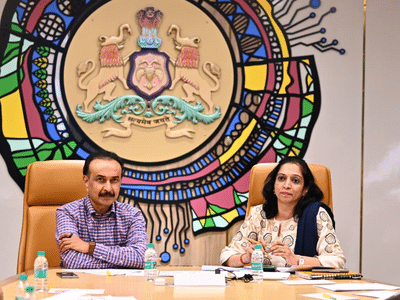
He said the group is focussed on enabling the creation of high-impact startups while improving access to capital, mentorship, and market opportunities. “By strengthening both policy and ecosystem support, Karnataka is well positioned to lead the next wave of innovation,” he added.
IT/BT secretary N Manjula said the government is working towards a more inclusive and accessible startup ecosystem. “Through stronger policy support, improved programme delivery and expanded infrastructure in emerging regions, we aim to ensure startups across Karnataka have the resources required to grow and succeed,” she said.
Deliberations at the meeting focussed on accelerating growth in deeptech sectors, expanding the startup footprint beyond Bengaluru, strengthening funding mechanisms, and enhancing policy support.
Among key priorities for the coming year, the state plans to expand centres of excellence (CoEs) in areas such as artificial intelligence (AI), quantum computing, and electronics, while adopting a hub-and-spoke model to extend capabilities to emerging cities. It will also drive startup activity in tier-2 and tier-3 regions through district-level hackathons, bootcamps, and targeted interventions.
On funding, Karnataka aims to strengthen existing programmes such as Elevate and roll out “Elevate Next” to support deeptech startups with higher-value funding, along with faster disbursement and improved monitoring.
The state is also looking to bolster its startup policy framework with enhanced patent support, international market access, and new initiatives, including research and development (R&D) grants, internship support, and employer contribution reimbursements.
Further, the government will focus on building data-driven governance systems to track startup growth and outcomes, expanding incubation and co-working infrastructure, and deepening global partnerships to position Karnataka as a global innovation hub.
The Vision Group underscored the need for a more integrated, founder-centric ecosystem with stronger alignment across funding, mentorship, incubation, and market access.
The meeting was attended by IT/BT director Rahul Sharanappa Sankannur and members, including K Ganesh, Naganand Doraswamy, Ravi Gururaj, Madan Padaki, Anand Sri Ganesh, Rohit Bhat, Sudhanva Dhananjaya, Anand Kumar, Rohan M Ganapathy, and Shrikumar Suryanarayan.
Chairman Prashant Prakash said Karnataka has already built one of the strongest startup ecosystems in the country, and future momentum will hinge on emerging technologies and wider geographic inclusion. Prakash, founding partner at Accel, was speaking at the eighth meeting of the Vision Group on Startups held in Bengaluru.
He said the group is focussed on enabling the creation of high-impact startups while improving access to capital, mentorship, and market opportunities. “By strengthening both policy and ecosystem support, Karnataka is well positioned to lead the next wave of innovation,” he added.
IT/BT secretary N Manjula said the government is working towards a more inclusive and accessible startup ecosystem. “Through stronger policy support, improved programme delivery and expanded infrastructure in emerging regions, we aim to ensure startups across Karnataka have the resources required to grow and succeed,” she said.
Deliberations at the meeting focussed on accelerating growth in deeptech sectors, expanding the startup footprint beyond Bengaluru, strengthening funding mechanisms, and enhancing policy support.
Among key priorities for the coming year, the state plans to expand centres of excellence (CoEs) in areas such as artificial intelligence (AI), quantum computing, and electronics, while adopting a hub-and-spoke model to extend capabilities to emerging cities. It will also drive startup activity in tier-2 and tier-3 regions through district-level hackathons, bootcamps, and targeted interventions.
On funding, Karnataka aims to strengthen existing programmes such as Elevate and roll out “Elevate Next” to support deeptech startups with higher-value funding, along with faster disbursement and improved monitoring.
The state is also looking to bolster its startup policy framework with enhanced patent support, international market access, and new initiatives, including research and development (R&D) grants, internship support, and employer contribution reimbursements.
Further, the government will focus on building data-driven governance systems to track startup growth and outcomes, expanding incubation and co-working infrastructure, and deepening global partnerships to position Karnataka as a global innovation hub.
The Vision Group underscored the need for a more integrated, founder-centric ecosystem with stronger alignment across funding, mentorship, incubation, and market access.
The meeting was attended by IT/BT director Rahul Sharanappa Sankannur and members, including K Ganesh, Naganand Doraswamy, Ravi Gururaj, Madan Padaki, Anand Sri Ganesh, Rohit Bhat, Sudhanva Dhananjaya, Anand Kumar, Rohan M Ganapathy, and Shrikumar Suryanarayan.
Next Story