
Lumio Vision 9 (2026) launched in India with QD MiniLED panel, 144Hz gaming, and 50W Dolby Atmos speakers


Lumio has launched the Vision 9 (2026) Smart TV in India with a spec sheet that's hard to ignore at its price. The 65-inch variant goes on sale April 24 on Amazon and Flipkart for Rs 72,999—effectively Rs 64,999 after bank offers and coupons. A 55-inch version arrives in May.
Alongside the Vision 9 (2026), Lumio also refreshed the Vision 7, announced TLDR 2.0 , it's content discovery app, and also unveiled Project Neo , an AI-powered system that lets users build their TV watchlist straight from WhatsApp.
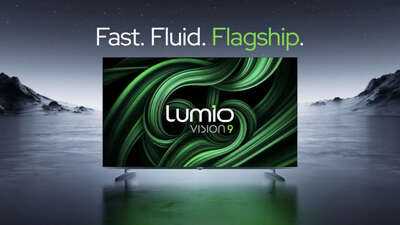
Lumio Vision 9 (2026): QD MiniLED panel with 800 nits peak brightness, 7000:1 contrast, and 9.7ms input lagThe display is a QD MiniLED built on an Enhanced VA panel, delivering a native contrast ratio of 7000:1 and a dynamic contrast of 100,000:1. Color coverage reaches over 100% NTSC and up to 82% Rec.2020, with Delta E accuracy under 1.9—meaning skin tones and gradients hold up without visible banding. Peak brightness hits 800 nits, with both Dolby Vision and HDR10 supported.
Under the hood, the TV runs on MediaTek's Pentonic 700 chipset with 3GB DDR4 RAM and what Lumio claims is 2X faster storage than competing TVs in the segment. The pitch is simple: a TV that stays fast whether you're switching apps or deep into a gaming session.
Gaming is where the Vision 9 (2026) gets serious. The Vision 9 (2026) supports 4K at 144Hz and 1080p at 240Hz, with VRR across the 48–240Hz range and ALLM-enabled input lag of just 9.7ms. HDMI 2.1 with FRL signaling supports up to 48Gbps—figures that sit comfortably alongside dedicated gaming monitors.
Audio is handled by a 50W DGS 2.2 system with six drivers—dual subwoofers, dual full-range, and dual tweeters. Bass reaches down to 38Hz at 70dB, double the output of the previous generation. Dolby Atmos is on board.
On the software side, the Vision 9 (2026) runs Android 14 with TLDR 2.0—Lumio's content discovery platform, now with 34 new AI-driven features. It surfaces daily-updated Top 10 rankings across platforms, curated collections with a unified Lumio Rating, and smart search filters by language, genre, and platform. The idea, company says, is to cut down the time spent hunting for something to watch.
Lumio Vision 7 (2026): 64GB storage and a satellite port for 540 free DD Free Dish channelsThe Vision 7 (2026) gets a meaningful refresh alongside the flagship. Storage jumps to 64GB—4X more than before and 2X faster—and a new satellite port adds access to up to 540 free channels via DD Free Dish, no subscription needed. TLDR 2.0 is also on board here, and Lumio says the update will roll out to last year's Vision TVs as well. It goes on sale April 24 in 43-inch (Rs 29,999) and 55-inch (Rs 39,999) variants.
Both the Vision 9 and Vision 7 carry a two-year comprehensive warranty, with service available across 300+ centers and 19,000+ pincodes nationwide.
Lumio’s Project Neo turns WhatsApp and Instagram into a TV remoteThe most compelling announcement isn't the hardware. Project Neo, a new initiative from Lumio Labs, lets users control their TVs through messaging apps they already use. Send a WhatsApp message like "movies where the villain wins," or forward an Instagram Reel to Lumio's TLDR bot—the AI parses the intent, finds where it's streaming, and builds a watchlist directly on the TV.
There's no new app to install. Co-founder Kailash Sankaranarayanan put it directly: people discover content on their phones but watch it on TV, so the interface should live where users already spend hours a day. Project Neo rolls out across all Lumio devices later this year.
Alongside the Vision 9 (2026), Lumio also refreshed the Vision 7, announced TLDR 2.0 , it's content discovery app, and also unveiled Project Neo , an AI-powered system that lets users build their TV watchlist straight from WhatsApp.
Lumio Vision 9 (2026): QD MiniLED panel with 800 nits peak brightness, 7000:1 contrast, and 9.7ms input lagThe display is a QD MiniLED built on an Enhanced VA panel, delivering a native contrast ratio of 7000:1 and a dynamic contrast of 100,000:1. Color coverage reaches over 100% NTSC and up to 82% Rec.2020, with Delta E accuracy under 1.9—meaning skin tones and gradients hold up without visible banding. Peak brightness hits 800 nits, with both Dolby Vision and HDR10 supported.
Under the hood, the TV runs on MediaTek's Pentonic 700 chipset with 3GB DDR4 RAM and what Lumio claims is 2X faster storage than competing TVs in the segment. The pitch is simple: a TV that stays fast whether you're switching apps or deep into a gaming session.
Gaming is where the Vision 9 (2026) gets serious. The Vision 9 (2026) supports 4K at 144Hz and 1080p at 240Hz, with VRR across the 48–240Hz range and ALLM-enabled input lag of just 9.7ms. HDMI 2.1 with FRL signaling supports up to 48Gbps—figures that sit comfortably alongside dedicated gaming monitors.
Audio is handled by a 50W DGS 2.2 system with six drivers—dual subwoofers, dual full-range, and dual tweeters. Bass reaches down to 38Hz at 70dB, double the output of the previous generation. Dolby Atmos is on board.
On the software side, the Vision 9 (2026) runs Android 14 with TLDR 2.0—Lumio's content discovery platform, now with 34 new AI-driven features. It surfaces daily-updated Top 10 rankings across platforms, curated collections with a unified Lumio Rating, and smart search filters by language, genre, and platform. The idea, company says, is to cut down the time spent hunting for something to watch.
Lumio Vision 7 (2026): 64GB storage and a satellite port for 540 free DD Free Dish channelsThe Vision 7 (2026) gets a meaningful refresh alongside the flagship. Storage jumps to 64GB—4X more than before and 2X faster—and a new satellite port adds access to up to 540 free channels via DD Free Dish, no subscription needed. TLDR 2.0 is also on board here, and Lumio says the update will roll out to last year's Vision TVs as well. It goes on sale April 24 in 43-inch (Rs 29,999) and 55-inch (Rs 39,999) variants.
Both the Vision 9 and Vision 7 carry a two-year comprehensive warranty, with service available across 300+ centers and 19,000+ pincodes nationwide.
Lumio’s Project Neo turns WhatsApp and Instagram into a TV remoteThe most compelling announcement isn't the hardware. Project Neo, a new initiative from Lumio Labs, lets users control their TVs through messaging apps they already use. Send a WhatsApp message like "movies where the villain wins," or forward an Instagram Reel to Lumio's TLDR bot—the AI parses the intent, finds where it's streaming, and builds a watchlist directly on the TV.
There's no new app to install. Co-founder Kailash Sankaranarayanan put it directly: people discover content on their phones but watch it on TV, so the interface should live where users already spend hours a day. Project Neo rolls out across all Lumio devices later this year.
Next Story