
NASA releases Artemis II mission images taken on iPhone 17 Pro Max


When NASA's Artemis II spacecraft lifted off, it carried four astronauts, decades of engineering ambition and an extraordinary arsenal of cameras, smartphones and communications technology to document humanity’s return to lunar orbit in detail. NASA approved the use of personal smartphones aboard Artemis II, making it one of the first missions where astronauts have brought their own handsets into space. The astronauts onboard carried four units of iPhone 17 Pro Max.
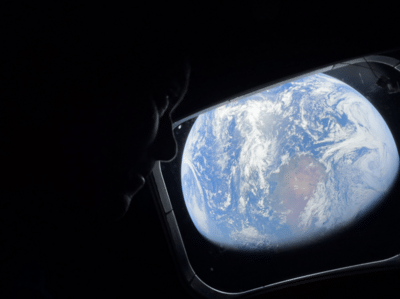
Now NASA has released a series of striking images captured on the iPhone 17 Pro Max during the Artemis II mission, marking the first time consumer smartphones have been officially used to document a crewed lunar mission . The photos, taken on April 2, 2026, show astronauts Reid Wiseman and Christina Koch aboard the Orion spacecraft, gazing back at Earth through its cabin windows.
“NASA astronaut and Artemis II mission specialist Christina Koch peers out of one of the Orion spacecraft's main cabin windows, looking back at Earth, as the crew travels towards the Moon,” wrote NASA while sharing the image on Flickr.
How iPhones made it onto NASA’s Artemis II mission
For the first time, astronauts aboard Artemis II are carrying personal smartphones—specifically four units of the iPhone 17 Pro Max. It sounds like a small detail, but getting those devices approved for spaceflight was anything but straightforward.
The clearance process followed a strict four-phase protocol. First, the hardware is introduced to a safety panel. Then comes hazard identification—everything from moving parts to materials like glass that could shatter in microgravity. The third phase outlines mitigation strategies, and the final stage validates that those fixes actually work.
Durability was a key factor. The iPhone 17 Pro Max uses Ceramic Shield 2, which Apple claims is tougher than any smartphone glass. But NASA’s concerns went beyond just breakability. Devices behave differently in microgravity—heat dissipation, battery stability, and even how they’re stored all matter.
While the iPhone has drawn attention, NASA continues to rely on its traditional imaging equipment for mission-critical documentation. The crew is also using Nikon D5, Nikon Z9, and GoPro HERO4 Black cameras to capture high-resolution scientific and operational imagery. The iPhones complement these tools by providing accessible, everyday snapshots from the astronauts’ point of view.
Now NASA has released a series of striking images captured on the iPhone 17 Pro Max during the Artemis II mission, marking the first time consumer smartphones have been officially used to document a crewed lunar mission . The photos, taken on April 2, 2026, show astronauts Reid Wiseman and Christina Koch aboard the Orion spacecraft, gazing back at Earth through its cabin windows.
“NASA astronaut and Artemis II mission specialist Christina Koch peers out of one of the Orion spacecraft's main cabin windows, looking back at Earth, as the crew travels towards the Moon,” wrote NASA while sharing the image on Flickr.
How iPhones made it onto NASA’s Artemis II mission
For the first time, astronauts aboard Artemis II are carrying personal smartphones—specifically four units of the iPhone 17 Pro Max. It sounds like a small detail, but getting those devices approved for spaceflight was anything but straightforward.
The clearance process followed a strict four-phase protocol. First, the hardware is introduced to a safety panel. Then comes hazard identification—everything from moving parts to materials like glass that could shatter in microgravity. The third phase outlines mitigation strategies, and the final stage validates that those fixes actually work.
Durability was a key factor. The iPhone 17 Pro Max uses Ceramic Shield 2, which Apple claims is tougher than any smartphone glass. But NASA’s concerns went beyond just breakability. Devices behave differently in microgravity—heat dissipation, battery stability, and even how they’re stored all matter.
While the iPhone has drawn attention, NASA continues to rely on its traditional imaging equipment for mission-critical documentation. The crew is also using Nikon D5, Nikon Z9, and GoPro HERO4 Black cameras to capture high-resolution scientific and operational imagery. The iPhones complement these tools by providing accessible, everyday snapshots from the astronauts’ point of view.
Next Story