
Regulations slow growth but reward patient founders: Razorpay's Harshil Mathur


Building in a regulated space has its own advantages because not all founders will have the patience to navigate regulatory hurdles, said Harshil Mathur, chief executive officer of Razorpay, at the Y Combinator Startup School event in Bengaluru.
Addressing a crowd of 2,500 at the first such YC event in India, Mathur told YC partner Jon Xu in a fireside chat that when he started the company, he had underestimated the potential size of the Indian payments market and that Razorpay has since surpassed all his initial business projections in the last ten years.
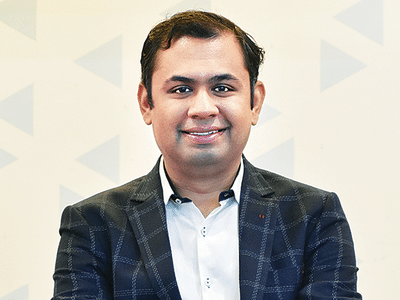
“In my application to YC in 2014–15, we had said that India is a $60 billion payments market. Today, Razorpay alone does $180 billion in payments volume,” Mathur said.
Razorpay was the first Indian fintech startup to be funded by YC. The company, founded by Mathur and Shashank Kumar in 2014, offers digital payment services to merchants operating across online, offline, and cross-border channels. It has been licensed by the central bank to operate as a payment aggregator.
Talking about the early days of Razorpay around 2014–15, Mathur said he felt the need to build a digital payments network after experiencing firsthand the challenges of accepting payments digitally.
“I knew there was a problem around payments and was wondering why others were not solving it. It was such that accepting payments in cash was easier,” he said.
Razorpay is currently targeting a Rs 4,500 crore public listing on Indian stock exchanges. The firm was valued at $7.5 billion in its last venture funding round, which took place in 2021. In FY25, Razorpay reported total revenue of Rs 3,783 crore and a profit before ESOP costs of Rs 1,277 crore.
Building in a regulated space, however, came with its own share of challenges. Recalling his experience during demo day at YC, Mathur said that after going live with around 50 merchants, the bank sponsoring backend settlements for Razorpay pulled the plug.
“We got abused by some of our merchants then, whose payments failed to go through, but we stayed in touch with them and explained the problem. Eventually we went back online in four or five days — and, mind you, those businesses who abused us that day are still with us,” he added.
On the importance of being nimble, Mathur explained how an early bet on the Unified Payments Interface helped the company acquire many merchants eager to go live with the service. During the pandemic years, as India saw a major boom in direct-to-consumer brands, Razorpay grew its business exponentially by powering these merchants.
Addressing a crowd of 2,500 at the first such YC event in India, Mathur told YC partner Jon Xu in a fireside chat that when he started the company, he had underestimated the potential size of the Indian payments market and that Razorpay has since surpassed all his initial business projections in the last ten years.
“In my application to YC in 2014–15, we had said that India is a $60 billion payments market. Today, Razorpay alone does $180 billion in payments volume,” Mathur said.
Razorpay was the first Indian fintech startup to be funded by YC. The company, founded by Mathur and Shashank Kumar in 2014, offers digital payment services to merchants operating across online, offline, and cross-border channels. It has been licensed by the central bank to operate as a payment aggregator.
Talking about the early days of Razorpay around 2014–15, Mathur said he felt the need to build a digital payments network after experiencing firsthand the challenges of accepting payments digitally.
“I knew there was a problem around payments and was wondering why others were not solving it. It was such that accepting payments in cash was easier,” he said.
Razorpay is currently targeting a Rs 4,500 crore public listing on Indian stock exchanges. The firm was valued at $7.5 billion in its last venture funding round, which took place in 2021. In FY25, Razorpay reported total revenue of Rs 3,783 crore and a profit before ESOP costs of Rs 1,277 crore.
Building in a regulated space, however, came with its own share of challenges. Recalling his experience during demo day at YC, Mathur said that after going live with around 50 merchants, the bank sponsoring backend settlements for Razorpay pulled the plug.
“We got abused by some of our merchants then, whose payments failed to go through, but we stayed in touch with them and explained the problem. Eventually we went back online in four or five days — and, mind you, those businesses who abused us that day are still with us,” he added.
On the importance of being nimble, Mathur explained how an early bet on the Unified Payments Interface helped the company acquire many merchants eager to go live with the service. During the pandemic years, as India saw a major boom in direct-to-consumer brands, Razorpay grew its business exponentially by powering these merchants.
Next Story