
TCS is asking staff to use AI even if it hits revenues: CEO K Krithivasan


Tata Consultancy Services is not resisting disruption from artificial intelligence, but is encouraging its associates to bring AI-led efficiencies even if it compresses the company’s revenue, chief executive K Krithivasan said.
“If you find that you can do something faster, better, cheaper with AI, you should probably go and tell your customers, even if it cannibalises your revenue,” Krithivasan said, describing the message he is sending to the company’s 600,000 employees as it navigates the AI era.
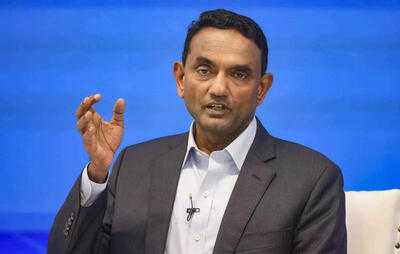
“We are not offering this technology to take away our revenue. The unit is going to work on a different model, so you enjoy the benefits the more you do, not by resisting this change,” he said during a panel discussion at the Nasscom Technology Leadership Forum in Mumbai on Wednesday.
The executive said cultural change must begin at the top. “We insist that all the senior management build something of their own, so they understand…it’s not about asking questions, it’s how you build,” he said.
Also Read: TCS CEO K Krithivasan says AI will not trigger mass layoffs: FT report
TCS is undergoing workforce retrenchment and has recently let go 2%, or 12,000 employees, of its global workforce, in roles where skills could not be redeployed in the AI era.
Rather than financial incentives, TCS is betting on relevance, he said. “I don’t think they are looking at, ‘will you give me some additional incentive’…We are helping them stay correct in this new world.”
He described the AI wave as a far bigger transformation than just a technology upgrade. “We look at it as a challenge, we don’t look at it as a small technology issue. Because of the size and scale and speed…we need to treat it as a civilisational issue,” he said, citing breakthroughs such as DeepMind solving decades-old protein structure problems.
As TCS, India’s largest IT services company, navigates the disruption, it is looking beyond productivity gains, the CEO said. “What are the new services that you will be able to introduce? Those are the more important questions,” he added.
The company is now looking at data infrastructure and building new revenue streams. “How do you implement AI for the customers? Most customers don’t have the data ready…How do you build the AI? How do you orchestrate the data,” he said.
Kotak Mahindra Bank CEO Ashok Vaswani said AI adoption in banking is inevitable but must be grounded in trust. “There’s absolutely no question AI is going to transform our business,” he said, though “it’s not going to be a straight line”.
At Kotak, the starting point is data. “If that data stack is built…making sure it’s in a place where the agents can actually utilise the data becomes a very, very fundamental part,” he said.
On governance and accountability, Vaswani said: “The buck stops at my table…You can’t blame technology. That’s like a bad carpenter blaming his tools.”
He warned against forgetting the human element. “Finance is all about emotions,” he said, pointing to the volatility triggered by a single AI-related blog post that wiped billions off tech valuations.
Krithivasan said boards were actively pushing management teams to accelerate AI adoption. “A lot of push comes from the board,” he said, adding that while CIO budgets are being reallocated, business units are also directly investing in AI to gain competitive advantage.
Also Read: Indian IT captains hold firm amid raging agentic AI storm
“If you find that you can do something faster, better, cheaper with AI, you should probably go and tell your customers, even if it cannibalises your revenue,” Krithivasan said, describing the message he is sending to the company’s 600,000 employees as it navigates the AI era.
“We are not offering this technology to take away our revenue. The unit is going to work on a different model, so you enjoy the benefits the more you do, not by resisting this change,” he said during a panel discussion at the Nasscom Technology Leadership Forum in Mumbai on Wednesday.
The executive said cultural change must begin at the top. “We insist that all the senior management build something of their own, so they understand…it’s not about asking questions, it’s how you build,” he said.
Also Read: TCS CEO K Krithivasan says AI will not trigger mass layoffs: FT report
TCS is undergoing workforce retrenchment and has recently let go 2%, or 12,000 employees, of its global workforce, in roles where skills could not be redeployed in the AI era.
Rather than financial incentives, TCS is betting on relevance, he said. “I don’t think they are looking at, ‘will you give me some additional incentive’…We are helping them stay correct in this new world.”
He described the AI wave as a far bigger transformation than just a technology upgrade. “We look at it as a challenge, we don’t look at it as a small technology issue. Because of the size and scale and speed…we need to treat it as a civilisational issue,” he said, citing breakthroughs such as DeepMind solving decades-old protein structure problems.
As TCS, India’s largest IT services company, navigates the disruption, it is looking beyond productivity gains, the CEO said. “What are the new services that you will be able to introduce? Those are the more important questions,” he added.
The company is now looking at data infrastructure and building new revenue streams. “How do you implement AI for the customers? Most customers don’t have the data ready…How do you build the AI? How do you orchestrate the data,” he said.
Kotak Mahindra Bank CEO Ashok Vaswani said AI adoption in banking is inevitable but must be grounded in trust. “There’s absolutely no question AI is going to transform our business,” he said, though “it’s not going to be a straight line”.
At Kotak, the starting point is data. “If that data stack is built…making sure it’s in a place where the agents can actually utilise the data becomes a very, very fundamental part,” he said.
On governance and accountability, Vaswani said: “The buck stops at my table…You can’t blame technology. That’s like a bad carpenter blaming his tools.”
He warned against forgetting the human element. “Finance is all about emotions,” he said, pointing to the volatility triggered by a single AI-related blog post that wiped billions off tech valuations.
Krithivasan said boards were actively pushing management teams to accelerate AI adoption. “A lot of push comes from the board,” he said, adding that while CIO budgets are being reallocated, business units are also directly investing in AI to gain competitive advantage.
Also Read: Indian IT captains hold firm amid raging agentic AI storm
Next Story