Tesla's former AI Director Andrej Karpathy sends 'Open Letter' to software engineers: I never felt this much behind as a programmer, profession is…


Andrej Karpathy, Tesla's former AI director and OpenAI cofounder , has issued what amounts to an open letter to the entire software engineering profession, warning that developers face an unprecedented challenge as AI fundamentally reshapes how code gets written. In a post on X that has sparked widespread debate, Karpathy confessed: "I've never felt this much behind as a programmer. The profession is being dramatically refactored as the bits contributed by the programmer are increasingly sparse and between."
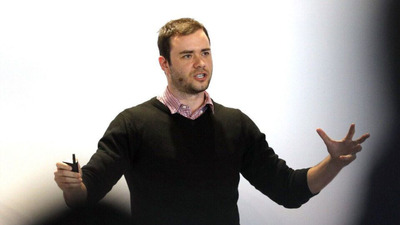
The candid admission from one of AI's most influential figures highlights the seismic shift happening in software development. Karpathy, who led AI development at Tesla for five years and helped steer the company's Autopilot effort, described feeling inadequate despite his expertise. "I have a sense that I could be 10X more powerful if I just properly string together what has become available over the last ~year and a failure to claim the boost feels decidedly like skill issue," he wrote.
His post outlines a new reality where programmers must master what he calls a "new programmable layer of abstraction" involving agents, subagents, prompts, contexts, memory modes, MCP protocols, and IDE integrations. The challenge, Karpathy explains, is building a mental model for "fundamentally stochastic, fallible, unintelligible and changing entities suddenly intermingled with what used to be good old fashioned engineering."
AI coding tools rewriting developer workflows, industry leaders say
The evolution Karpathy describes represents a dramatic departure from the " vibe coding " approach he famously coined in February 2025. Back then, he described casually asking AI to make changes while barely reading code diffs, accepting all suggestions, and working around bugs rather than fixing them properly. "It's not too bad for throwaway weekend projects, but still quite amusing," he wrote at the time.
Now, even Karpathy acknowledges the limitations. When building his recent project Nanochat, he admitted it was "basically entirely hand-written" because AI agents "just didn't work well enough at all and net unhelpful." The admission underscores the gap between AI coding hype and reality, even as the technology rapidly improves.
Boris Cherny, creator of Anthropic 's Claude Code, responded to Karpathy's post by sharing his own revelation: "The last month was my first month as an engineer that I didn't open an IDE at all. Opus 4.5 wrote around 200 PRs, every single line." Cherny described how newer developers without "legacy memories" of older models often use AI more effectively than veterans, requiring "significant mental work to re-adjust to what the model can do every month or two."
Productivity gains remain uncertain as AI models improve Despite the rapid advancement, research suggests AI coding tools don't always boost productivity. A METR study from July found that AI assistants decreased experienced developers' productivity by 19%, though participants expected a 20% boost. Management consultants Bain & Company reported that programming showed "unremarkable" savings despite being "one of the first areas to deploy generative AI."
Yet industry leaders remain optimistic. Google CEO Sundar Pichai said in November that vibe coding is making software development "so much more enjoyable" and "exciting again," with AI now writing over 30% of new code at Google. Anthropic CEO Dario Amodei claimed in October that Claude was writing 90% of the company's code.
Karpathy concluded his post with an urgent call to action: "Clearly some powerful alien tool was handed around except it comes with no manual and everyone has to figure out how to hold it and operate it, while the resulting magnitude 9 earthquake is rocking the profession. Roll up your sleeves to not fall behind."
The candid admission from one of AI's most influential figures highlights the seismic shift happening in software development. Karpathy, who led AI development at Tesla for five years and helped steer the company's Autopilot effort, described feeling inadequate despite his expertise. "I have a sense that I could be 10X more powerful if I just properly string together what has become available over the last ~year and a failure to claim the boost feels decidedly like skill issue," he wrote.
His post outlines a new reality where programmers must master what he calls a "new programmable layer of abstraction" involving agents, subagents, prompts, contexts, memory modes, MCP protocols, and IDE integrations. The challenge, Karpathy explains, is building a mental model for "fundamentally stochastic, fallible, unintelligible and changing entities suddenly intermingled with what used to be good old fashioned engineering."
AI coding tools rewriting developer workflows, industry leaders say
The evolution Karpathy describes represents a dramatic departure from the " vibe coding " approach he famously coined in February 2025. Back then, he described casually asking AI to make changes while barely reading code diffs, accepting all suggestions, and working around bugs rather than fixing them properly. "It's not too bad for throwaway weekend projects, but still quite amusing," he wrote at the time.
Now, even Karpathy acknowledges the limitations. When building his recent project Nanochat, he admitted it was "basically entirely hand-written" because AI agents "just didn't work well enough at all and net unhelpful." The admission underscores the gap between AI coding hype and reality, even as the technology rapidly improves.
Boris Cherny, creator of Anthropic 's Claude Code, responded to Karpathy's post by sharing his own revelation: "The last month was my first month as an engineer that I didn't open an IDE at all. Opus 4.5 wrote around 200 PRs, every single line." Cherny described how newer developers without "legacy memories" of older models often use AI more effectively than veterans, requiring "significant mental work to re-adjust to what the model can do every month or two."
Productivity gains remain uncertain as AI models improve Despite the rapid advancement, research suggests AI coding tools don't always boost productivity. A METR study from July found that AI assistants decreased experienced developers' productivity by 19%, though participants expected a 20% boost. Management consultants Bain & Company reported that programming showed "unremarkable" savings despite being "one of the first areas to deploy generative AI."
Yet industry leaders remain optimistic. Google CEO Sundar Pichai said in November that vibe coding is making software development "so much more enjoyable" and "exciting again," with AI now writing over 30% of new code at Google. Anthropic CEO Dario Amodei claimed in October that Claude was writing 90% of the company's code.
Karpathy concluded his post with an urgent call to action: "Clearly some powerful alien tool was handed around except it comes with no manual and everyone has to figure out how to hold it and operate it, while the resulting magnitude 9 earthquake is rocking the profession. Roll up your sleeves to not fall behind."
Next Story