
Went hands-on with the Xiaomi 17 Ultra, and it's more camera than phone


So here's something I didn't expect to say: I've been shooting more with the main camera on the Xiaomi 17 Ultra than the telephoto. And I'm a telephoto person—especially on phones. Have been for years. Wide angles stress me out. Anything under 50mm feels like a commitment I'm not ready to make.
But Xiaomi kept pushing the LOFIC sensor—that's Lateral Overflow Integration Capacitor, a mouthful that basically means the 1-inch main sensor captures light that would otherwise clip your highlights before they get a chance to. 16.5EV of dynamic range, they said. I was skeptical, then I started shooting at 28mm and 35mm more seriously, and the pictures have been quietly changing my mind about wide-angle shooting altogether.
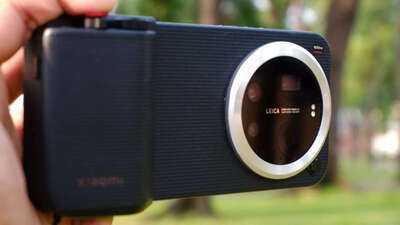
I strapped on the photography kit grip—threaded shutter button, command dial set to exposure compensation, wrist strap—and that's more or less where the phone part of this story ends, and the camera part begins. What follows is a week of finding out.
The telephoto is still the star
The 200MP telephoto pairs a Leica APO-certified lens with mechanical optical zoom between 75mm and 100mm equivalent—3.2x to 4.3x without any sensor cropping—and extends to a usable 17.2x with in-sensor crop. I've been reaching for it constantly, partly out of habit, partly because it keeps delivering.

A person walking along a beachfront, shot from high up — white hat, strip of sand, a band of green below, boats sitting far out on still water. The telephoto compressed the distance between the figure and the sea into something almost flat, the kind of layered composition where everything sits on top of everything else. That's what this lens does well.
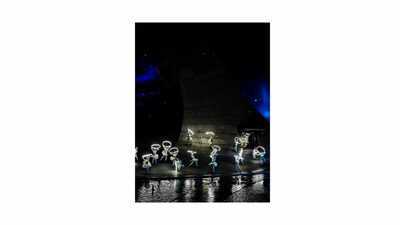
Another scene I shot: a troupe of performers holding glowing hoop props, wearing white costumes, with blue stage light spilling from behind and the wet ground throwing their reflections back up. I was shooting from a distance, and the telephoto pulled them in without losing the scale of the architecture behind. The structure stayed sharp, the glowing rings had definition, and the reflections in the foreground added depth that a wider lens would have flattened into noise.

Portraits in the 75–100mm range have a compression that's immediately flattering. I shot a Greco-Roman statue (fyi: it's a living statue) framed against an arched colonnade—background falling away softly, stone detail sharp in the subject, the arch framing the whole thing. No portrait mode, no edge detection running in the background. The separation happened because of the focal length, the way it should.
The mechanical zoom between 75mm and 100mm is more subtle in practice than it sounds on paper. Twenty-five millimetres isn't a dramatic compositional leap, and I mostly found myself landing at 3.2x and staying there. The engineering is quite impressive—this kind of continuous optical zoom at portrait focal lengths is new for Xiaomi—but don't expect the range itself to change how you shoot.
Beyond 17.2x, AI steps in. Xiaomi's approach is restrained—it sharpens edges rather than inventing detail wholesale—so extreme zoom shots look a bit crisp rather than painterly and strange. At 30x and 60x, you're working with something more like a reference point than a finished image, but it holds up better than most.
The main camera surprised me, and I don't say that lightly
Right. Back to the LOFIC story.
I started shooting the main camera at 28mm and 35mm in scenes I'd normally have avoided with a wide lens—high contrast, hard light, tricky dynamic range situations—and it kept handling them.
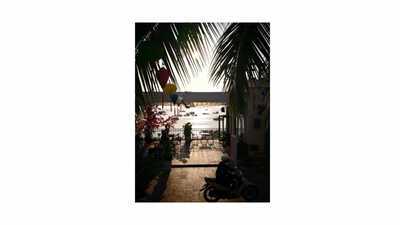
A good example of what that means in practice: framing a harbour scene through palm fronds at golden hour, sun punching straight through the leaves, fishing boats sitting in the glittering water behind, a motorbike and tiled terrace in deep shadow below. I shot it in Leica Authentic mode—it pulls saturation back, adds a mild vignette, renders cooler and more cinematic. The kind of shot where most cameras either expose for the sky and lose the foreground entirely, or lift the shadows and blow the sun into a warm, over-processed mess.
The camera held both ends—the fronds stayed detailed against the bright sky, the shadow areas in the foreground retained texture and warmth, and the water behind caught the light without clipping.
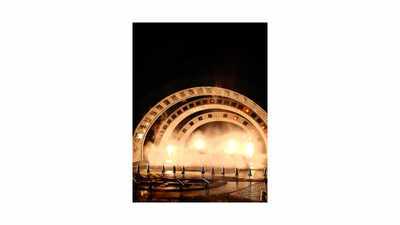
Then, the same performance I had shot with the telephoto earlier became a different scene entirely when the fire performers came on. Flames lit them hard, orange and red, everything behind almost completely black. I switched to the main sensor—good time to put LOFIC to a harder test. I expected the highlights to clip and the shadows to flatten. Neither happened. The fire had texture—individual tongues of flame, not a blown-out blob—and the arch above retained its detail against the dark sky.
Shot the same scene twice, once with the orange tones dominating and once as the fire shifted redder, and both frames held the light without fighting it.
LOFIC, in short, does what it says.
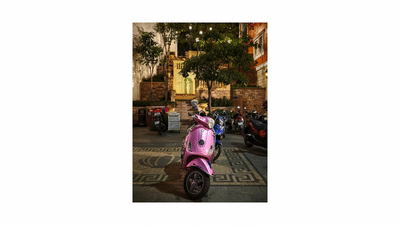
A pink Vespa on a cobblestone street — the perfect European scene. Shot late at night, street lights throwing a yellow glaze on the ground, a building behind it with lit windows. I shot it in Leica Authentic again, as I do—same pulled-back saturation, same mild vignette, but here it gave the scene a quieter, cooler quality that felt right for scene.
And the image came out exactly the way I saw the scene. The shadows in the cobblestones were there. The warmth from the street lights sat against the cooler ambient light without one swallowing the other—that's the LOFIC sensor doing its single-exposure range thing again, quietly. The phone didn't decide the scene needed brightening or punching up.
The 1-inch sensor doesn't have to pick its battles the way smaller sensors do, and it shows.
The ultrawide at 14mm is something I reach for less than the other two, but it doesn't feel like the weak link it so often is on other phones. I shot the same Vespa scene with it—the cobblestone street, the building behind, all of it—and the 14mm gave it a sense of place that the tighter frame couldn't.
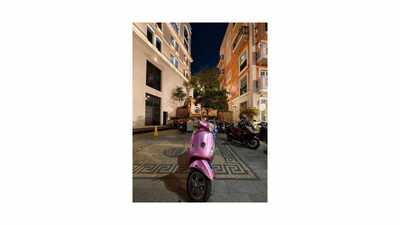
The lens is wide enough to give a scene its environmental context without distorting edges or making proportions feel squeezed. Corners soften a little, but it responds to Leica Authentic the same way the other lenses do—although you'll find some differences , don't expect it to be perfect.
The phone, when you remember it is one
The 6.9-inch OLED is flat this time—no curved edges—and noticeably easier to hold than the 15 Ultra. The screen holds up in direct tropical sun, bright enough that you're actually seeing the image, not guessing at it. At 3,500 nits peak and LTPO between 1 and 120Hz, it's one of the better displays I've used in the field.
The Snapdragon 8 Elite Gen 5 keeps everything moving without friction. The usuals—switching between apps, browsing social media, and whatever ten minutes of gaming I did—were smooth. Then, the camera, which is what this phone is for. Switching between lenses is instant, the app never stutters, and editing DNG files in Lightroom on the phone itself happens quickly enough that it doesn't break your rhythm.
The phone got me through full shooting days comfortably. The 6,000mAh number doesn't sound big enough these days, I know, but it holds up, and 90W charging means topping up between sessions takes minutes. HyperOS 3 on Android 16 is functional enough to stay out of the way.
There's more to talk about how the Xiaomi 17 Ultra is as an everyday phone, and that'll get its own space when we're talking more than just hands-on.
A week in and one question left
Xiaomi asks Rs 1,39,999 for the 17 Ultra, and it's serious money. For that kind of money, the camera alone can't be the only thing that holds up—and as I said I'd put the phone through the usual hoops before I've formed my opinions on it. But as far as the 17 Ultra's cameras are concerned, they've been doing more than enough to make the case on their own.
I came in as a telephoto shooter. I'm still mostly a telephoto shooter. But, somewhere along the way, the main camera made a convert. Though, I am still shooting—so ask me later.
But Xiaomi kept pushing the LOFIC sensor—that's Lateral Overflow Integration Capacitor, a mouthful that basically means the 1-inch main sensor captures light that would otherwise clip your highlights before they get a chance to. 16.5EV of dynamic range, they said. I was skeptical, then I started shooting at 28mm and 35mm more seriously, and the pictures have been quietly changing my mind about wide-angle shooting altogether.
I strapped on the photography kit grip—threaded shutter button, command dial set to exposure compensation, wrist strap—and that's more or less where the phone part of this story ends, and the camera part begins. What follows is a week of finding out.
The telephoto is still the star
The 200MP telephoto pairs a Leica APO-certified lens with mechanical optical zoom between 75mm and 100mm equivalent—3.2x to 4.3x without any sensor cropping—and extends to a usable 17.2x with in-sensor crop. I've been reaching for it constantly, partly out of habit, partly because it keeps delivering.
A person walking along a beachfront, shot from high up — white hat, strip of sand, a band of green below, boats sitting far out on still water. The telephoto compressed the distance between the figure and the sea into something almost flat, the kind of layered composition where everything sits on top of everything else. That's what this lens does well.
Another scene I shot: a troupe of performers holding glowing hoop props, wearing white costumes, with blue stage light spilling from behind and the wet ground throwing their reflections back up. I was shooting from a distance, and the telephoto pulled them in without losing the scale of the architecture behind. The structure stayed sharp, the glowing rings had definition, and the reflections in the foreground added depth that a wider lens would have flattened into noise.
Portraits in the 75–100mm range have a compression that's immediately flattering. I shot a Greco-Roman statue (fyi: it's a living statue) framed against an arched colonnade—background falling away softly, stone detail sharp in the subject, the arch framing the whole thing. No portrait mode, no edge detection running in the background. The separation happened because of the focal length, the way it should.
The mechanical zoom between 75mm and 100mm is more subtle in practice than it sounds on paper. Twenty-five millimetres isn't a dramatic compositional leap, and I mostly found myself landing at 3.2x and staying there. The engineering is quite impressive—this kind of continuous optical zoom at portrait focal lengths is new for Xiaomi—but don't expect the range itself to change how you shoot.
Beyond 17.2x, AI steps in. Xiaomi's approach is restrained—it sharpens edges rather than inventing detail wholesale—so extreme zoom shots look a bit crisp rather than painterly and strange. At 30x and 60x, you're working with something more like a reference point than a finished image, but it holds up better than most.
The main camera surprised me, and I don't say that lightly
Right. Back to the LOFIC story.
I started shooting the main camera at 28mm and 35mm in scenes I'd normally have avoided with a wide lens—high contrast, hard light, tricky dynamic range situations—and it kept handling them.
A good example of what that means in practice: framing a harbour scene through palm fronds at golden hour, sun punching straight through the leaves, fishing boats sitting in the glittering water behind, a motorbike and tiled terrace in deep shadow below. I shot it in Leica Authentic mode—it pulls saturation back, adds a mild vignette, renders cooler and more cinematic. The kind of shot where most cameras either expose for the sky and lose the foreground entirely, or lift the shadows and blow the sun into a warm, over-processed mess.
The camera held both ends—the fronds stayed detailed against the bright sky, the shadow areas in the foreground retained texture and warmth, and the water behind caught the light without clipping.
Then, the same performance I had shot with the telephoto earlier became a different scene entirely when the fire performers came on. Flames lit them hard, orange and red, everything behind almost completely black. I switched to the main sensor—good time to put LOFIC to a harder test. I expected the highlights to clip and the shadows to flatten. Neither happened. The fire had texture—individual tongues of flame, not a blown-out blob—and the arch above retained its detail against the dark sky.
Shot the same scene twice, once with the orange tones dominating and once as the fire shifted redder, and both frames held the light without fighting it.
LOFIC, in short, does what it says.
A pink Vespa on a cobblestone street — the perfect European scene. Shot late at night, street lights throwing a yellow glaze on the ground, a building behind it with lit windows. I shot it in Leica Authentic again, as I do—same pulled-back saturation, same mild vignette, but here it gave the scene a quieter, cooler quality that felt right for scene.
And the image came out exactly the way I saw the scene. The shadows in the cobblestones were there. The warmth from the street lights sat against the cooler ambient light without one swallowing the other—that's the LOFIC sensor doing its single-exposure range thing again, quietly. The phone didn't decide the scene needed brightening or punching up.
The 1-inch sensor doesn't have to pick its battles the way smaller sensors do, and it shows.
The ultrawide at 14mm is something I reach for less than the other two, but it doesn't feel like the weak link it so often is on other phones. I shot the same Vespa scene with it—the cobblestone street, the building behind, all of it—and the 14mm gave it a sense of place that the tighter frame couldn't.
The lens is wide enough to give a scene its environmental context without distorting edges or making proportions feel squeezed. Corners soften a little, but it responds to Leica Authentic the same way the other lenses do—although you'll find some differences , don't expect it to be perfect.
The phone, when you remember it is one
The 6.9-inch OLED is flat this time—no curved edges—and noticeably easier to hold than the 15 Ultra. The screen holds up in direct tropical sun, bright enough that you're actually seeing the image, not guessing at it. At 3,500 nits peak and LTPO between 1 and 120Hz, it's one of the better displays I've used in the field.
The Snapdragon 8 Elite Gen 5 keeps everything moving without friction. The usuals—switching between apps, browsing social media, and whatever ten minutes of gaming I did—were smooth. Then, the camera, which is what this phone is for. Switching between lenses is instant, the app never stutters, and editing DNG files in Lightroom on the phone itself happens quickly enough that it doesn't break your rhythm.
The phone got me through full shooting days comfortably. The 6,000mAh number doesn't sound big enough these days, I know, but it holds up, and 90W charging means topping up between sessions takes minutes. HyperOS 3 on Android 16 is functional enough to stay out of the way.
There's more to talk about how the Xiaomi 17 Ultra is as an everyday phone, and that'll get its own space when we're talking more than just hands-on.
A week in and one question left
Xiaomi asks Rs 1,39,999 for the 17 Ultra, and it's serious money. For that kind of money, the camera alone can't be the only thing that holds up—and as I said I'd put the phone through the usual hoops before I've formed my opinions on it. But as far as the 17 Ultra's cameras are concerned, they've been doing more than enough to make the case on their own.
I came in as a telephoto shooter. I'm still mostly a telephoto shooter. But, somewhere along the way, the main camera made a convert. Though, I am still shooting—so ask me later.
Next Story