
The Global Smartphone Powerhouse: Which Country Produces The Most Smartphones?

In the palm of every person on Earth lies a piece of high-tech machinery that likely began its journey in the same place. As of 2026, despite shifting global trade winds and the rise of new global manufacturing hubs, one nation remains the undisputed heavyweight champion of smartphone production : China. Over the past two decades, China has established itself as the undisputed leader in smartphone manufacturing, producing the majority of the world’s devices.
China’s dominance in smartphone manufacturing
China produces more smartphones than any other country by a significant margin. Estimates suggest that 60-70% of the world's smartphones are assembled in China. Cities like Shenzhen, Guangzhou and Zhengzhou have transformed into global manufacturing hubs, often referred to as the ‘Silicon valley of hardware’.
The country’s dominance is driven by a combination of factors like advanced infrastructure, a massive labour force,efficient logistics and strong government support for manufacturing industries. Companies can design, prototype and mass produce devices at remarkably short times while simultaneously being cost effective. Something which few other countries can match.
China is not only a manufacturing hub but also home to some of the world’s biggest smartphone brands. Companies like Xiaomi, Oppo and Vivo have expanded globally, contributing significantly to production volumes. Even non Chinese brands rely heavily on Chinese factories.
For example Apple, one of the world’s most valuable company also produces most of its iphones in China due to its large and cheap workforce.
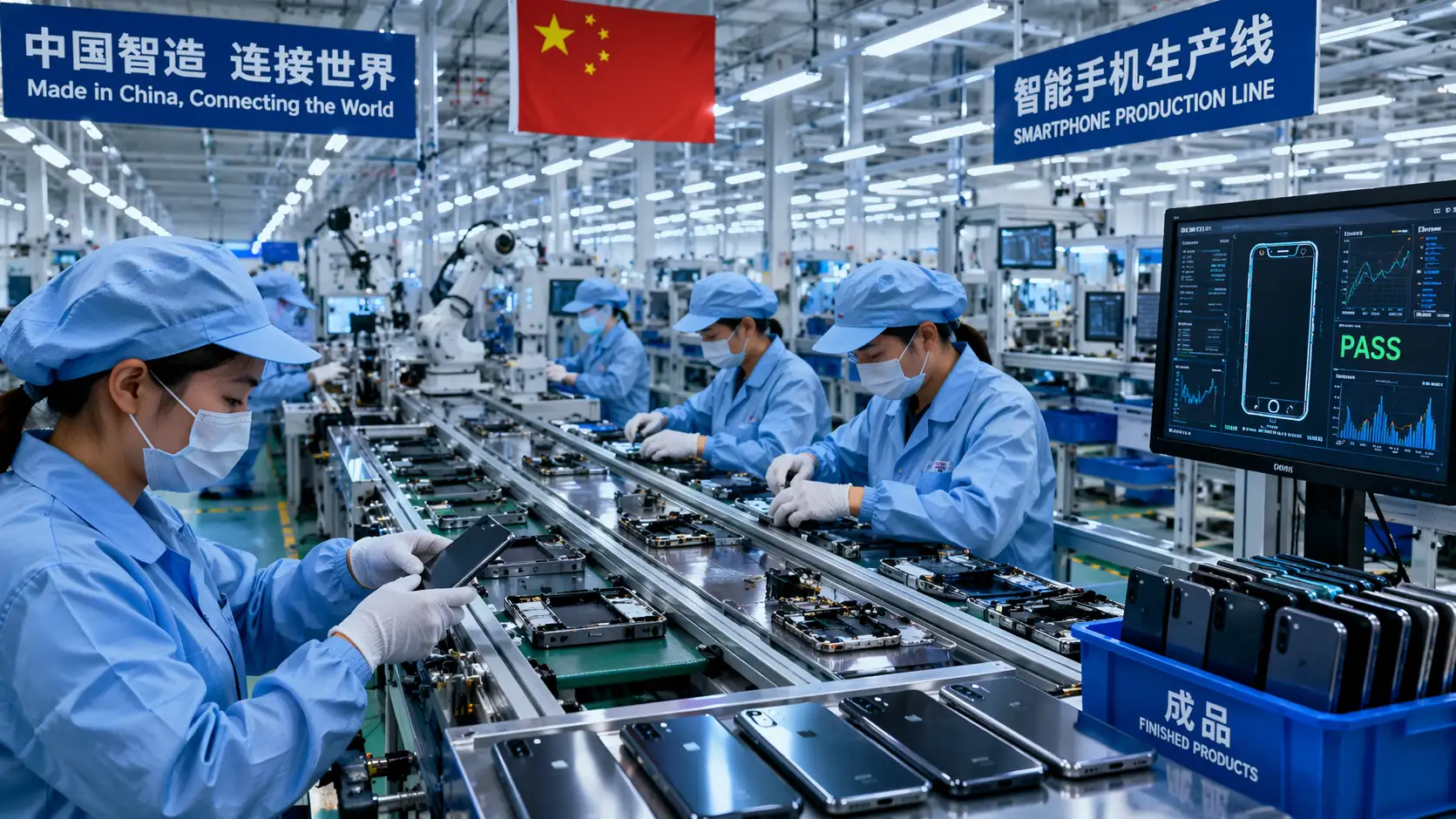
Firstly, China has a deeply integrated supply chain ecosystem and all components like screens, batteries and chips are in close proximity. This reduces costs and speeds up the production cycle.
Secondly, China also has developed a highly skilled workforce experienced in electronics manufacturing. Workers are trained to assemble complex assembly processes with precision.
Thirdly, China’s port, highways and export systems are some of the most advanced in the world. This allows manufacturers to ship millions of devices globally without any delay.
Fourthly, supportive industrial policies, tax incentives and investments in technologies have further strengthened China’s manufacturing base.
While China remains dominant, other countries are gradually increasing their share in smartphone production.India has emerged as a significant player driven by initiatives like ‘ Make In India ’. Global companies are shifting some manufacturing operations to India to diversify supply chain and reduce dependency on China.
Vietnam is also another fast growing manufacturing hub and companies like Samsung have invested heavily in Vietnamese factories, making the country a key exporter of smartphones, particularly to western markets.
With rising labour costs, geopolitical tensions and supply chain disruptions have prompted many companies to explore alternatives. Will this lead to the end of China’s dominance in the near future?
China’s dominance in smartphone manufacturing
China produces more smartphones than any other country by a significant margin. Estimates suggest that 60-70% of the world's smartphones are assembled in China. Cities like Shenzhen, Guangzhou and Zhengzhou have transformed into global manufacturing hubs, often referred to as the ‘Silicon valley of hardware’.
The country’s dominance is driven by a combination of factors like advanced infrastructure, a massive labour force,efficient logistics and strong government support for manufacturing industries. Companies can design, prototype and mass produce devices at remarkably short times while simultaneously being cost effective. Something which few other countries can match.
The role of major smartphone brands
China is not only a manufacturing hub but also home to some of the world’s biggest smartphone brands. Companies like Xiaomi, Oppo and Vivo have expanded globally, contributing significantly to production volumes. Even non Chinese brands rely heavily on Chinese factories.
For example Apple, one of the world’s most valuable company also produces most of its iphones in China due to its large and cheap workforce.
Why China leads the industry
Firstly, China has a deeply integrated supply chain ecosystem and all components like screens, batteries and chips are in close proximity. This reduces costs and speeds up the production cycle.
Secondly, China also has developed a highly skilled workforce experienced in electronics manufacturing. Workers are trained to assemble complex assembly processes with precision.
Thirdly, China’s port, highways and export systems are some of the most advanced in the world. This allows manufacturers to ship millions of devices globally without any delay.
Fourthly, supportive industrial policies, tax incentives and investments in technologies have further strengthened China’s manufacturing base.
Rising competition
While China remains dominant, other countries are gradually increasing their share in smartphone production.India has emerged as a significant player driven by initiatives like ‘ Make In India ’. Global companies are shifting some manufacturing operations to India to diversify supply chain and reduce dependency on China.
Vietnam is also another fast growing manufacturing hub and companies like Samsung have invested heavily in Vietnamese factories, making the country a key exporter of smartphones, particularly to western markets.
With rising labour costs, geopolitical tensions and supply chain disruptions have prompted many companies to explore alternatives. Will this lead to the end of China’s dominance in the near future?
Next Story