
How Public Wi-Fi Can Quietly Expose Your Data, Accounts, and Privacy

Free internet feels harmless. That is exactly why public Wi-Fi has become such a normal part of daily life. You sit down, open your phone or laptop, connect in seconds, and carry on. It feels quick, helpful, and almost invisible. Most people think of it as a simple convenience, something no more serious than plugging in a charger.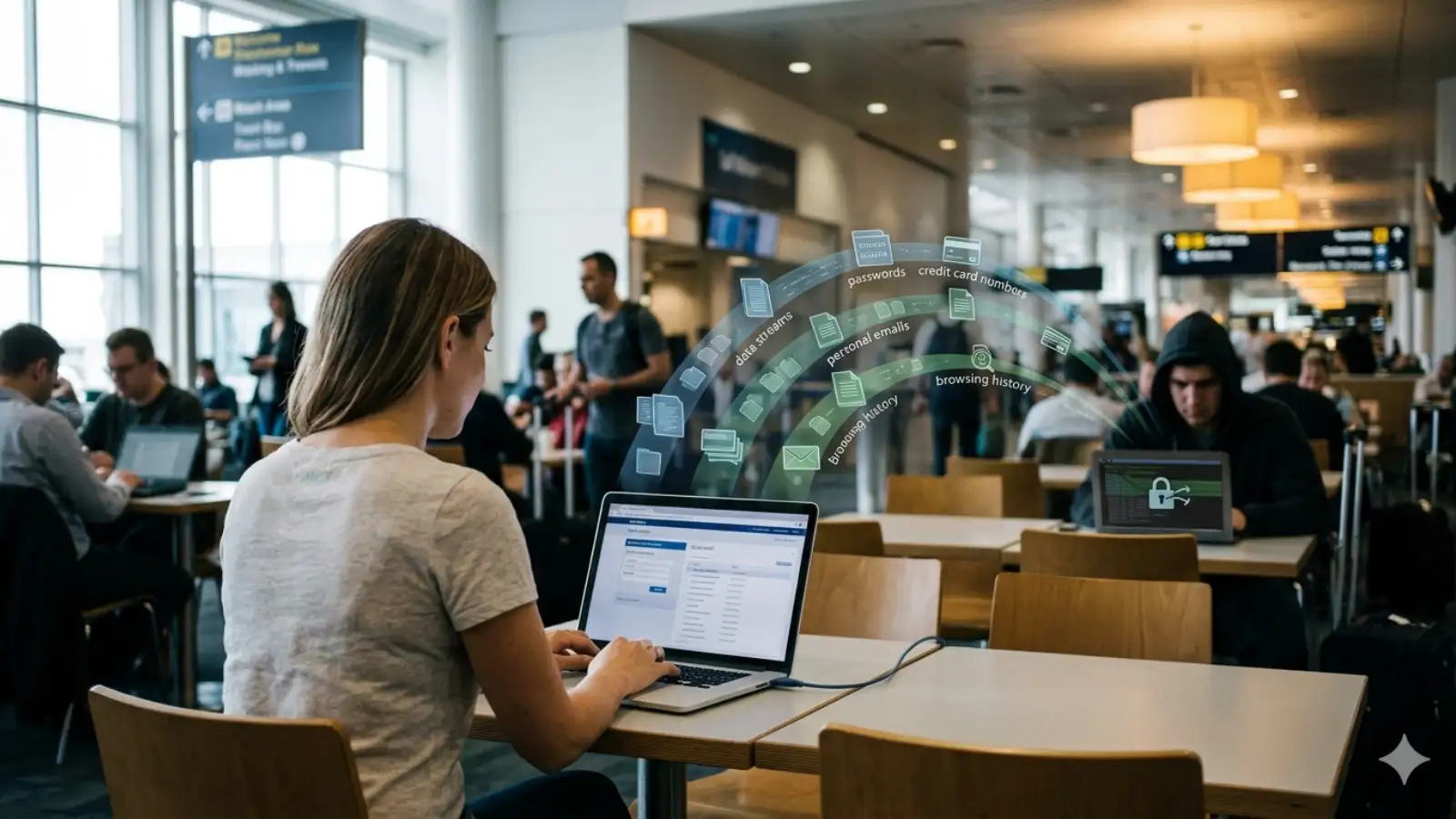
But public Wi-Fi often carries a quiet risk that many people underestimate.
The concern is not only whether someone can see your passwords. The bigger issue is that public networks can reveal far more than that. They can expose your browsing habits, bits of your personal identity, your digital routines, and the tiny patterns that make up your online life.
That matters because privacy is not only about secret information. Privacy is also about control. It is about deciding what parts of your life stay yours.
And when you connect to an unsecured network, that control can become surprisingly weak. Public Wi-Fi networks are often open, shared by strangers, and sometimes poorly protected, which makes data interception and spoofed networks a persistent risk.
When something feels ordinary, it feels safe. A public Wi-Fi login screen looks familiar. A network name looks official. The fact that many other people are connected creates a kind of silent reassurance.
It feels a bit like watching pigeons gather in a city square or sparrows resting on a wire. If everyone else seems comfortable, we assume there is no danger.
But digital comfort can be misleading.
Public Wi-Fi is usually built for convenience first. Security is often not what people notice, ask about, or think about. The average user sees only one thing: internet access.
What they do not see is the invisible traffic moving back and forth between devices, websites, apps, and background services.
That hidden traffic can say a lot.
That is part of the picture, but it is not the whole story.
A lot of information travels quietly in the background whenever you are connected. Your device may communicate with apps, cloud services, notifications, saved accounts, and other online tools. Even when you are not actively typing anything sensitive, digital traces still move.
Those traces can reveal:
Think of it like seeing footprints in the sand. A single footprint tells very little. A long trail tells a story.
That is what makes public Wi-Fi security such an important topic. The issue is often not one big leak. It is many small exposures that slowly build a clearer picture of you.
You are sharing the same digital environment with people you do not know. Some are simply checking messages. Others are streaming videos. Others may be doing nothing unusual at all.
But the reality is simple. The more open the environment, the harder it is to control who is watching, what tools are being used, or how the network itself is managed.
This is where many people misunderstand internet safety.
A Wi-Fi password does not automatically mean strong protection. Sometimes the password only controls entry. It does not always guarantee that traffic inside the network is private or well protected.
That means the risk often exists before you even start doing anything important online.
A network can look legitimate simply because it has a believable name. Most people connect quickly without thinking much about it. After all, Wi-Fi names are not something we usually study carefully.
That is exactly why imitation works.
In many public places, people are moving fast. Attention is divided. Phones connect automatically. Laptops remember previous networks.
A moment of convenience can quietly become a moment of exposure.
And what makes this more concerning is that you usually do not feel anything unusual. There is no alarm. No warning sound. No obvious sign that anything is wrong.
It feels normal.
That is what makes it effective.
In reality, it begins much earlier.
The moment a device connects, it can start exchanging information. Background sync, email refresh, app notifications, cloud backups, account checks, and software updates can all begin quietly.
You may not even notice it happening.
Imagine a fox moving through grass or a deer walking through a forest. The movement is soft, but it still leaves traces.
Your device works in much the same way.
Even when you are not actively doing much, it can still be talking.
That is one reason data privacy matters so much today. Our devices are no longer passive tools. They are active digital companions, constantly sending and receiving information.
Many websites now use encryption. Browsers are better at warning users. Apps are more security-aware than they used to be.
That is good news.
But it does not eliminate the risks of public Wi-Fi.
Modern protection helps shield certain parts of your online activity. It does not always protect everything around it.
Metadata, network behavior, fake access points, session information, and poorly secured apps can still create vulnerabilities. Security researchers still warn that open or weakly secured public networks remain attractive targets because users share the same network space and often trust it too quickly.
In simple terms, stronger locks help. But they do not mean the whole building is impossible to enter.
People are busy.
When the battery is low, when mobile data is running out, when work needs to be done, convenience becomes powerful. The faster choice often wins over the safer choice.
That does not mean people are careless.
It just means daily life moves fast.
And that is why public Wi-Fi risks remain so easy to overlook. The danger rarely feels immediate. It feels abstract. Distant. Something that happens to someone else.
Until it does not.
It starts with awareness.
Knowing that public Wi-Fi is not always private changes the way you use it. It makes you a little more alert. A little less automatic.
That awareness alone matters.
Because online privacy is often less about dramatic cyber threats and more about ordinary habits.
The safest mindset is simple: when you do not control the network, assume the network does not fully protect you.
That small shift in thinking can make a huge difference.
But public Wi-Fi often carries a quiet risk that many people underestimate.
The concern is not only whether someone can see your passwords. The bigger issue is that public networks can reveal far more than that. They can expose your browsing habits, bits of your personal identity, your digital routines, and the tiny patterns that make up your online life.
That matters because privacy is not only about secret information. Privacy is also about control. It is about deciding what parts of your life stay yours.
And when you connect to an unsecured network, that control can become surprisingly weak. Public Wi-Fi networks are often open, shared by strangers, and sometimes poorly protected, which makes data interception and spoofed networks a persistent risk.
Why Public Wi-Fi Feels Safer Than It Really Is
Part of the problem is psychological.When something feels ordinary, it feels safe. A public Wi-Fi login screen looks familiar. A network name looks official. The fact that many other people are connected creates a kind of silent reassurance.
It feels a bit like watching pigeons gather in a city square or sparrows resting on a wire. If everyone else seems comfortable, we assume there is no danger.
But digital comfort can be misleading.
Public Wi-Fi is usually built for convenience first. Security is often not what people notice, ask about, or think about. The average user sees only one thing: internet access.
What they do not see is the invisible traffic moving back and forth between devices, websites, apps, and background services.
That hidden traffic can say a lot.
It Is Not Just Passwords That Can Be Exposed
When people hear about Wi-Fi security, they often think only about stolen passwords.That is part of the picture, but it is not the whole story.
A lot of information travels quietly in the background whenever you are connected. Your device may communicate with apps, cloud services, notifications, saved accounts, and other online tools. Even when you are not actively typing anything sensitive, digital traces still move.
Those traces can reveal:
- what services you use
- how often you use them
- what kind of device you have
- what websites you visit
- when you are active online
- whether you are logged in somewhere already
Think of it like seeing footprints in the sand. A single footprint tells very little. A long trail tells a story.
That is what makes public Wi-Fi security such an important topic. The issue is often not one big leak. It is many small exposures that slowly build a clearer picture of you.
Shared Networks Mean Shared Risk
A public network is exactly that: public.You are sharing the same digital environment with people you do not know. Some are simply checking messages. Others are streaming videos. Others may be doing nothing unusual at all.
But the reality is simple. The more open the environment, the harder it is to control who is watching, what tools are being used, or how the network itself is managed.
This is where many people misunderstand internet safety.
A Wi-Fi password does not automatically mean strong protection. Sometimes the password only controls entry. It does not always guarantee that traffic inside the network is private or well protected.
That means the risk often exists before you even start doing anything important online.
Fake Networks Can Feel Completely Real
One of the more unsettling things about public Wi-Fi is how easy familiarity can be copied.A network can look legitimate simply because it has a believable name. Most people connect quickly without thinking much about it. After all, Wi-Fi names are not something we usually study carefully.
That is exactly why imitation works.
In many public places, people are moving fast. Attention is divided. Phones connect automatically. Laptops remember previous networks.
A moment of convenience can quietly become a moment of exposure.
And what makes this more concerning is that you usually do not feel anything unusual. There is no alarm. No warning sound. No obvious sign that anything is wrong.
It feels normal.
That is what makes it effective.
Your Device May Reveal More Than You Intend
Many people think privacy begins when they open a browser.In reality, it begins much earlier.
The moment a device connects, it can start exchanging information. Background sync, email refresh, app notifications, cloud backups, account checks, and software updates can all begin quietly.
You may not even notice it happening.
Imagine a fox moving through grass or a deer walking through a forest. The movement is soft, but it still leaves traces.
Your device works in much the same way.
Even when you are not actively doing much, it can still be talking.
That is one reason data privacy matters so much today. Our devices are no longer passive tools. They are active digital companions, constantly sending and receiving information.
Why Modern Security Helps, But Does Not Solve Everything
It is true that the internet has become safer in some ways.Many websites now use encryption. Browsers are better at warning users. Apps are more security-aware than they used to be.
That is good news.
But it does not eliminate the risks of public Wi-Fi.
Modern protection helps shield certain parts of your online activity. It does not always protect everything around it.
Metadata, network behavior, fake access points, session information, and poorly secured apps can still create vulnerabilities. Security researchers still warn that open or weakly secured public networks remain attractive targets because users share the same network space and often trust it too quickly.
In simple terms, stronger locks help. But they do not mean the whole building is impossible to enter.
Why Convenience Often Wins
This is probably the most human part of the story.People are busy.
When the battery is low, when mobile data is running out, when work needs to be done, convenience becomes powerful. The faster choice often wins over the safer choice.
That does not mean people are careless.
It just means daily life moves fast.
And that is why public Wi-Fi risks remain so easy to overlook. The danger rarely feels immediate. It feels abstract. Distant. Something that happens to someone else.
Until it does not.
Simple Awareness Changes Everything
The good news is that protecting yourself does not require becoming highly technical.It starts with awareness.
Knowing that public Wi-Fi is not always private changes the way you use it. It makes you a little more alert. A little less automatic.
That awareness alone matters.
Because online privacy is often less about dramatic cyber threats and more about ordinary habits.
The safest mindset is simple: when you do not control the network, assume the network does not fully protect you.
That small shift in thinking can make a huge difference.
Next Story