
Art is a lot of Work: Behind every painting that changes hands lies invisible labour


All life is paperwork. Why would art be any different? The creator might put soul into a piece of art, but for it to have credence as a piece of value, paperwork has to be filled.
Hidden behind each work of art is a network that cranks up to legitimise it, transport it, preserve it and safeguard it. The moment a collector buys a work of art, a silent machinery begins to move. Crates are measured, humidity settings calibrated, paperwork drafted, couriers briefed. A painting that once hung undisturbed on a gallery wall now enters the new, more fragile phase of its life. Art may begin with imagination, but it survives on systems. Behind every painting that changes hands lies a quiet infrastructure of paperwork, logistics, conservation and legal care that determines whether a work can travel, be sold, or endure. As India’s art market grows and collecting becomes more widespread, this invisible labour is emerging as one of the most critical forces shaping art ownership.
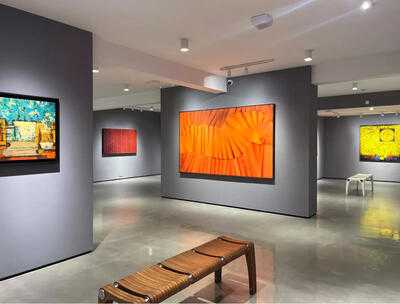
India’s art market is growing steadily with a surge of first-time collectors. Its art auction market touched $144 million ( ₹1,253 crore) in 2023, according to the “State of the Indian Art Market Report FY23” by Grant Thornton Bharat and Indian Art Investor.
As more buyers treat art as wealth, memory and legacy, they are discovering that possessing a work is only half the battle. Owning it is a commitment beyond what is seen.
What emerges from conversations with galleries, auction houses, logistics firms, collectors, craft platforms and art lawyers is a simple truth: the art world runs on invisible labour.
PAPERWORK OF PROVENANCE
Before an artwork moves outside a gallery or an auction house, it must have paperwork that assures that it has a well-documented past. “Documentation should begin even before money changes hands,” says Safir Anand, senior partner & head of trademarks at Noida-based IP law firm Anand & Anand, who works with private collectors, galleries and estates. A collector, he explains, must secure three essentials: a certificate of authenticity, a detailed invoice and a clean provenance chain. Anything less, and future transferability becomes uncertain.
Auction houses echo the same caution. “There is no one-size-fits-all timeline,” says Punya Nagpal, senior vice-resident of Saffronart, where every work undergoes three broad layers of verification— authenticity, condition and legal ownership. “Complex provenance or a long publishing trail naturally takes longer, and if verification risks missing our deadlines, we defer the work to a future sale,” she adds.
It is even more exacting at the auction house Sotheby’s, which routinely moves works across continents. “Every consignment begins with due diligence,” says Manjari Sihare-Sutin, co-worldwide head, modern & contemporary South Asian art at Sotheby’s. Provenance records, exhibition history, literature citations and condition are independently reviewed by specialists and conservation teams. External scholars are looped in when necessary, creating a triangulated review system.
Gaps in provenance appear more frequently within India than outside. “Works held abroad often have institutional documentation. Indian-held works tend to rely on personal letters or informal archives,” says Sihare-Sutin. The challenge, then, is not just paperwork but “credibility and context”. Things are changing. Galleries, too, are standardising their systems.
Eikowa, an art gallery with presence in Hyderabad and Gurgaon, has started issuing blockchain certificates for every sale, a tamper-proof digital record of authenticity and transaction history. “It helps create traceability in an ecosystem that still lacks a unified provenance standard,” says its founder, Vaishnavi Murali.
Works with partial or informal documentation undergo far deeper scrutiny, often requiring external scholars. This is why for those looking to re-sell their art collection, the secondary market has created opportunity but has also exposed vulnerabilities.
Auction houses emphasise that the burden of proof lies with the seller.
That is why for works sold privately—to another collector, through a gallery, or via advisors—a professional appraiser becomes indispensable.
Such valuation is not merely about a number. It sets expectations, informs insurance and determines whether the work should be restored, conserved, or left untouched before sale.
IN TRANSIT
Once the paperwork is cleared, the artwork enters its most physically vulnerable stage—transportation. Moving teacups is easy. Moving a canvas worth crores in monsoon humidity is not.
Galleries like Bruno Art Gallery treat this phase as a high-risk operation. “Every piece undergoes a thorough condition check, with photographs and a signed report before it leaves us,” says Akshitta Aggarwal, gallery director at Bruno Art Group. Art works are then packed using acidfree tissue, custom crates and climate-stable cushioning, and transported only with trained logistics professionals.
Cratingo, a Delhi-based art handling company, breaks down the movement more technically: Prep begins with condition documentation, followed by selecting the packing method —soft-packing, crating, or climate-controlled casing —and route planning.
High-value works often require “redundant climate systems and live thermal monitoring” especially during interstate movement. Once at the destination, the team conducts mounting checks, environmental assessments and post-installation condition reports.
The challenges are rarely predictable. In one instance, a sudden heat spike during a long transfer forced Cratingo to recalibrate climate controls midroute and wrap the crate in emergency insulation. The incident, the team says, reinforced why every movement must be backed by contingency systems.
“Moving a heritage artwork isn’t logistics, it is conservation in motion,” says Aakanksha Singh, founder, Bridge Bharat, a platform that co-creates contemporary works with India’s last-generation master artists. “We once transported a 12-ft-long natural-dye textile during peak humidity. We built a humidity-absorbing archival crate, rolled the textile in museum-safe materials, monitored climate in real time and had a conservator inspect it on arrival. The craft is delicate, so the systems around it must be incredibly strong.”
Airports, perhaps the most high-risk spaces for exquisite craft, follow their own protocols. “Transporting art is not a shipment, it is a responsibility,” says Naresh Sharma, CEO of IRHPL Group, a travel retail organisation. Its Delhi-based store Artport sells art, craft and souvenirs. Fragile pieces like Kangra miniatures or marble dust idols are often hand-carried by trained staff rather than shipped. Each piece carries its own documentation packet containing authenticity certificates, provenance, condition reports and a cultural story card.
All this has grown quietly alongside India’s art market boom. According to industry estimates, specialised art logistics in India has grown 3.5 times in the last decade, driven by rising private collections, gallery expansions and international consignments.
HOMECOMING
If transport tests an artwork’s physical resilience, installation tests the collector’s commitment. Installation is where ownership becomes personal.
Delhi’s Tarun Art Gallery stresses the role of the wall itself. “Plain walls are preferred so that textures don’t conflict with the artwork, and diffused warm lighting is best,” says Tarun Sharma, director, Tarun Art Gallery. Humidity remains the silent enemy, capable of causing mould, fungus and colour shifts if left unchecked.
Collectors today are more willing to rotate displays, rethink arrangements and treat their homes as evolving curated spaces. Aggarwal says, “The idea of keeping a work forever in one corner is losing appeal.”
Art patron and collector Shalini Passi captures this shift: “Not every work needs to be on view all the time. I rotate pieces depending on mood, light, even the season.”
“A serious collection is a living ecosystem,” says Passi, who has spent decades building a private collection. “It demands constant attention like ideal temperature, humidity, condition checks and professional restoration when required.”
Installation of sculptures demands an entirely different kind of structural, spatial and sometimes architectural outlook.
A Subodh Gupta sculpture had to be lifted over the boundary wall with a crane because it could not pass through Passi’s gate. The base area of her garden was reinforced with concrete to hold the installation, followed by regular DuPont coating to preserve the material—an example of how sculptures don’t just sit in a space but reshape it.
Passi’s reference to “ecosystem” isn’t a metaphor. Art handlers say an Indian home is loaded with risks most collectors don’t notice —like hanging a painting near an AC vent, exposing a paper work to harsh lighting, or placing a sculpture in a high-traffic corridor. Cratingo lists the big three: direct sunlight, humidity and heat-emitting fixtures.
Aggarwal observes that first time buyers are often shocked by how simple choices like wall colour, light temperature, even furniture proximity can transform an artwork’s character.
“Most collectors see a heritage piece as decor, but they underestimate what begins after the sale: natural dyes fade, wood breathes, metals oxidise, textiles need rotation. Most damage happens quietly in the first year, long before anyone notices. Ownership isn’t display, it is stewardship,” says Singh of Bridge Bharat.
Different mediums age differently. Sharma of Tarun Art Gallery says acrylic works can be lightly cleaned with damp cloth, but oils must not be touched with moisture. Older oils may require professional varnishing or surface cleaning by restoration experts.
Artport rotates textiles to prevent light exposure and conducts routine condition checks because natural materials respond differently to regional climates. Wood from humid South India may crack in a dry northern terminal; pashmina weaves need humidity-stable vitrines.
Across the market, conservators increasingly play the role of first responders. At Saffronart, even before a work is listed, conservators assess the piece and suggest whether it needs stabilisation or touch-ups. Any intervention, Nagpal stresses, is “preventive, not aesthetic — to preserve a work’s stability and intent, never to alter its appearance”.
LEGAL LEGACY
If collection and maintenance are the physical backbone of ownership, paperwork is the legal spine. In India, that spine is often fragile.
Most disputes arise because buyers hold “framed beauties” but lack paperwork. Several art works, Anand notes, are “lost in estates” simply because heirs cannot identify their true value or origin. A structured private art registry with a listing of condition reports, valuations, provenance and transaction records is the only way to ensure clarity.
Then there is the Indian tax law, under which art is treated not as decor but as a capital asset akin to jewellery or antiques. Collectors should know that:
■ Long-term capital gains apply on sale.
■ There is no inheritance tax, but heirs incur tax when they sell art.
■ Gift tax applies if art above a threshold value is gifted to a non-relative.
■ Import duties and GST apply on artwork being brought into the country
Next up, a clean transfer in a will must list each artwork individually with medium, title, dimensions and intended heir. Probate formalises the transfer and heirs must subsequently execute an acknowledgment deed and update insurance and storage records.
In Indian families, where multiple homes, multiple owners and multiple memories intersect, this chain of clarity is essential.
For a growing art market like India, the future of collecting art may not be defined by what people buy, but by how well they care for it.
Hidden behind each work of art is a network that cranks up to legitimise it, transport it, preserve it and safeguard it. The moment a collector buys a work of art, a silent machinery begins to move. Crates are measured, humidity settings calibrated, paperwork drafted, couriers briefed. A painting that once hung undisturbed on a gallery wall now enters the new, more fragile phase of its life. Art may begin with imagination, but it survives on systems. Behind every painting that changes hands lies a quiet infrastructure of paperwork, logistics, conservation and legal care that determines whether a work can travel, be sold, or endure. As India’s art market grows and collecting becomes more widespread, this invisible labour is emerging as one of the most critical forces shaping art ownership.
India’s art market is growing steadily with a surge of first-time collectors. Its art auction market touched $144 million ( ₹1,253 crore) in 2023, according to the “State of the Indian Art Market Report FY23” by Grant Thornton Bharat and Indian Art Investor.
As more buyers treat art as wealth, memory and legacy, they are discovering that possessing a work is only half the battle. Owning it is a commitment beyond what is seen.
What emerges from conversations with galleries, auction houses, logistics firms, collectors, craft platforms and art lawyers is a simple truth: the art world runs on invisible labour.
PAPERWORK OF PROVENANCE
Before an artwork moves outside a gallery or an auction house, it must have paperwork that assures that it has a well-documented past. “Documentation should begin even before money changes hands,” says Safir Anand, senior partner & head of trademarks at Noida-based IP law firm Anand & Anand, who works with private collectors, galleries and estates. A collector, he explains, must secure three essentials: a certificate of authenticity, a detailed invoice and a clean provenance chain. Anything less, and future transferability becomes uncertain.
Auction houses echo the same caution. “There is no one-size-fits-all timeline,” says Punya Nagpal, senior vice-resident of Saffronart, where every work undergoes three broad layers of verification— authenticity, condition and legal ownership. “Complex provenance or a long publishing trail naturally takes longer, and if verification risks missing our deadlines, we defer the work to a future sale,” she adds.
It is even more exacting at the auction house Sotheby’s, which routinely moves works across continents. “Every consignment begins with due diligence,” says Manjari Sihare-Sutin, co-worldwide head, modern & contemporary South Asian art at Sotheby’s. Provenance records, exhibition history, literature citations and condition are independently reviewed by specialists and conservation teams. External scholars are looped in when necessary, creating a triangulated review system.
Gaps in provenance appear more frequently within India than outside. “Works held abroad often have institutional documentation. Indian-held works tend to rely on personal letters or informal archives,” says Sihare-Sutin. The challenge, then, is not just paperwork but “credibility and context”. Things are changing. Galleries, too, are standardising their systems.
Eikowa, an art gallery with presence in Hyderabad and Gurgaon, has started issuing blockchain certificates for every sale, a tamper-proof digital record of authenticity and transaction history. “It helps create traceability in an ecosystem that still lacks a unified provenance standard,” says its founder, Vaishnavi Murali.
Works with partial or informal documentation undergo far deeper scrutiny, often requiring external scholars. This is why for those looking to re-sell their art collection, the secondary market has created opportunity but has also exposed vulnerabilities.
That is why for works sold privately—to another collector, through a gallery, or via advisors—a professional appraiser becomes indispensable.
Such valuation is not merely about a number. It sets expectations, informs insurance and determines whether the work should be restored, conserved, or left untouched before sale.
IN TRANSIT
Once the paperwork is cleared, the artwork enters its most physically vulnerable stage—transportation. Moving teacups is easy. Moving a canvas worth crores in monsoon humidity is not.
Galleries like Bruno Art Gallery treat this phase as a high-risk operation. “Every piece undergoes a thorough condition check, with photographs and a signed report before it leaves us,” says Akshitta Aggarwal, gallery director at Bruno Art Group. Art works are then packed using acidfree tissue, custom crates and climate-stable cushioning, and transported only with trained logistics professionals.
Cratingo, a Delhi-based art handling company, breaks down the movement more technically: Prep begins with condition documentation, followed by selecting the packing method —soft-packing, crating, or climate-controlled casing —and route planning.
High-value works often require “redundant climate systems and live thermal monitoring” especially during interstate movement. Once at the destination, the team conducts mounting checks, environmental assessments and post-installation condition reports.
The challenges are rarely predictable. In one instance, a sudden heat spike during a long transfer forced Cratingo to recalibrate climate controls midroute and wrap the crate in emergency insulation. The incident, the team says, reinforced why every movement must be backed by contingency systems.
“Moving a heritage artwork isn’t logistics, it is conservation in motion,” says Aakanksha Singh, founder, Bridge Bharat, a platform that co-creates contemporary works with India’s last-generation master artists. “We once transported a 12-ft-long natural-dye textile during peak humidity. We built a humidity-absorbing archival crate, rolled the textile in museum-safe materials, monitored climate in real time and had a conservator inspect it on arrival. The craft is delicate, so the systems around it must be incredibly strong.”
Airports, perhaps the most high-risk spaces for exquisite craft, follow their own protocols. “Transporting art is not a shipment, it is a responsibility,” says Naresh Sharma, CEO of IRHPL Group, a travel retail organisation. Its Delhi-based store Artport sells art, craft and souvenirs. Fragile pieces like Kangra miniatures or marble dust idols are often hand-carried by trained staff rather than shipped. Each piece carries its own documentation packet containing authenticity certificates, provenance, condition reports and a cultural story card.
All this has grown quietly alongside India’s art market boom. According to industry estimates, specialised art logistics in India has grown 3.5 times in the last decade, driven by rising private collections, gallery expansions and international consignments.
HOMECOMING
If transport tests an artwork’s physical resilience, installation tests the collector’s commitment. Installation is where ownership becomes personal.
Delhi’s Tarun Art Gallery stresses the role of the wall itself. “Plain walls are preferred so that textures don’t conflict with the artwork, and diffused warm lighting is best,” says Tarun Sharma, director, Tarun Art Gallery. Humidity remains the silent enemy, capable of causing mould, fungus and colour shifts if left unchecked.
Collectors today are more willing to rotate displays, rethink arrangements and treat their homes as evolving curated spaces. Aggarwal says, “The idea of keeping a work forever in one corner is losing appeal.”
Art patron and collector Shalini Passi captures this shift: “Not every work needs to be on view all the time. I rotate pieces depending on mood, light, even the season.”
“A serious collection is a living ecosystem,” says Passi, who has spent decades building a private collection. “It demands constant attention like ideal temperature, humidity, condition checks and professional restoration when required.”
Installation of sculptures demands an entirely different kind of structural, spatial and sometimes architectural outlook.
A Subodh Gupta sculpture had to be lifted over the boundary wall with a crane because it could not pass through Passi’s gate. The base area of her garden was reinforced with concrete to hold the installation, followed by regular DuPont coating to preserve the material—an example of how sculptures don’t just sit in a space but reshape it.
Passi’s reference to “ecosystem” isn’t a metaphor. Art handlers say an Indian home is loaded with risks most collectors don’t notice —like hanging a painting near an AC vent, exposing a paper work to harsh lighting, or placing a sculpture in a high-traffic corridor. Cratingo lists the big three: direct sunlight, humidity and heat-emitting fixtures.
Aggarwal observes that first time buyers are often shocked by how simple choices like wall colour, light temperature, even furniture proximity can transform an artwork’s character.
“Most collectors see a heritage piece as decor, but they underestimate what begins after the sale: natural dyes fade, wood breathes, metals oxidise, textiles need rotation. Most damage happens quietly in the first year, long before anyone notices. Ownership isn’t display, it is stewardship,” says Singh of Bridge Bharat.
Different mediums age differently. Sharma of Tarun Art Gallery says acrylic works can be lightly cleaned with damp cloth, but oils must not be touched with moisture. Older oils may require professional varnishing or surface cleaning by restoration experts.
Artport rotates textiles to prevent light exposure and conducts routine condition checks because natural materials respond differently to regional climates. Wood from humid South India may crack in a dry northern terminal; pashmina weaves need humidity-stable vitrines.
Across the market, conservators increasingly play the role of first responders. At Saffronart, even before a work is listed, conservators assess the piece and suggest whether it needs stabilisation or touch-ups. Any intervention, Nagpal stresses, is “preventive, not aesthetic — to preserve a work’s stability and intent, never to alter its appearance”.
LEGAL LEGACY
If collection and maintenance are the physical backbone of ownership, paperwork is the legal spine. In India, that spine is often fragile.
Most disputes arise because buyers hold “framed beauties” but lack paperwork. Several art works, Anand notes, are “lost in estates” simply because heirs cannot identify their true value or origin. A structured private art registry with a listing of condition reports, valuations, provenance and transaction records is the only way to ensure clarity.
Then there is the Indian tax law, under which art is treated not as decor but as a capital asset akin to jewellery or antiques. Collectors should know that:
■ Long-term capital gains apply on sale.
■ There is no inheritance tax, but heirs incur tax when they sell art.
■ Gift tax applies if art above a threshold value is gifted to a non-relative.
■ Import duties and GST apply on artwork being brought into the country
In Indian families, where multiple homes, multiple owners and multiple memories intersect, this chain of clarity is essential.
Next Story