
Gulf economies at risk of worst slump since 1990s on Iran war


The Iran war threatens to deal significant blows to the Gulf’s biggest economies, including Saudi Arabia, the United Arab Emirates and Qatar, if it doesn’t end soon.
Qatar and Kuwait could each see their gross domestic product contract by 14% this year should the conflict continue through April, resulting in a two-month halt of the Strait of Hormuz, according to Goldman Sachs Group Inc. economist Farouk Soussa.
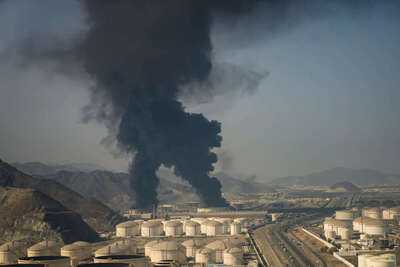
That’d be the worst economic slump for those countries since the early 1990s, when Iraq’s invasion of Kuwait triggered the Gulf War and sparked turmoil in global oil markets.
ALSO READ: Trump presses seven nations to deploy warships for Hormuz security as oil prices surge amid Iran war
Saudi Arabia and the UAE would fare better given their ability to re-route oil flows away from critical Hormuz waterway, but would still likely see GDP drop by about 3% and 5%, respectively, in the biggest economic hit since the pandemic in 2020.
“For many Gulf economies, the war could have a bigger near-term impact than Covid,” said Soussa, Goldman’s economist for the Middle East and North Africa. “When the dust settles they will rebuild and they will recover, but the scars this conflict leaves on confidence remain to be seen.”
ALSO READ: Trump says 'we're talking' to Iran but it's not 'ready' for deal to end war
The view underscores how the war in the Middle East has created a nightmare scenario for Arab Gulf states, who face a double-whammy of damages to both the oil and non-oil sectors.
The conflict showed little sign of easing in its third week, with Iran continuing to strike neighbors across the region in retaliation for US and Israeli bombings.
The US hit military sites on Iran’s crude export hub of Kharg Island over the weekend and warned it will target energy facilities if Tehran continues to disrupt traffic in Hormuz, the conduit through which about a fifth of the world’s oil exports flow.
Brent crude topped $103 a barrel on Friday amid the Hormuz halt and oil output shut-ins by countries including Saudi Arabia and the UAE.
Global gas markets have also been upended by a collapse in Qatar’s LNG exports, while Bahrain has started cutting output at the world’s top aluminum smelter in part due to the Hormuz halt.
Such disruptions, if prolonged, may inflict the most damage on the oil economies of Qatar, Kuwait and Bahrain, according to Soussa.
The picture is more nuanced for Saudi Arabia and the UAE, which can export crude via alternative routes and should be helped by oil’s price spike, said economists including EFG Hermes’ Mohamed Abu Basha and Justin Alexander at Khalij Economics.
When it comes to the non-oil sector, the pain may be more widespread for Gulf nations as everything from real estate to tourism and investment are affected.
Saudi Arabia may fare best through a protracted war, according to the half-dozen economists who spoke to Bloomberg. The kingdom continues to thwart most Iranian strikes, while airspace and businesses remain open with limited disruptions.
Should that continue, the country’s biggest near-term risk may be a deeper first-quarter fiscal deficit due to lower revenues, according to Abu Dhabi Commercial Bank’s Monica Malik and Azad Zangana at Oxford Economics.
For 2026, Saudi Arabia may actually outperform by posting a smaller shortfall than predicted before the war — if oil prices and exports stay elevated, most of the economists that spoke to Bloomberg said.
Tim Callen, a visiting scholar at the Arab Gulf States Institute in Washington, sees the annual budget deficit shrinking by 1% should Saudi Arabia’s oil output average about 7.5 million daily barrels and Brent stays in the $90 range.
The Saudi government has forecast a shortfall of 3.3% for 2026.
Elsewhere, the UAE is still expected to post a budget surplus for this year, while Qatar’s deficit could widen, according to Abu Basha at EFG Hermes.
Gulf economies may continue to turn to debt markets to alleviate fiscal pressure. Bond investors aren’t yet indicating concern about the ramifications of the war on regional finances, according to Fady Gendy, a portfolio manager at Arqaam Capital.
“It’d be a concern if the conflict simmers on for a prolonged period, which is not what is currently priced into the market.”
Qatar and Kuwait could each see their gross domestic product contract by 14% this year should the conflict continue through April, resulting in a two-month halt of the Strait of Hormuz, according to Goldman Sachs Group Inc. economist Farouk Soussa.
That’d be the worst economic slump for those countries since the early 1990s, when Iraq’s invasion of Kuwait triggered the Gulf War and sparked turmoil in global oil markets.
ALSO READ: Trump presses seven nations to deploy warships for Hormuz security as oil prices surge amid Iran war
Saudi Arabia and the UAE would fare better given their ability to re-route oil flows away from critical Hormuz waterway, but would still likely see GDP drop by about 3% and 5%, respectively, in the biggest economic hit since the pandemic in 2020.
“For many Gulf economies, the war could have a bigger near-term impact than Covid,” said Soussa, Goldman’s economist for the Middle East and North Africa. “When the dust settles they will rebuild and they will recover, but the scars this conflict leaves on confidence remain to be seen.”
ALSO READ: Trump says 'we're talking' to Iran but it's not 'ready' for deal to end war
The view underscores how the war in the Middle East has created a nightmare scenario for Arab Gulf states, who face a double-whammy of damages to both the oil and non-oil sectors.
The conflict showed little sign of easing in its third week, with Iran continuing to strike neighbors across the region in retaliation for US and Israeli bombings.
The US hit military sites on Iran’s crude export hub of Kharg Island over the weekend and warned it will target energy facilities if Tehran continues to disrupt traffic in Hormuz, the conduit through which about a fifth of the world’s oil exports flow.
Brent crude topped $103 a barrel on Friday amid the Hormuz halt and oil output shut-ins by countries including Saudi Arabia and the UAE.
Global gas markets have also been upended by a collapse in Qatar’s LNG exports, while Bahrain has started cutting output at the world’s top aluminum smelter in part due to the Hormuz halt.
Such disruptions, if prolonged, may inflict the most damage on the oil economies of Qatar, Kuwait and Bahrain, according to Soussa.
The picture is more nuanced for Saudi Arabia and the UAE, which can export crude via alternative routes and should be helped by oil’s price spike, said economists including EFG Hermes’ Mohamed Abu Basha and Justin Alexander at Khalij Economics.
When it comes to the non-oil sector, the pain may be more widespread for Gulf nations as everything from real estate to tourism and investment are affected.
Saudi Arabia may fare best through a protracted war, according to the half-dozen economists who spoke to Bloomberg. The kingdom continues to thwart most Iranian strikes, while airspace and businesses remain open with limited disruptions.
Should that continue, the country’s biggest near-term risk may be a deeper first-quarter fiscal deficit due to lower revenues, according to Abu Dhabi Commercial Bank’s Monica Malik and Azad Zangana at Oxford Economics.
For 2026, Saudi Arabia may actually outperform by posting a smaller shortfall than predicted before the war — if oil prices and exports stay elevated, most of the economists that spoke to Bloomberg said.
Tim Callen, a visiting scholar at the Arab Gulf States Institute in Washington, sees the annual budget deficit shrinking by 1% should Saudi Arabia’s oil output average about 7.5 million daily barrels and Brent stays in the $90 range.
The Saudi government has forecast a shortfall of 3.3% for 2026.
Elsewhere, the UAE is still expected to post a budget surplus for this year, while Qatar’s deficit could widen, according to Abu Basha at EFG Hermes.
Gulf economies may continue to turn to debt markets to alleviate fiscal pressure. Bond investors aren’t yet indicating concern about the ramifications of the war on regional finances, according to Fady Gendy, a portfolio manager at Arqaam Capital.
“It’d be a concern if the conflict simmers on for a prolonged period, which is not what is currently priced into the market.”
Next Story