
How a simple waterfall adventure taught Mumbai woman the real meaning of being alive: 'We just buried it under being sensible.'


We lose the joy and innocence of childhood as we grow up. Remember the time when simple things made us happy? Skipping school on a rainy day, gathering around candles and listening to horror stories during loadshedding and sneaking out of our homes secretly to play with our friends, only to return with our clothes all dirty, mud on our faces and perhaps a knee bruise. But as we stepped into adulthood, this carefree living slowly disappeared under the mound of responsibilities. We became overly cautious, thinking twice about consequences and too reliant on routines, lest anything happen to us.
Waterfall moment sparks deeper realisation
Recently, Mumbai-based woman Keerthika Govindhasamy shared a similar story on LinkedIn, where she talked about how a group trip to a waterfall in Kodaikanal, Tamil Nadu, drove her to the deep realisation that, as adults and working professionals, we have lost the ability to love in the moment and what being ‘alive’ truly means.
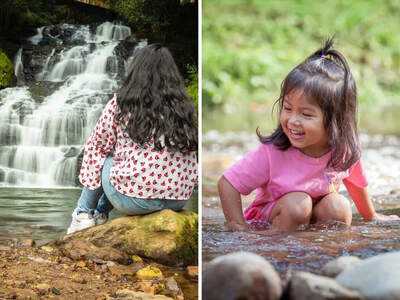
In her post, Govindhasamy admitted that visiting the waterfall would have felt entirely different in childhood. She wrote that while her younger self would have jumped into the cascading water with excitement, her adult self initially chose to sit by the side. Among the group she was travelling with, she noticed she was the only one eager to step in, while others held back, each citing practical concerns aka wet clothes, dirty shoes, or general discomfort.
When practicality replaces spontaneity
What struck her most was the irony of the situation: people hesitating to fully experience the very place they had travelled to see. Yet, she admitted that she, too, was not entirely free from the same mindset. Although she eventually stepped into the water, spent some time playing around, and even enjoyed the surroundings, the experience felt restrained. It was, in her words, merely ‘decent’, which was a stark contrast to the overwhelming joy such a moment would have brought in childhood.
Reflecting further, the woman pointed out how adulthood often turns spontaneous experiences into calculated decisions. Instead of immersing herself fully, she found her thoughts occupied with practicalities like how cold the water was, whether she had spare clothes, if her phone would be safe, and how much time was left before leaving. She realised that she was being filtered through a checklist rather than living wholeheartedly.
Why adults forget how to feel fully alive
Govindhasamy went on to explain that this shift does not happen overnight. Rather, it builds gradually over the years through constant caution: being told not to jump in puddles, avoid getting wet in the rain, or stay away from dirt. Over time, these small restrictions accumulate, conditioning adults to prioritise comfort and control over spontaneity and joy. She questioned whether this gradual loss of excitement contributes to the heaviness people often feel in their daily lives.
The woman concluded her post with a simple yet striking thought: while responsibilities are inevitable, perhaps the real loss lies in forgetting how to fully embrace a moment. Sometimes, it may be worth letting go because while clothes can dry and shoes can be cleaned, the feeling of being truly present is far harder to reclaim once lost.
Waterfall moment sparks deeper realisation
Recently, Mumbai-based woman Keerthika Govindhasamy shared a similar story on LinkedIn, where she talked about how a group trip to a waterfall in Kodaikanal, Tamil Nadu, drove her to the deep realisation that, as adults and working professionals, we have lost the ability to love in the moment and what being ‘alive’ truly means.
In her post, Govindhasamy admitted that visiting the waterfall would have felt entirely different in childhood. She wrote that while her younger self would have jumped into the cascading water with excitement, her adult self initially chose to sit by the side. Among the group she was travelling with, she noticed she was the only one eager to step in, while others held back, each citing practical concerns aka wet clothes, dirty shoes, or general discomfort.
When practicality replaces spontaneity
What struck her most was the irony of the situation: people hesitating to fully experience the very place they had travelled to see. Yet, she admitted that she, too, was not entirely free from the same mindset. Although she eventually stepped into the water, spent some time playing around, and even enjoyed the surroundings, the experience felt restrained. It was, in her words, merely ‘decent’, which was a stark contrast to the overwhelming joy such a moment would have brought in childhood.
Reflecting further, the woman pointed out how adulthood often turns spontaneous experiences into calculated decisions. Instead of immersing herself fully, she found her thoughts occupied with practicalities like how cold the water was, whether she had spare clothes, if her phone would be safe, and how much time was left before leaving. She realised that she was being filtered through a checklist rather than living wholeheartedly.
Why adults forget how to feel fully alive
Govindhasamy went on to explain that this shift does not happen overnight. Rather, it builds gradually over the years through constant caution: being told not to jump in puddles, avoid getting wet in the rain, or stay away from dirt. Over time, these small restrictions accumulate, conditioning adults to prioritise comfort and control over spontaneity and joy. She questioned whether this gradual loss of excitement contributes to the heaviness people often feel in their daily lives.
The woman concluded her post with a simple yet striking thought: while responsibilities are inevitable, perhaps the real loss lies in forgetting how to fully embrace a moment. Sometimes, it may be worth letting go because while clothes can dry and shoes can be cleaned, the feeling of being truly present is far harder to reclaim once lost.
Next Story