
16,000-Year-Old Forest Found Beneath the North Sea, Scientists Reveal Stunning Details

A fascinating discovery beneath the North Sea is reshaping our understanding of ancient Europe. Scientists have uncovered evidence of a vast prehistoric forest buried deep under the seabed, offering a rare look into life that existed around 16,000 years ago.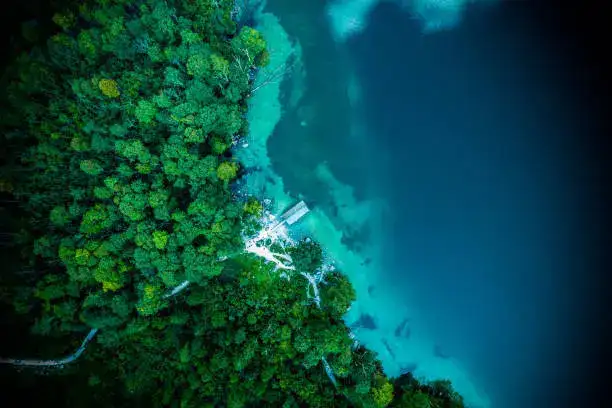
This lost landscape, known as Doggerland, was once a thriving region connecting Britain to mainland Europe. Far from being empty or barren, it now appears to have been rich in plant life, wildlife, and possibly early human activity.
A Forest Hidden for Thousands of Years
The discovery was made using advanced analysis of sedimentary ancient DNA collected from the seabed. By studying tiny traces of genetic material preserved in sediments, researchers were able to reconstruct what the environment looked like thousands of years ago.
The results revealed dense forests filled with trees such as oak, elm, and hazel. These findings challenge earlier assumptions that northern Europe remained largely frozen and lifeless during the later stages of the Ice Age.
A Safe Haven During Harsh Climate Conditions
One of the most important insights from this research is that Doggerland likely acted as a refuge during the last Ice Age. While glaciers covered large parts of Europe, this region appears to have maintained milder conditions that allowed life to continue.
Plants, animals, and possibly early human groups could have survived here when other areas became uninhabitable. This makes Doggerland a key piece in understanding how ecosystems adapted to extreme climate changes.
Unexpected Plant Survival
Scientists also found DNA from plant species that were believed to have vanished from the region hundreds of thousands of years earlier. This includes members of the walnut family, which were not expected to be present during this period.
These surprising findings suggest the existence of small, protected zones where certain species managed to survive for much longer than previously thought. Such areas highlight the resilience of nature even during dramatic environmental shifts.
More Than a Simple Land Bridge
For years, Doggerland was considered just a temporary land connection between Britain and Europe. However, new evidence paints a very different picture.
The region seems to have been a fertile and stable environment with complex ecosystems. The presence of tree species like lime earlier than expected indicates that the climate here was relatively mild and capable of supporting diverse plant life.
This suggests that Doggerland was not just a passageway but a significant ecological and possibly cultural centre.
Clues About Early Human Life
The rich environment of Doggerland could have supported early human populations by providing essential resources such as food, water, and shelter. Forests would have offered materials for tools and protection from harsh weather.
Researchers believe this may explain why early human evidence in parts of Britain is limited. Many ancient settlements could now be submerged beneath the North Sea, hidden from traditional archaeological exploration.
Rethinking Europe’s Post-Ice Age History
This discovery is also changing how scientists view the recovery of forests in Europe after the last glacial period. Instead of forests spreading only after the ice retreated, some ecosystems may have survived continuously in places like Doggerland.
Further research suggests that parts of this landscape remained above water even after major natural events, including powerful tsunamis, and may have been habitable until around 7,000 years ago before finally being submerged by rising sea levels.
A New Era of Scientific Discovery
The use of sedimentary DNA analysis is opening new doors in the study of ancient environments. Compared to traditional methods like pollen analysis, this approach provides more detailed and accurate insights into past ecosystems.
It also offers hope that scientists may one day identify specific locations where early humans lived, even in areas now covered by water.
The discovery of a prehistoric forest beneath the North Sea is a powerful reminder of how much of Earth’s history remains hidden. It reveals a world where forests thrived, animals roamed, and humans may have lived in harmony with nature long before modern times.
As research continues, Doggerland could unlock even more secrets about climate change, survival, and the deep history of life in Europe.
This lost landscape, known as Doggerland, was once a thriving region connecting Britain to mainland Europe. Far from being empty or barren, it now appears to have been rich in plant life, wildlife, and possibly early human activity.
A Forest Hidden for Thousands of Years
The discovery was made using advanced analysis of sedimentary ancient DNA collected from the seabed. By studying tiny traces of genetic material preserved in sediments, researchers were able to reconstruct what the environment looked like thousands of years ago.The results revealed dense forests filled with trees such as oak, elm, and hazel. These findings challenge earlier assumptions that northern Europe remained largely frozen and lifeless during the later stages of the Ice Age.
A Safe Haven During Harsh Climate Conditions
One of the most important insights from this research is that Doggerland likely acted as a refuge during the last Ice Age. While glaciers covered large parts of Europe, this region appears to have maintained milder conditions that allowed life to continue.Plants, animals, and possibly early human groups could have survived here when other areas became uninhabitable. This makes Doggerland a key piece in understanding how ecosystems adapted to extreme climate changes.
Unexpected Plant Survival
Scientists also found DNA from plant species that were believed to have vanished from the region hundreds of thousands of years earlier. This includes members of the walnut family, which were not expected to be present during this period. These surprising findings suggest the existence of small, protected zones where certain species managed to survive for much longer than previously thought. Such areas highlight the resilience of nature even during dramatic environmental shifts.
More Than a Simple Land Bridge
For years, Doggerland was considered just a temporary land connection between Britain and Europe. However, new evidence paints a very different picture.The region seems to have been a fertile and stable environment with complex ecosystems. The presence of tree species like lime earlier than expected indicates that the climate here was relatively mild and capable of supporting diverse plant life.
This suggests that Doggerland was not just a passageway but a significant ecological and possibly cultural centre.
Clues About Early Human Life
The rich environment of Doggerland could have supported early human populations by providing essential resources such as food, water, and shelter. Forests would have offered materials for tools and protection from harsh weather. Researchers believe this may explain why early human evidence in parts of Britain is limited. Many ancient settlements could now be submerged beneath the North Sea, hidden from traditional archaeological exploration.
Rethinking Europe’s Post-Ice Age History
This discovery is also changing how scientists view the recovery of forests in Europe after the last glacial period. Instead of forests spreading only after the ice retreated, some ecosystems may have survived continuously in places like Doggerland.Further research suggests that parts of this landscape remained above water even after major natural events, including powerful tsunamis, and may have been habitable until around 7,000 years ago before finally being submerged by rising sea levels.
A New Era of Scientific Discovery
The use of sedimentary DNA analysis is opening new doors in the study of ancient environments. Compared to traditional methods like pollen analysis, this approach provides more detailed and accurate insights into past ecosystems. It also offers hope that scientists may one day identify specific locations where early humans lived, even in areas now covered by water.
The discovery of a prehistoric forest beneath the North Sea is a powerful reminder of how much of Earth’s history remains hidden. It reveals a world where forests thrived, animals roamed, and humans may have lived in harmony with nature long before modern times.
As research continues, Doggerland could unlock even more secrets about climate change, survival, and the deep history of life in Europe.
Next Story