
Are China’s Robots Ready for Kung Fu? Humanoids Train with Shaolin Monks in Temple - Watch the Viral Video

Kung fu, an age-old martial art deeply rooted in Chinese culture, has long been practiced and perfected by generations of Shaolin monks. This revered tradition, famous worldwide for its disciplined techniques and spiritual depth, now finds itself at an unexpected crossroads - melding with the world of advanced robotics.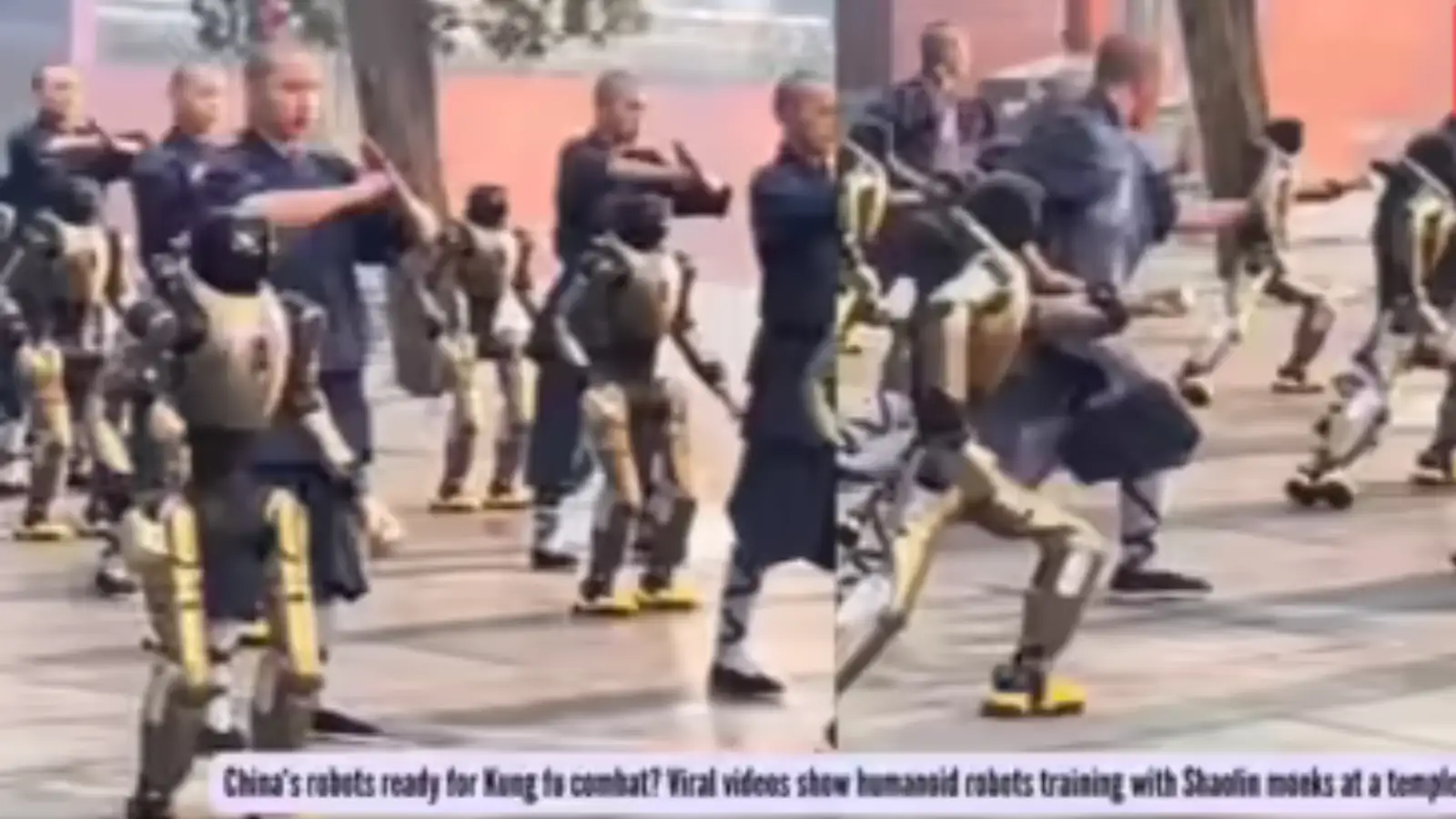
Recently, a captivating video surfaced from China’s iconic Shaolin Temple, showing humanoid robots training alongside Shaolin monks. In the footage, these mechanical figures mimic punches, kicks, and choreographed Kung fu sequences in unison with the warrior monks, offering a fascinating glimpse into the fusion of ancient martial arts and modern artificial intelligence.
Robots Training in the Dojo
This extraordinary scene unfolds in a temple where tradition meets innovation. The robots, developed by Shanghai-based AgiBot, are no ordinary machines. Designed as AI-powered humanoids for versatile real-world applications, these robots smoothly navigate their surroundings and execute complex movements. Beyond industrial uses, these robots can even participate in dynamic activities such as Kung fu drills, demonstrating remarkable agility and precision.
AgiBot’s creations have sensors that allow them to “feel” their environment, enabling them to perform intricate martial arts maneuvers with surprising grace. This combination of traditional Kung fu techniques and sophisticated AI technology is drawing attention for its bold vision of what the future might hold.
Social Media Buzz: Mixed Reactions and Memes
The video quickly went viral, amassing millions of views and sparking lively discussions online. Reactions ranged from awe to humour. One enthusiastic user on X (formerly Twitter) exclaimed, “Damn, this country is heading the top...I am a big fan...China is soon to be a dream country for the entire world.”
Meanwhile, others couldn’t resist a joke: “Meanwhile, men, we are using AI to generate pictures.” Some comments reflected a critical perspective, like this one: “And, here in India, we are training people to hate each other based on events that have happened thousands of years ago!”
Sceptics also pointed out, “Everything about China is great till the time they are recording and sharing on social media. Once you start using them, only then do you know the real reality of cheap and incompetent Chinese products.”
Tradition Meets Technology in Henan Province
The striking contrast in the video between the monks’ disciplined spiritual training and the robots’ sensor-driven movements highlights a unique moment in Henan Province’s temple - a place where age-old Kung fu is meeting the algorithms of artificial intelligence.
A Gimmick or a Glimpse of the Future?
While the display is impressive, some experts view it as more of a spectacle than a breakthrough. These robots follow pre-set routines and lack the genuine learning, muscle memory, and adaptive skills that human monks develop over years of training.
Still, the video invites deeper reflection. Is this just entertainment, or does it hint at a future where robots might share roles in artistic and athletic fields? It raises important questions about technological progress - whether these machines represent exciting innovation or a potential challenge to traditional jobs and skills.
This intriguing blend of past and future invites us all to ponder: can the spirit of Kung fu live on in the algorithms of tomorrow’s robots? Only time will tell.
Recently, a captivating video surfaced from China’s iconic Shaolin Temple, showing humanoid robots training alongside Shaolin monks. In the footage, these mechanical figures mimic punches, kicks, and choreographed Kung fu sequences in unison with the warrior monks, offering a fascinating glimpse into the fusion of ancient martial arts and modern artificial intelligence.
Robots Training in the Dojo
This extraordinary scene unfolds in a temple where tradition meets innovation. The robots, developed by Shanghai-based AgiBot, are no ordinary machines. Designed as AI-powered humanoids for versatile real-world applications, these robots smoothly navigate their surroundings and execute complex movements. Beyond industrial uses, these robots can even participate in dynamic activities such as Kung fu drills, demonstrating remarkable agility and precision.
AgiBot’s creations have sensors that allow them to “feel” their environment, enabling them to perform intricate martial arts maneuvers with surprising grace. This combination of traditional Kung fu techniques and sophisticated AI technology is drawing attention for its bold vision of what the future might hold.
Social Media Buzz: Mixed Reactions and Memes
The video quickly went viral, amassing millions of views and sparking lively discussions online. Reactions ranged from awe to humour. One enthusiastic user on X (formerly Twitter) exclaimed, “Damn, this country is heading the top...I am a big fan...China is soon to be a dream country for the entire world.”
Meanwhile, others couldn’t resist a joke: “Meanwhile, men, we are using AI to generate pictures.” Some comments reflected a critical perspective, like this one: “And, here in India, we are training people to hate each other based on events that have happened thousands of years ago!”
Sceptics also pointed out, “Everything about China is great till the time they are recording and sharing on social media. Once you start using them, only then do you know the real reality of cheap and incompetent Chinese products.”
Tradition Meets Technology in Henan Province
The striking contrast in the video between the monks’ disciplined spiritual training and the robots’ sensor-driven movements highlights a unique moment in Henan Province’s temple - a place where age-old Kung fu is meeting the algorithms of artificial intelligence.
A Gimmick or a Glimpse of the Future?
While the display is impressive, some experts view it as more of a spectacle than a breakthrough. These robots follow pre-set routines and lack the genuine learning, muscle memory, and adaptive skills that human monks develop over years of training.
Still, the video invites deeper reflection. Is this just entertainment, or does it hint at a future where robots might share roles in artistic and athletic fields? It raises important questions about technological progress - whether these machines represent exciting innovation or a potential challenge to traditional jobs and skills.
This intriguing blend of past and future invites us all to ponder: can the spirit of Kung fu live on in the algorithms of tomorrow’s robots? Only time will tell.
Next Story