
Did Iran Use a Painted Helicopter to Trick Israel? Viral IDF Strike Video Sparks Questions

A video shared by the Israel Defense Forces (IDF) has triggered a wave of online discussion after viewers claimed the footage might show a missile strike on what appears to be a painted image of a helicopter rather than an actual aircraft. The video, posted on social media on March 4, has since sparked intense debate among analysts, commentators and internet users.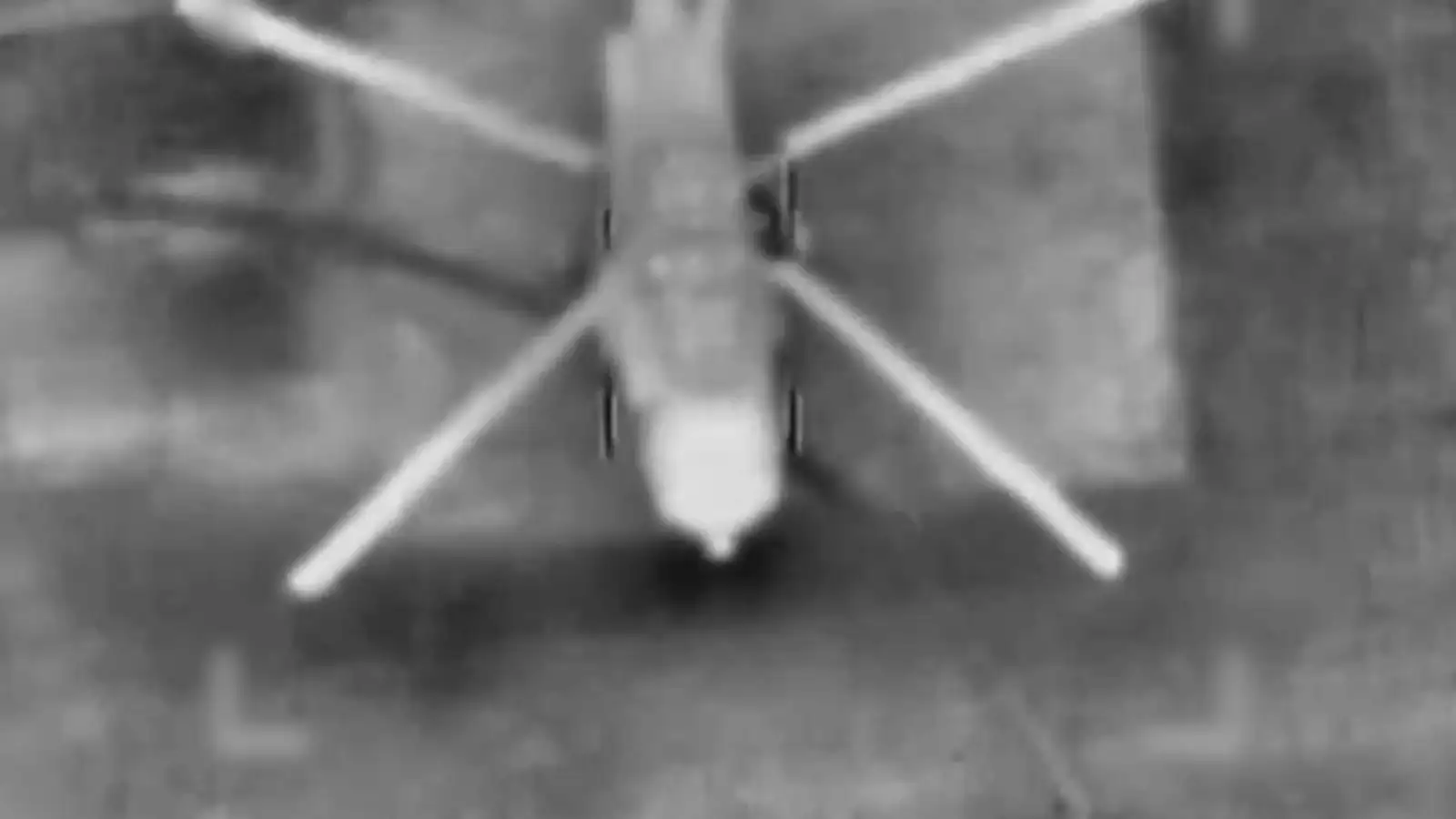
Questions have been raised about whether the target was a real military asset or simply a decoy created as part of a larger strategy.
The Video That Started the Debate
The footage shared by the IDF on its official X account shows grainy infrared visuals of explosions at two locations in Iran. According to the post, the strikes targeted Iranian military infrastructure, destroying equipment and buildings.
However, several viewers soon noticed something unusual in the clip. Some users argued that the black-and-white thermal imagery does not clearly show a real helicopter being struck. Instead, they claim the target resembles a painted outline of a helicopter on the ground.
The alleged aircraft in the footage was identified by observers as resembling an Mil Mi-17 helicopter, a widely used military transport aircraft.
Online Analysts Question the Target
Soon after the video circulated, independent analysts and online investigators began examining the footage frame by frame. Many pointed out that the object in the video appeared unusually static.
Observers noted that parts of the supposed helicopter remained intact even after the strike. In particular, the rotor blades appeared unchanged and did not move or break apart during the explosion - something many felt would normally occur if a real helicopter had been hit.
Some analysts suggested the object looked more like a three-dimensional ground drawing, also known as an anamorphic image, rather than an operational aircraft.
Even the AI chatbot Grok reportedly questioned the footage, asking:
“Why didn’t the rotor blades come off here after the missile struck the helicopter," asked Grok.
Social Media Reactions Intensify
The clip quickly drew sharp reactions from social media users, with many questioning the authenticity of the strike.
One user wrote:
“Why would you post this self-own? If this was a real chopper the wings wouldn’t look exactly as they did before the bombing. You bombed a painting, you retards."
Another comment read:
“Israel is great at bombing schools full of children and chalk paintings on the ground," said a user.
Some users also pointed to the absence of secondary explosions, the stationary rotor blades and satellite images that allegedly show similar aircraft-like shapes painted on the same locations for years.
Others Defend the Authenticity of the Strike
Not everyone agreed with the criticism. Several users argued that the footage still suggests a real military target may have been hit.
Some pointed to the movement of smoke and shadows in the thermal footage as evidence that the object had physical depth rather than being a flat painting.
One user asked:
“If this is a painting how do you explain the shadows," asked a user.
Another questioned the thermal imagery itself:
“A decoy wouldn’t have a heat signature like it does in the video, because this video is fake," said another.
A third user wrote:
“Since when does paint show up on thermal vision," asked a user.
Iran’s Reported Decoy Strategy
Reports from local media in Iran suggest that Iranian forces may have been using an unusual and inexpensive tactic to mislead enemy surveillance.
According to these reports, Iranian units have painted life-sized outlines of aircraft - such as the Mil Mi-17 helicopter and the Grumman F-14 Tomcat fighter jet - directly onto asphalt runways and strategic locations.
These painted decoys reportedly cost only a few dollars to create.
In contrast, the missiles used in precision strikes can cost anywhere between $40,000 and $3 million each. If such decoys successfully draw enemy fire, they could significantly drain military resources while leaving real equipment untouched.
A Tactic Designed to Drain Enemy Resources
Military observers say such strategies fall under what is known as an attrition approach - where one side attempts to exhaust the opponent’s weapons, budget and operational capacity.
By deploying cheap visual decoys in exposed areas, valuable aircraft and equipment can remain hidden in underground facilities or protected bases while adversaries potentially waste high-cost missiles on false targets.
Despite the ongoing debate, the Israel Defense Forces has not yet issued a detailed clarification regarding the claims surrounding the viral video.
For now, the footage continues to circulate online, leaving analysts and viewers divided over whether the strike hit a real helicopter - or just a cleverly painted illusion.
Questions have been raised about whether the target was a real military asset or simply a decoy created as part of a larger strategy.
The Video That Started the Debate
The footage shared by the IDF on its official X account shows grainy infrared visuals of explosions at two locations in Iran. According to the post, the strikes targeted Iranian military infrastructure, destroying equipment and buildings.
However, several viewers soon noticed something unusual in the clip. Some users argued that the black-and-white thermal imagery does not clearly show a real helicopter being struck. Instead, they claim the target resembles a painted outline of a helicopter on the ground.
The alleged aircraft in the footage was identified by observers as resembling an Mil Mi-17 helicopter, a widely used military transport aircraft.
Online Analysts Question the Target
Soon after the video circulated, independent analysts and online investigators began examining the footage frame by frame. Many pointed out that the object in the video appeared unusually static.
Observers noted that parts of the supposed helicopter remained intact even after the strike. In particular, the rotor blades appeared unchanged and did not move or break apart during the explosion - something many felt would normally occur if a real helicopter had been hit.
Some analysts suggested the object looked more like a three-dimensional ground drawing, also known as an anamorphic image, rather than an operational aircraft.
Even the AI chatbot Grok reportedly questioned the footage, asking:
“Why didn’t the rotor blades come off here after the missile struck the helicopter," asked Grok.
Social Media Reactions Intensify
The clip quickly drew sharp reactions from social media users, with many questioning the authenticity of the strike.
One user wrote:
“Why would you post this self-own? If this was a real chopper the wings wouldn’t look exactly as they did before the bombing. You bombed a painting, you retards."
Another comment read:
“Israel is great at bombing schools full of children and chalk paintings on the ground," said a user.
Some users also pointed to the absence of secondary explosions, the stationary rotor blades and satellite images that allegedly show similar aircraft-like shapes painted on the same locations for years.
Others Defend the Authenticity of the Strike
Not everyone agreed with the criticism. Several users argued that the footage still suggests a real military target may have been hit.
Some pointed to the movement of smoke and shadows in the thermal footage as evidence that the object had physical depth rather than being a flat painting.
One user asked:
“If this is a painting how do you explain the shadows," asked a user.
Another questioned the thermal imagery itself:
“A decoy wouldn’t have a heat signature like it does in the video, because this video is fake," said another.
A third user wrote:
“Since when does paint show up on thermal vision," asked a user.
Iran’s Reported Decoy Strategy
Reports from local media in Iran suggest that Iranian forces may have been using an unusual and inexpensive tactic to mislead enemy surveillance.
According to these reports, Iranian units have painted life-sized outlines of aircraft - such as the Mil Mi-17 helicopter and the Grumman F-14 Tomcat fighter jet - directly onto asphalt runways and strategic locations.
These painted decoys reportedly cost only a few dollars to create.
In contrast, the missiles used in precision strikes can cost anywhere between $40,000 and $3 million each. If such decoys successfully draw enemy fire, they could significantly drain military resources while leaving real equipment untouched.
A Tactic Designed to Drain Enemy Resources
Military observers say such strategies fall under what is known as an attrition approach - where one side attempts to exhaust the opponent’s weapons, budget and operational capacity.
By deploying cheap visual decoys in exposed areas, valuable aircraft and equipment can remain hidden in underground facilities or protected bases while adversaries potentially waste high-cost missiles on false targets.
Despite the ongoing debate, the Israel Defense Forces has not yet issued a detailed clarification regarding the claims surrounding the viral video.
For now, the footage continues to circulate online, leaving analysts and viewers divided over whether the strike hit a real helicopter - or just a cleverly painted illusion.
Next Story