
Earth’s 24-Hour Day Isn’t Forever: Scientists Warn Days Are Gradually Getting Longer

For generations, people have lived by the steady rhythm of a 24-hour day. It feels fixed and unchanging, something we rarely question. But scientists have long known that this cycle is not permanent. The Earth’s rotation is gradually slowing down, and over vast stretches of time, this could lead to longer days than we experience today.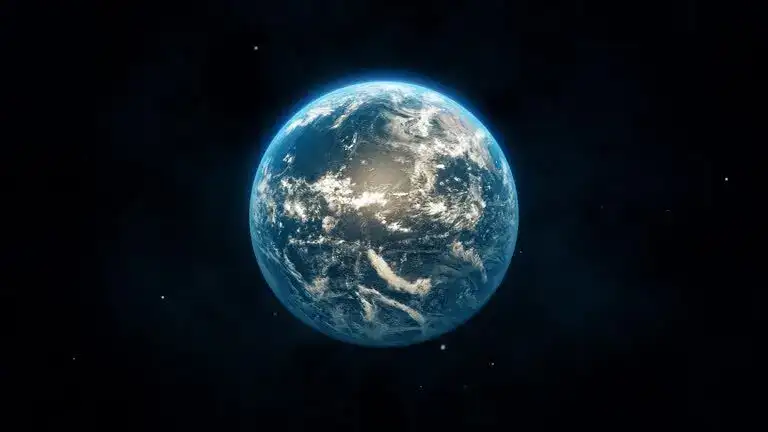
According to observations from NASA, this change is extremely small in the short term, but it is real and ongoing. Over millions of years, these tiny shifts add up and reshape the planet’s natural clock.
Why Earth’s Rotation Is Gradually Slowing
Earth spins on its axis, completing one full rotation in about 24 hours. However, this rotation is not perfectly constant. It slows down ever so slightly over time.
Scientists estimate that the length of a day increases by about 1.7 milliseconds every 100 years. This change is too small to notice in everyday life, but precise instruments can detect it.
The primary reason behind this slowdown is the Moon. Its gravitational pull creates tides in Earth’s oceans. These tides are not just movements of water. They also involve an exchange of energy between Earth and the Moon.
As this energy transfer takes place, Earth gradually loses rotational speed. At the same time, the Moon gains energy and slowly moves farther away from our planet.
“Earth slows down. The Moon shifts outward.”
This relationship has existed for billions of years and continues even now. Scientists have measured that the Moon drifts away from Earth at a rate of about 3.8 centimetres per year.
Earth’s Past Reveals Shorter Days
The idea of a 24-hour day is relatively recent in Earth’s long history. In the distant past, the planet rotated much faster.
Scientists have uncovered this information through fossil evidence, particularly ancient coral formations. These corals contain growth patterns that reflect daily and seasonal cycles, allowing researchers to estimate how long a day lasted millions of years ago.
The evidence clearly shows a steady trend. Earth’s rotation has been slowing gradually over time, not through sudden changes but through a continuous and long-term process.
Could Earth Have 25-Hour Days?
Looking far into the future, scientists believe that Earth’s day could eventually stretch to 25 hours. However, this is not something that will happen anytime soon.
Estimates suggest it could take around 200 million years for Earth’s rotation to slow enough for this change to occur. By that time, the planet itself will have undergone major transformations. Continents will have shifted, climates will have evolved, and life forms may look very different from today.
So while the idea of longer days is fascinating, it remains part of a distant future far beyond human timescales.
How Scientists Track These Tiny Changes
Measuring such small variations in Earth’s rotation requires advanced technology. Scientists rely on a combination of precise tools and observations:
These methods reveal that Earth’s rotation is not perfectly smooth. It can vary slightly due to natural factors such as earthquakes, ocean currents, and atmospheric changes.
To keep global time aligned with Earth’s actual rotation, experts occasionally introduce a leap second into official timekeeping systems.
A Planet That Is Always Changing
Although the length of a day feels stable to us, it is part of a much larger and dynamic system. Earth’s rotation is influenced by gravitational forces, energy exchanges, and interactions with other celestial bodies.
From a human perspective, the change is almost invisible. But on a geological timescale, it becomes significant.
The idea that Earth’s day is slowly getting longer offers a fascinating glimpse into the planet’s deep history and future. It reminds us that even the most familiar aspects of life are not fixed forever.
For now, the 24-hour cycle remains steady and reliable. But over millions of years, Earth will continue to change, quietly stretching the length of a day and reshaping the rhythm of life itself.
According to observations from NASA, this change is extremely small in the short term, but it is real and ongoing. Over millions of years, these tiny shifts add up and reshape the planet’s natural clock.
Why Earth’s Rotation Is Gradually Slowing
Earth spins on its axis, completing one full rotation in about 24 hours. However, this rotation is not perfectly constant. It slows down ever so slightly over time.Scientists estimate that the length of a day increases by about 1.7 milliseconds every 100 years. This change is too small to notice in everyday life, but precise instruments can detect it.
The primary reason behind this slowdown is the Moon. Its gravitational pull creates tides in Earth’s oceans. These tides are not just movements of water. They also involve an exchange of energy between Earth and the Moon.
As this energy transfer takes place, Earth gradually loses rotational speed. At the same time, the Moon gains energy and slowly moves farther away from our planet.
“Earth slows down. The Moon shifts outward.”
This relationship has existed for billions of years and continues even now. Scientists have measured that the Moon drifts away from Earth at a rate of about 3.8 centimetres per year. Earth’s Past Reveals Shorter Days
The idea of a 24-hour day is relatively recent in Earth’s long history. In the distant past, the planet rotated much faster. - During the age of dinosaurs, a day lasted around 23 hours
- On early Earth, days were closer to 18 hours
Scientists have uncovered this information through fossil evidence, particularly ancient coral formations. These corals contain growth patterns that reflect daily and seasonal cycles, allowing researchers to estimate how long a day lasted millions of years ago.
The evidence clearly shows a steady trend. Earth’s rotation has been slowing gradually over time, not through sudden changes but through a continuous and long-term process.
Could Earth Have 25-Hour Days?
Looking far into the future, scientists believe that Earth’s day could eventually stretch to 25 hours. However, this is not something that will happen anytime soon. Estimates suggest it could take around 200 million years for Earth’s rotation to slow enough for this change to occur. By that time, the planet itself will have undergone major transformations. Continents will have shifted, climates will have evolved, and life forms may look very different from today.
So while the idea of longer days is fascinating, it remains part of a distant future far beyond human timescales.
How Scientists Track These Tiny Changes
Measuring such small variations in Earth’s rotation requires advanced technology. Scientists rely on a combination of precise tools and observations:- Atomic clocks to measure time with incredible accuracy
- Satellites to monitor Earth’s position and movement
- Astronomical observations to track rotational patterns
These methods reveal that Earth’s rotation is not perfectly smooth. It can vary slightly due to natural factors such as earthquakes, ocean currents, and atmospheric changes.
To keep global time aligned with Earth’s actual rotation, experts occasionally introduce a leap second into official timekeeping systems.
A Planet That Is Always Changing
Although the length of a day feels stable to us, it is part of a much larger and dynamic system. Earth’s rotation is influenced by gravitational forces, energy exchanges, and interactions with other celestial bodies. From a human perspective, the change is almost invisible. But on a geological timescale, it becomes significant.
The idea that Earth’s day is slowly getting longer offers a fascinating glimpse into the planet’s deep history and future. It reminds us that even the most familiar aspects of life are not fixed forever.
For now, the 24-hour cycle remains steady and reliable. But over millions of years, Earth will continue to change, quietly stretching the length of a day and reshaping the rhythm of life itself.
Next Story