
Grand Canyon Mystery Deepens: Did an Ancient Lake Help Carve This Natural Wonder?

The origins of the Grand Canyon have long puzzled scientists. While it is widely accepted that the Colorado River played a central role in shaping this vast landscape, the exact timeline and process behind its formation remain open to debate. A new study now revisits an older and intriguing idea, suggesting that a long-lost ancient lake may have played a crucial part in carving one of Earth’s most iconic natural features.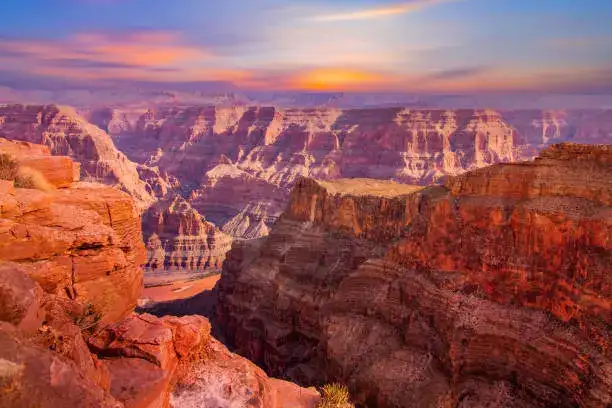
This fresh perspective does not completely rewrite what we know, but it adds important new evidence to a theory that had once been pushed aside.
A Lost Lake and a Dramatic Overflow
At the heart of this theory lies a prehistoric lake that once filled the Bidahochi Basin in northern Arizona. Researchers believe that this basin gradually accumulated water over time, possibly fed by early flows connected to the Colorado River system.
As water levels continued to rise, the lake may have reached a tipping point. Once full, it likely spilled over its natural boundary, crossing elevated terrain such as the Kaibab Arch. This overflow could have carved a new path through the landscape, setting the stage for the formation of the Grand Canyon.
Scientists suggest that this was not necessarily a single sudden event. Instead, it may have involved phases of gradual filling followed by bursts of rapid erosion, which helped shape the canyon over time.
Tiny Crystals, Big Clues
One of the most compelling pieces of evidence comes from zircon crystals found within sandstone layers. These microscopic minerals are formed in volcanic conditions and are known for preserving their chemical identity over millions of years.
Researchers compared zircon samples from the Grand Canyon with those from the Bidahochi Basin. The chemical signatures closely matched, indicating that sediments carried by the Colorado River reached the basin long before the canyon was fully formed.
Using advanced laser-based analysis, scientists were able to examine the internal composition of these crystals with remarkable accuracy. This helped them trace the origin of the sediments and strengthen the idea that the river and basin were once connected.
What the Rocks Reveal
Beyond microscopic evidence, the study also examined physical features within the rock layers. Some formations display ripple marks, which typically form when moving water interacts with a still body of water such as a lake.
These patterns suggest that flowing water once entered the basin and interacted with a stable water body, supporting the idea that a lake existed in the region. This adds another layer of evidence pointing toward a spillover event that may have helped shape the canyon.
A Theory Still Under Debate
Despite the exciting findings, not all geologists are fully convinced. There are still important questions that remain unanswered.
Some experts question whether the lake could have reached the height required for such a large overflow. Others are uncertain about the timing and scale of the event. There are also discussions about whether earlier channels or smaller canyons already existed, which could have influenced how water moved through the region.
Because of these uncertainties, the spillover theory is seen as a strong possibility rather than a definitive explanation.
Rethinking How the Canyon Formed
This study offers a new way of looking at the Grand Canyon’s formation. Instead of being shaped only by slow and steady river erosion, the landscape may have been influenced by a combination of gradual processes and powerful, short-lived events.
Large-scale overflow from an ancient lake could have accelerated erosion, helping the river carve deeper and faster than previously imagined.
A Landscape Full of Secrets
The Grand Canyon continues to reveal new clues about its past. Each discovery adds another piece to a complex puzzle that spans millions of years.
As researchers use more advanced tools and techniques, they are uncovering details that were once impossible to detect. This not only deepens our understanding of the canyon but also highlights how dynamic Earth’s geological history truly is.
The idea that an ancient lake helped shape the Grand Canyon brings a fresh and fascinating twist to an ongoing scientific debate. While the Colorado River remains central to the story, this new evidence suggests that its path may have been influenced by dramatic natural events.
The mystery is not fully solved yet, but studies like this remind us that even the most well-known natural wonders still have stories waiting to be uncovered.
This fresh perspective does not completely rewrite what we know, but it adds important new evidence to a theory that had once been pushed aside.
A Lost Lake and a Dramatic Overflow
At the heart of this theory lies a prehistoric lake that once filled the Bidahochi Basin in northern Arizona. Researchers believe that this basin gradually accumulated water over time, possibly fed by early flows connected to the Colorado River system.As water levels continued to rise, the lake may have reached a tipping point. Once full, it likely spilled over its natural boundary, crossing elevated terrain such as the Kaibab Arch. This overflow could have carved a new path through the landscape, setting the stage for the formation of the Grand Canyon.
Scientists suggest that this was not necessarily a single sudden event. Instead, it may have involved phases of gradual filling followed by bursts of rapid erosion, which helped shape the canyon over time.
Tiny Crystals, Big Clues
One of the most compelling pieces of evidence comes from zircon crystals found within sandstone layers. These microscopic minerals are formed in volcanic conditions and are known for preserving their chemical identity over millions of years. Researchers compared zircon samples from the Grand Canyon with those from the Bidahochi Basin. The chemical signatures closely matched, indicating that sediments carried by the Colorado River reached the basin long before the canyon was fully formed.
Using advanced laser-based analysis, scientists were able to examine the internal composition of these crystals with remarkable accuracy. This helped them trace the origin of the sediments and strengthen the idea that the river and basin were once connected.
What the Rocks Reveal
Beyond microscopic evidence, the study also examined physical features within the rock layers. Some formations display ripple marks, which typically form when moving water interacts with a still body of water such as a lake.These patterns suggest that flowing water once entered the basin and interacted with a stable water body, supporting the idea that a lake existed in the region. This adds another layer of evidence pointing toward a spillover event that may have helped shape the canyon.
A Theory Still Under Debate
Despite the exciting findings, not all geologists are fully convinced. There are still important questions that remain unanswered. Some experts question whether the lake could have reached the height required for such a large overflow. Others are uncertain about the timing and scale of the event. There are also discussions about whether earlier channels or smaller canyons already existed, which could have influenced how water moved through the region.
Because of these uncertainties, the spillover theory is seen as a strong possibility rather than a definitive explanation.
Rethinking How the Canyon Formed
This study offers a new way of looking at the Grand Canyon’s formation. Instead of being shaped only by slow and steady river erosion, the landscape may have been influenced by a combination of gradual processes and powerful, short-lived events.Large-scale overflow from an ancient lake could have accelerated erosion, helping the river carve deeper and faster than previously imagined.
A Landscape Full of Secrets
The Grand Canyon continues to reveal new clues about its past. Each discovery adds another piece to a complex puzzle that spans millions of years. As researchers use more advanced tools and techniques, they are uncovering details that were once impossible to detect. This not only deepens our understanding of the canyon but also highlights how dynamic Earth’s geological history truly is.
The idea that an ancient lake helped shape the Grand Canyon brings a fresh and fascinating twist to an ongoing scientific debate. While the Colorado River remains central to the story, this new evidence suggests that its path may have been influenced by dramatic natural events.
The mystery is not fully solved yet, but studies like this remind us that even the most well-known natural wonders still have stories waiting to be uncovered.
Next Story