
Greenland Shark Study Reveals How the World’s Longest-Living Vertebrate Survives for Centuries

The Greenland shark , known as the world’s longest-living vertebrate, lives an incredibly slow-paced life. Its heart beats only once every 12 seconds, and a new research study has revealed that this remarkable creature can keep its heart functioning for centuries without major age-related degeneration.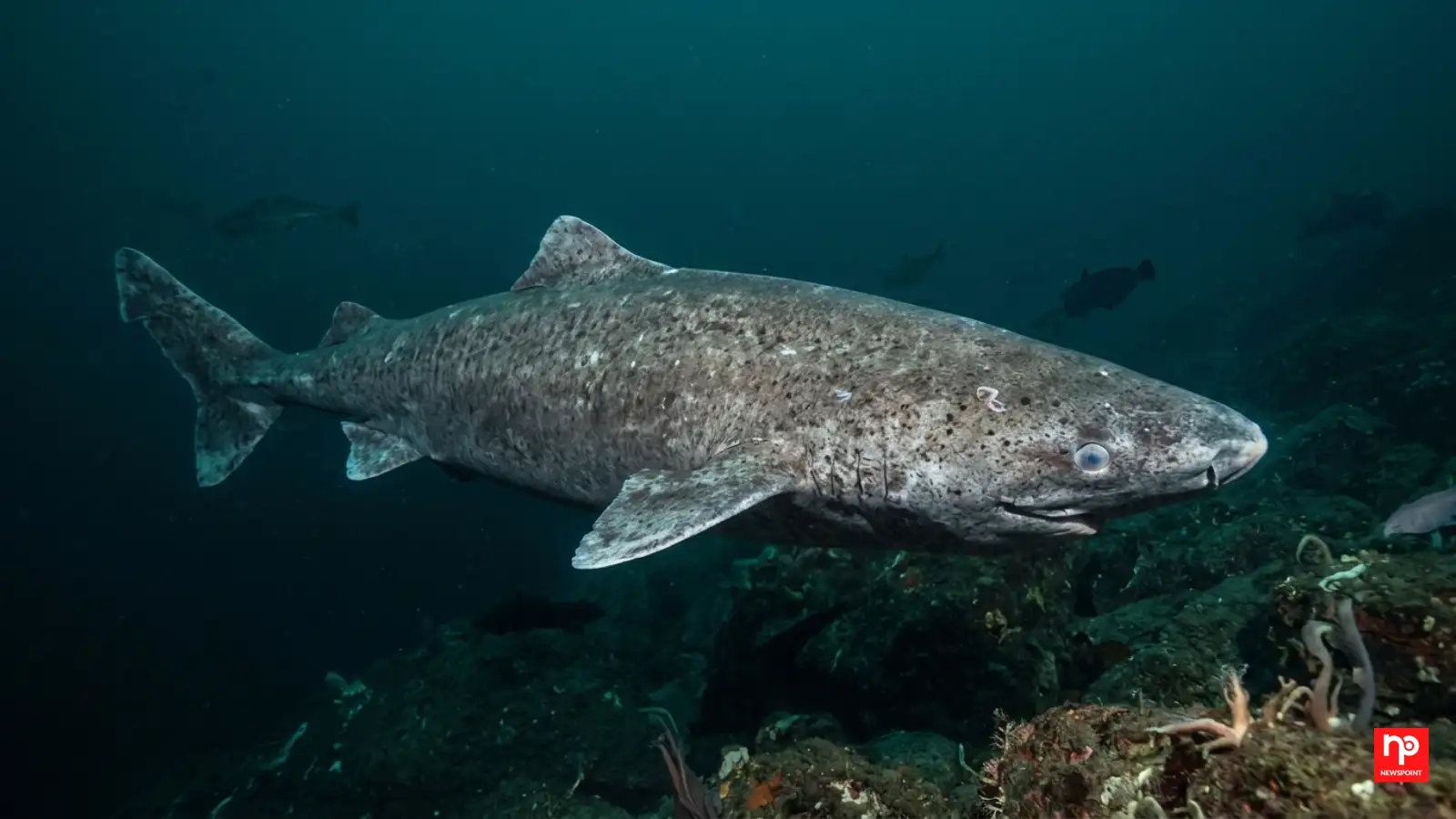
Scientists studying the Greenland shark say its unusual biology and slow ageing process may offer important clues about longevity and even future research into extending human life.
Living in deep, icy waters, the Greenland shark reaches sexual maturity only at around 150 years of age. Researchers believe this extremely slow lifestyle has helped the species extend its lifespan to nearly 200, 400, or even more years.
Despite signs of biological ageing, scientists have also discovered that the shark maintains its eyesight and vision. This challenges earlier assumptions that Greenland sharks might be blind. The slow-moving “sleeper sharks” actually possess functional eyesight that adapts well to low-light conditions in deep waters.
Scientists analysed the vital organs and heart tissue of Greenland sharks and compared them with those of the belly lantern shark, a much smaller species with a shorter lifespan. To deepen the comparison, researchers also studied the African turquoise killifish, a commonly used model organism for ageing research because of its accelerated ageing process.
Although the Greenland shark grows slowly, it can still reach lengths of up to sixteen feet. Researchers say its genome contains genes linked to cancer suppression, anti-inflammatory properties, and powerful DNA repair systems. These adaptations are believed to play a major role in the shark’s extraordinary lifespan.
Researchers noted that the sharks developed severe fibrosis, a condition caused by scar tissue accumulation. This stiffness affects the movement and pumping ability of the heart as the animals age.
The team also found massive amounts of lipofuscin inside cardiomyocytes, the cells responsible for pumping blood through the heart. Lipofuscin is an age-related pigment that forms when damaged cellular machinery is not properly broken down.
The analysis further revealed damage to cardiac mitochondria, which are responsible for powering cells, along with problems affecting lysosomes that help break down cellular materials.
Interestingly, these ageing indicators were not seen in the belly lantern shark or the African turquoise killifish used in the comparison.
Despite these ageing signs, the Greenland shark’s ability to hunt and capture prey remained unaffected. Researchers confirmed this observation through specimens collected using longline fishing in Greenland.
The shark reportedly has lower blood pressure than many other organisms, along with a uniquely structured ventral aorta. Researchers also believe the elasticity of the heart muscle contributes to its ability to keep functioning over centuries.
“The shark’s resilience to ageing could help scientists better understand longevity in vertebrates, including humans. These findings may also inform translational approaches to mitigate age-related cardiac decline in humans,” the paper read.
The study adds significant new evidence to ongoing research into ageing, longevity, and the biology of the longest-living vertebrates on Earth.
Scientists studying the Greenland shark say its unusual biology and slow ageing process may offer important clues about longevity and even future research into extending human life.
A Slow Life in the Deep Ocean
The Greenland shark is famous for moving slowly through the freezing depths of the ocean. It swims at an average speed of only about one foot per second and grows at a rate of just 0.4 inches every year.Living in deep, icy waters, the Greenland shark reaches sexual maturity only at around 150 years of age. Researchers believe this extremely slow lifestyle has helped the species extend its lifespan to nearly 200, 400, or even more years.
Despite signs of biological ageing, scientists have also discovered that the shark maintains its eyesight and vision. This challenges earlier assumptions that Greenland sharks might be blind. The slow-moving “sleeper sharks” actually possess functional eyesight that adapts well to low-light conditions in deep waters.
Insights From the Study at Superior Normal School (SNS)
The latest study was conducted at the Biology Laboratory at the Superior Normal School (SNS) in Italy by Alessandro Cellerino and his colleagues. The research focused on examining the hearts of Greenland sharks in detail.Scientists analysed the vital organs and heart tissue of Greenland sharks and compared them with those of the belly lantern shark, a much smaller species with a shorter lifespan. To deepen the comparison, researchers also studied the African turquoise killifish, a commonly used model organism for ageing research because of its accelerated ageing process.
Strong DNA Repair and Cancer Protection Mechanisms
According to researchers, Greenland sharks possess highly efficient DNA repair mechanisms that help protect them from tumours. They also have a strong immune system, allowing them to maintain healthy biological functions despite their advanced age.Although the Greenland shark grows slowly, it can still reach lengths of up to sixteen feet. Researchers say its genome contains genes linked to cancer suppression, anti-inflammatory properties, and powerful DNA repair systems. These adaptations are believed to play a major role in the shark’s extraordinary lifespan.
What Scientists Found Inside the Shark’s Heart
The study comparing the three organisms revealed that Greenland sharks aged between 100 and 155 years showed signs of weakened heart tissue.Researchers noted that the sharks developed severe fibrosis, a condition caused by scar tissue accumulation. This stiffness affects the movement and pumping ability of the heart as the animals age.
The team also found massive amounts of lipofuscin inside cardiomyocytes, the cells responsible for pumping blood through the heart. Lipofuscin is an age-related pigment that forms when damaged cellular machinery is not properly broken down.
The analysis further revealed damage to cardiac mitochondria, which are responsible for powering cells, along with problems affecting lysosomes that help break down cellular materials.
Interestingly, these ageing indicators were not seen in the belly lantern shark or the African turquoise killifish used in the comparison.
You may also like
- Hantavirus outbreak spreads to Europe as cruise returnee tests positive
- This ancient Chinese megacity hides mysterious underground tunnels buried for over 4,000 years
- China says ties with Bangaldesh not directed against any "third party"
- US-Iran have had 'good talks over last 24 hours': Trump
- Operation Sindoor: Ten strategic lessons for India's military future
Challenging the Myth of Biological Immortality
“All in all, the analysed Greenland shark samples showed clearly recognisable signs of classic ageing at the molecular and tissue level. This proves that ageing processes also take place in the heart tissue of this species,” read the paper published on April 23.Despite these ageing signs, the Greenland shark’s ability to hunt and capture prey remained unaffected. Researchers confirmed this observation through specimens collected using longline fishing in Greenland.
Why the Greenland Shark’s Heart Still Functions Efficiently
Scientists believe the Greenland shark’s heart continues functioning effectively despite ageing because of several unique biological features.The shark reportedly has lower blood pressure than many other organisms, along with a uniquely structured ventral aorta. Researchers also believe the elasticity of the heart muscle contributes to its ability to keep functioning over centuries.
“The shark’s resilience to ageing could help scientists better understand longevity in vertebrates, including humans. These findings may also inform translational approaches to mitigate age-related cardiac decline in humans,” the paper read.
The study adds significant new evidence to ongoing research into ageing, longevity, and the biology of the longest-living vertebrates on Earth.






More from our partners


Loving Newspoint? Download the app now
