
What Iran’s Attacks on Qatar’s Ras Laffan LNG Hub Mean for India’s Energy Security

The ongoing Middle East conflict is now hitting the global energy market where it hurts most. Qatar’s crucial LNG hub, Ras Laffan, has suffered extensive damage after multiple strikes by Iran in retaliation for US-Israeli actions against Iran. The facility, responsible for roughly a fifth of the world’s LNG, may take 3 to 5 years to fully repair, and QatarEnergy CEO Saad al-Kaabi warns that 17% of Qatar’s LNG capacity could be offline for up to five years.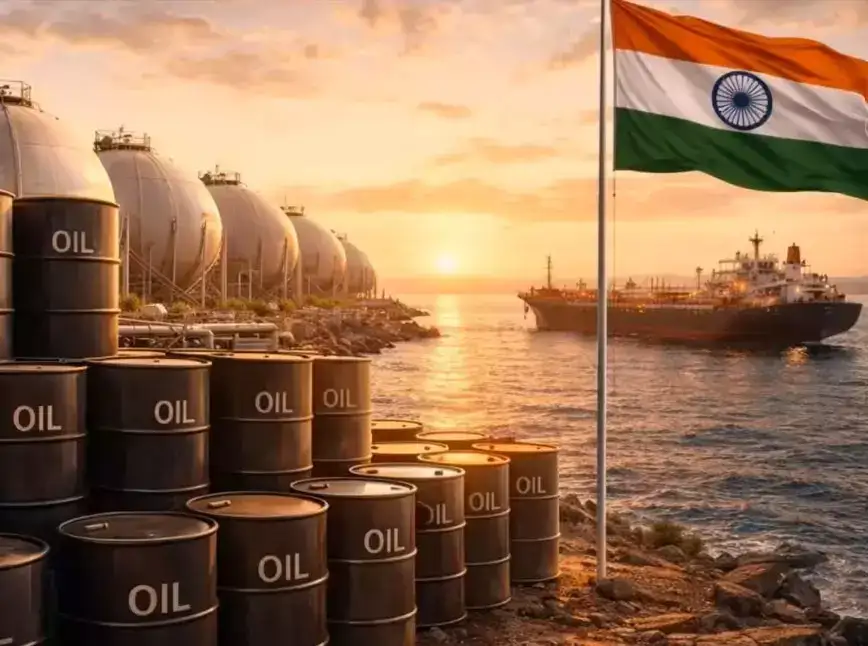
The attacks sent Brent crude soaring over $119 per barrel before easing, stoking fears of long-lasting energy supply disruptions. Gas prices in Europe have jumped 35%, and Asia, including India, is highly vulnerable.
India sources around 40% of its LNG from Qatar. Reacting to the strikes, External Affairs Ministry spokesperson Randhir Jaiswal said, “India had previously called for the avoidance of targeting civilian infrastructure, including energy infrastructure, across the region.”
“The recent attacks against energy installations in different locations across this region are therefore deeply disturbing and only serve to further destabilise an already uncertain energy scenario for the whole world,” he added.
Which Facilities Have Been Hit?
The damage isn’t limited to Qatar. Iran’s South Pars gas field, UAE’s Ruwais refinery (halted temporarily after a drone incident), Saudi Arabia’s Ras Tanura refinery and Yanbu port, and Kuwait’s Mina Abdullah and Mina Al-Ahmadi refineries have all faced strikes or disruptions. Iran’s Kharg Island, a key crude export hub, was also hit.
QatarEnergy estimates potential revenue losses around $20 billion annually and warns that some long-term contracts with China, Italy, Korea, and Belgium may need renegotiation. The attacks have significantly reduced Gulf oil output and sent shockwaves through global energy markets.
What This Means for India
India’s dependence on the Middle East for crude and LNG is substantial. “More than 60% of India’s crude oil imports originate from the Persian Gulf, particularly from Iraq, Saudi Arabia, and the UAE,” explains Sourav Mitra, Partner - Oil & Gas, Grant Thornton Bharat. He notes that 40-50% of India’s crude normally passes through the Strait of Hormuz, which is now near impassable due to Iranian activity.
On LNG, Qatar alone supplies around 40% of India’s needs, while 90% of LPG imports also transit the Hormuz chokepoint. “LNG production outages in Qatar and hits on UAE gas facilities have already forced Indian distributors to curtail supply and raise industrial gas prices. Crude prices have surged sharply following the attacks, with Brent fluctuating between $90-120 per barrel in the past few days, aggravating India’s import bill and risking further depreciation of the rupee in an economy that imports 85% to 90% of its oil,” Mitra adds.
India’s Response
India is working to secure alternative supply routes and diversify sources. Jaiswal says, “With the latest attacks, the LNG supply is going to be impacted. It has been impacted because of the closure of the Strait of Hormuz. But we are in discussion with several countries. We are in touch with all the stakeholders there to see how best we can secure our energy needs.”
He added, "We're trying to buy LPG from everywhere, wherever it's available. So if Russia is available, we'll go there too. Because the current situation is such that we have to ensure that our people's fuel needs are met... I can say that we want to have a wide range of options..."
Sujata Sharma, Joint Secretary, Ministry of Petroleum and Natural Gas, added, “We are affected by the supplies of the Middle East... Anything which impacts the supplies from the Middle East impacts us... We are trying to pick up the cargoes from other sources. In crude oil, we have already diversified. Around 70% of our crude is coming from the area outside the Strait of Hormuz. Some of our LPG is also coming from the US. Qatar is definitely a very big supplier of LNG. But there are other suppliers also. For example, the US and Australia. There are other big suppliers as far as LNG is concerned...”
Mitra explains that India is actively raising non-Hormuz imports to around 70%, sourcing crude from Russia, the US, West Africa, and Latin America. For LNG, alternatives include the US and Australia, while domestic buffers and renewable adoption are being accelerated.
Sumit Ritolia, Lead Research Analyst at Kpler, adds, “Meanwhile, replacement LNG volumes could come from the US, West Africa, Australia or Russia, but longer shipping distances mean higher freight costs and slower delivery times. In the near term, India’s priority will likely be ensuring supply security for critical sectors, particularly fertilizers with the sowing season approaching, as well as cooking gas and power generation.”
Domestic measures are also underway. LPG production from Indian refineries has already risen about 36%, helping to ease supply constraints amid panic buying caused by Hormuz disruptions.
The Middle East strikes underscore India’s vulnerability to regional instability, highlighting the need for swift diversification, secure shipping routes, and strategic reserves to protect the economy from escalating energy shocks.
The attacks sent Brent crude soaring over $119 per barrel before easing, stoking fears of long-lasting energy supply disruptions. Gas prices in Europe have jumped 35%, and Asia, including India, is highly vulnerable.
India sources around 40% of its LNG from Qatar. Reacting to the strikes, External Affairs Ministry spokesperson Randhir Jaiswal said, “India had previously called for the avoidance of targeting civilian infrastructure, including energy infrastructure, across the region.”
“The recent attacks against energy installations in different locations across this region are therefore deeply disturbing and only serve to further destabilise an already uncertain energy scenario for the whole world,” he added.
Which Facilities Have Been Hit?
The damage isn’t limited to Qatar. Iran’s South Pars gas field, UAE’s Ruwais refinery (halted temporarily after a drone incident), Saudi Arabia’s Ras Tanura refinery and Yanbu port, and Kuwait’s Mina Abdullah and Mina Al-Ahmadi refineries have all faced strikes or disruptions. Iran’s Kharg Island, a key crude export hub, was also hit.QatarEnergy estimates potential revenue losses around $20 billion annually and warns that some long-term contracts with China, Italy, Korea, and Belgium may need renegotiation. The attacks have significantly reduced Gulf oil output and sent shockwaves through global energy markets.
What This Means for India
India’s dependence on the Middle East for crude and LNG is substantial. “More than 60% of India’s crude oil imports originate from the Persian Gulf, particularly from Iraq, Saudi Arabia, and the UAE,” explains Sourav Mitra, Partner - Oil & Gas, Grant Thornton Bharat. He notes that 40-50% of India’s crude normally passes through the Strait of Hormuz, which is now near impassable due to Iranian activity. On LNG, Qatar alone supplies around 40% of India’s needs, while 90% of LPG imports also transit the Hormuz chokepoint. “LNG production outages in Qatar and hits on UAE gas facilities have already forced Indian distributors to curtail supply and raise industrial gas prices. Crude prices have surged sharply following the attacks, with Brent fluctuating between $90-120 per barrel in the past few days, aggravating India’s import bill and risking further depreciation of the rupee in an economy that imports 85% to 90% of its oil,” Mitra adds.
India’s Response
India is working to secure alternative supply routes and diversify sources. Jaiswal says, “With the latest attacks, the LNG supply is going to be impacted. It has been impacted because of the closure of the Strait of Hormuz. But we are in discussion with several countries. We are in touch with all the stakeholders there to see how best we can secure our energy needs.”He added, "We're trying to buy LPG from everywhere, wherever it's available. So if Russia is available, we'll go there too. Because the current situation is such that we have to ensure that our people's fuel needs are met... I can say that we want to have a wide range of options..."
Sujata Sharma, Joint Secretary, Ministry of Petroleum and Natural Gas, added, “We are affected by the supplies of the Middle East... Anything which impacts the supplies from the Middle East impacts us... We are trying to pick up the cargoes from other sources. In crude oil, we have already diversified. Around 70% of our crude is coming from the area outside the Strait of Hormuz. Some of our LPG is also coming from the US. Qatar is definitely a very big supplier of LNG. But there are other suppliers also. For example, the US and Australia. There are other big suppliers as far as LNG is concerned...”
Mitra explains that India is actively raising non-Hormuz imports to around 70%, sourcing crude from Russia, the US, West Africa, and Latin America. For LNG, alternatives include the US and Australia, while domestic buffers and renewable adoption are being accelerated.
Sumit Ritolia, Lead Research Analyst at Kpler, adds, “Meanwhile, replacement LNG volumes could come from the US, West Africa, Australia or Russia, but longer shipping distances mean higher freight costs and slower delivery times. In the near term, India’s priority will likely be ensuring supply security for critical sectors, particularly fertilizers with the sowing season approaching, as well as cooking gas and power generation.”
Domestic measures are also underway. LPG production from Indian refineries has already risen about 36%, helping to ease supply constraints amid panic buying caused by Hormuz disruptions.
The Middle East strikes underscore India’s vulnerability to regional instability, highlighting the need for swift diversification, secure shipping routes, and strategic reserves to protect the economy from escalating energy shocks.
Next Story