
Is There a Fifth Force in the Solar System? Scientists Explore a New Mystery

For years, science has explained the universe using four fundamental forces. Gravity shapes the motion of planets and stars. Electromagnetism powers light, energy and everyday technology. The strong and weak nuclear forces operate deep inside atoms, holding matter together and driving key reactions.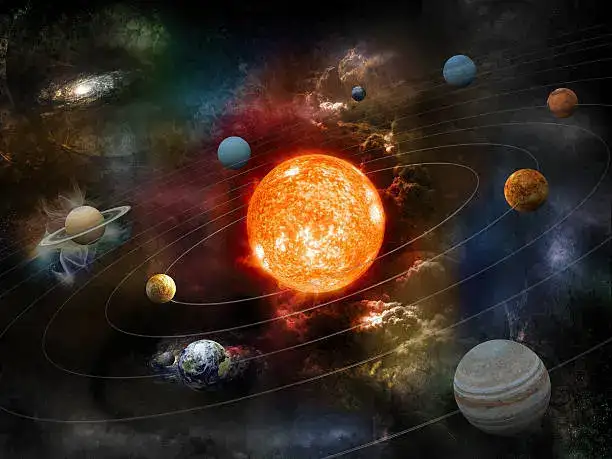
Together, these forces form the foundation of modern physics. But despite their success, they do not explain everything we observe in the universe.
Now, a growing number of scientists believe there may be something more. A mysterious “fifth force” that could help fill the gaps in our understanding.
Where the Current Theory Falls Short
The four known forces work extremely well when explaining familiar systems like our solar system. But when scientists study the universe at a much larger scale, things become harder to explain.
Galaxies rotate in ways that do not match predictions based on gravity alone. They appear to hold together more strongly than expected. At the same time, the universe is expanding at an accelerating pace, something current theories struggle to fully explain.
To account for this, scientists have proposed the existence of dark matter and dark energy. These invisible components are believed to make up most of the universe. Yet, they have never been directly detected, which raises an important question. Are we missing a deeper force at work?
A New Idea Gains Attention
The idea of a fifth force has been explored for years, but recent studies have brought it back into focus. Some physicists believe this unknown force could be linked to dark matter and dark energy, helping explain their mysterious effects.
“precision experiments within our own solar system could reveal a "fifth force" tied to dark energy and dark matter.”
This idea shifts the search closer to home. Instead of only relying on distant observations, scientists are now considering whether careful measurements within our solar system might reveal subtle clues.
Clues From Past Experiments
The search for a fifth force is not new. In 2015, physicists studying radioactive decay noticed an unusual signal. It suggested the possible existence of a new particle, one that did not fit within the current framework of physics.
Some researchers proposed that this particle, sometimes referred to as a protophobic X boson, could be evidence of a previously unknown force that interacts in very specific ways.
More recently, experiments involving muons, tiny subatomic particles, have shown behaviour that does not fully match predictions from the Standard Model. These results are still being studied, but they add to the growing list of anomalies that hint at something missing.
Why the Solar System Matters
Large-scale space missions and galaxy surveys continue to provide valuable data. However, studying distant parts of the universe comes with limitations. Conditions cannot be controlled, and results can be difficult to isolate.
That is why some scientists are now focusing on experiments closer to Earth.
“to prove a fifth force exists, we need tests we can control, which means experiments in the solar system.”
By observing how planets, spacecraft and other objects move with extreme precision, researchers hope to detect tiny deviations that cannot be explained by the four known forces.
What a Fifth Force Could Change
If confirmed, a fifth force would be one of the biggest discoveries in modern science. It could change how we understand gravity, matter and the structure of the universe itself.
It may also provide answers to long-standing mysteries, including the true nature of dark matter and dark energy. This could bring scientists closer to a unified theory that connects all forces of nature.
For now, the fifth force remains a possibility, not a proven fact. Scientists continue to test ideas, refine experiments and study data from both space and laboratories.
What makes this search exciting is its potential impact. A discovery like this would not just add a new chapter to physics. It could rewrite parts of the story entirely.
Sometimes, the biggest breakthroughs do not come from looking farther into the universe, but from examining familiar surroundings in new ways. The answer to one of science’s greatest mysteries might be hiding much closer than we think.
Together, these forces form the foundation of modern physics. But despite their success, they do not explain everything we observe in the universe.
Now, a growing number of scientists believe there may be something more. A mysterious “fifth force” that could help fill the gaps in our understanding.
Where the Current Theory Falls Short
The four known forces work extremely well when explaining familiar systems like our solar system. But when scientists study the universe at a much larger scale, things become harder to explain. Galaxies rotate in ways that do not match predictions based on gravity alone. They appear to hold together more strongly than expected. At the same time, the universe is expanding at an accelerating pace, something current theories struggle to fully explain.
To account for this, scientists have proposed the existence of dark matter and dark energy. These invisible components are believed to make up most of the universe. Yet, they have never been directly detected, which raises an important question. Are we missing a deeper force at work?
A New Idea Gains Attention
The idea of a fifth force has been explored for years, but recent studies have brought it back into focus. Some physicists believe this unknown force could be linked to dark matter and dark energy, helping explain their mysterious effects. “precision experiments within our own solar system could reveal a "fifth force" tied to dark energy and dark matter.”
This idea shifts the search closer to home. Instead of only relying on distant observations, scientists are now considering whether careful measurements within our solar system might reveal subtle clues.
Clues From Past Experiments
The search for a fifth force is not new. In 2015, physicists studying radioactive decay noticed an unusual signal. It suggested the possible existence of a new particle, one that did not fit within the current framework of physics. Some researchers proposed that this particle, sometimes referred to as a protophobic X boson, could be evidence of a previously unknown force that interacts in very specific ways.
More recently, experiments involving muons, tiny subatomic particles, have shown behaviour that does not fully match predictions from the Standard Model. These results are still being studied, but they add to the growing list of anomalies that hint at something missing.
Why the Solar System Matters
Large-scale space missions and galaxy surveys continue to provide valuable data. However, studying distant parts of the universe comes with limitations. Conditions cannot be controlled, and results can be difficult to isolate. That is why some scientists are now focusing on experiments closer to Earth.
You may also like
- Iran offers US new deal to reopen Hormuz: Report
- Iran FM Araghchi says Islamabad talks reviewed "specific conditions" to resume Iran-US negotiations
- Rising food, gas, utility costs squeeze Americans amid tariff, war concerns
- 'Want to throw up': Correspondents' Dinner shooter hints at regret
- Wasn't worried, wanted to see what was happening: Trump on evacuation after shooting
“to prove a fifth force exists, we need tests we can control, which means experiments in the solar system.”
By observing how planets, spacecraft and other objects move with extreme precision, researchers hope to detect tiny deviations that cannot be explained by the four known forces.
What a Fifth Force Could Change
If confirmed, a fifth force would be one of the biggest discoveries in modern science. It could change how we understand gravity, matter and the structure of the universe itself. It may also provide answers to long-standing mysteries, including the true nature of dark matter and dark energy. This could bring scientists closer to a unified theory that connects all forces of nature.
For now, the fifth force remains a possibility, not a proven fact. Scientists continue to test ideas, refine experiments and study data from both space and laboratories.
What makes this search exciting is its potential impact. A discovery like this would not just add a new chapter to physics. It could rewrite parts of the story entirely.
Sometimes, the biggest breakthroughs do not come from looking farther into the universe, but from examining familiar surroundings in new ways. The answer to one of science’s greatest mysteries might be hiding much closer than we think.






More from our partners


Loving Newspoint? Download the app now
