
Kharg Island: Iran's oil hub in the crosshairs


NEW DELHI: US airstrikes on Kharg Island, the nerve centre of Iran's oil export network, have sharply escalated tensions in West Asia and raised fears of further disruption in global energy supplies. While Iran claimed that oil operations on the island continued despite the attack, it warned that retaliation could target US assets and shipping routes across the Gulf.
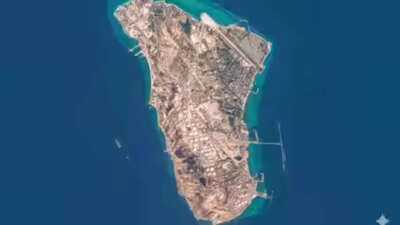
The focus on Kharg Island underscores its strategic importance. Located about 25 km off Iran's southern coast in the northern Persian Gulf, the small coral island serves as the country's primary oil export hub. Nearly 90% of Iran's crude exports pass through its terminals, making it one of the most critical pieces of energy infrastructure in the region.
The oil export terminal on Kharg Island was developed in the 1960s in partnership with the US oil company Amoco. Following the 1979 Iranian revolution, Iran expropriated the company's assets and took control of the facilities. Amoco later merged with BP, which still uses the Amoco retail fuel brand in the US.
Over the decades, Iran has built an extensive pipeline network connecting major inland oil fields to the island, turning it into the main collection, storage and loading hub for crude before it is shipped to international buyers. Kharg's facilities also receive crude from major offshore oilfields such as Aboozar, Forouzan and Dorood through subsea pipelines. The oil is stored in large tank farms and loaded onto supertankers headed mainly for Asian markets.
Energy analysts say much of Iran's coastline is too shallow for these large vessels, making Kharg uniquely suited for large-scale crude exports. Because of this concentration of export infrastructure, the island has long been viewed as both Iran's greatest energy asset and its most vulnerable chokepoint. Any major disruption there could remove a significant volume of crude from global markets and send oil prices spiralling.
"Kharg Island has storage capacity of roughly 30 million barrels and serves as the primary export outlet for Iranian crude. Around 90-95% of Iran's seaborne crude exports typically originate from this single island, meaning roughly 1.5-1.6 million barrels per day pass through its terminals. These exports are a critical source of foreign currency for Iran and remain a central pillar of govt revenues and economic stability despite years of sanctions," said Sumit Ritolia, lead research analyst at Kpler, a global data and analytics provider.
Ritolia said Iran has tried to develop alternative export routes such as the Jask terminal outside the Strait of Hormuz, but these facilities are smaller and cannot replace Kharg's capacity. Any sustained disruption from military escalation could immediately threaten most of Iran's export capacity.
Prashant Vashisht, senior vice president at ratings agency ICRA, said even after the start of the conflict Iran has maintained crude exports of 1.1-1.5 mbd. Any attack at Kharg Island could further affect crude supply, he said.
The focus on Kharg Island underscores its strategic importance. Located about 25 km off Iran's southern coast in the northern Persian Gulf, the small coral island serves as the country's primary oil export hub. Nearly 90% of Iran's crude exports pass through its terminals, making it one of the most critical pieces of energy infrastructure in the region.
The oil export terminal on Kharg Island was developed in the 1960s in partnership with the US oil company Amoco. Following the 1979 Iranian revolution, Iran expropriated the company's assets and took control of the facilities. Amoco later merged with BP, which still uses the Amoco retail fuel brand in the US.
Over the decades, Iran has built an extensive pipeline network connecting major inland oil fields to the island, turning it into the main collection, storage and loading hub for crude before it is shipped to international buyers. Kharg's facilities also receive crude from major offshore oilfields such as Aboozar, Forouzan and Dorood through subsea pipelines. The oil is stored in large tank farms and loaded onto supertankers headed mainly for Asian markets.
Energy analysts say much of Iran's coastline is too shallow for these large vessels, making Kharg uniquely suited for large-scale crude exports. Because of this concentration of export infrastructure, the island has long been viewed as both Iran's greatest energy asset and its most vulnerable chokepoint. Any major disruption there could remove a significant volume of crude from global markets and send oil prices spiralling.
"Kharg Island has storage capacity of roughly 30 million barrels and serves as the primary export outlet for Iranian crude. Around 90-95% of Iran's seaborne crude exports typically originate from this single island, meaning roughly 1.5-1.6 million barrels per day pass through its terminals. These exports are a critical source of foreign currency for Iran and remain a central pillar of govt revenues and economic stability despite years of sanctions," said Sumit Ritolia, lead research analyst at Kpler, a global data and analytics provider.
Ritolia said Iran has tried to develop alternative export routes such as the Jask terminal outside the Strait of Hormuz, but these facilities are smaller and cannot replace Kharg's capacity. Any sustained disruption from military escalation could immediately threaten most of Iran's export capacity.
Prashant Vashisht, senior vice president at ratings agency ICRA, said even after the start of the conflict Iran has maintained crude exports of 1.1-1.5 mbd. Any attack at Kharg Island could further affect crude supply, he said.
Next Story