
'Kick Out China, Russia, Iran': Team Trump’s New Oil Ultimatum to Venezuela

U.S. President Donald Trump has reportedly issued strict conditions to Venezuela’s interim government under Delcy Rodríguez before the country is allowed to increase oil production. According to sources cited by ABC News, the Trump administration wants Venezuela to “kick out” and “sever” economic ties with China, Russia, Iran, and Cuba before more oil can be pumped.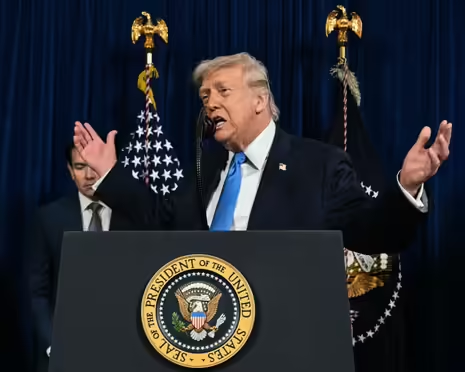
The U.S. is also demanding that Venezuela partner exclusively with the United States on oil production and favour America when selling heavy crude oil, sources said. This move is seen as an attempt to ensure that Venezuela’s oil one of the country’s largest revenue sources benefits the U.S. while restricting influence from nations historically aligned with Caracas.
Political Turmoil in Venezuela
Venezuela has been in political turmoil following U.S. strikes last week, during which former President Nicolás Maduro was captured and flown out. In his absence, Delcy Rodríguez has assumed the role of interim president. Despite this, Trump has claimed he is in control of the South American nation, heightening tensions and uncertainty within Venezuela.
U.S. Conditions on Oil Drilling
ABC News reported that the Trump administration has told Venezuela’s new leadership:
“First, the country must kick out China, Russia, Iran, and Cuba and sever economic ties... Second, Venezuela must agree to partner exclusively with the US on oil production and favour America when selling heavy crude oil.”
These demands must be met before Caracas can resume full-scale oil production. For years, China has been Venezuela’s closest partner and largest oil buyer, making this a significant diplomatic and economic shift.
How the U.S. Believes It Can Force Venezuela
According to the report, U.S. Secretary of State Marco Rubio has told lawmakers that the U.S. can leverage Venezuela’s current situation, as its oil tankers are full. Bloomberg reported that Venezuela began closing oil wells in late December due to lack of storage, a result of the U.S. blockade. Further production restrictions could deepen the country’s economic crisis and challenge Rodríguez’s grip on power.
“The government does intend to control the oil, taking charge of the ships, the tankers, and none of them are going to go to Havana,” said Senate Armed Services Committee Chairman Roger Wicker, confirming that controlling Venezuela’s oil is central to the U.S. strategy.
“And until they start moving we hope to the open market there are no more tankers to fill, because they're totally full.”
The U.S. estimates that Caracas has only a couple of weeks before financial insolvency without oil revenue. Wicker also noted that the plan does not require U.S. troop deployment, relying instead on controlling oil infrastructure.
Trump Oil Claim
Trump has also claimed that the “interim authorities” in Venezuela would turn over between 30 million and 50 million barrels of oil to the U.S. to be sold at market price.
Trump said those funds would be controlled by him “to ensure it is used to benefit the people of Venezuela and the United States!”
This move is intended to secure U.S. access to Venezuelan crude while directing profits toward mutual benefit, according to Trump.
Global and Geopolitical Implications
If Venezuela redirects oil shipments away from China, Russia, Iran, and Cuba toward the U.S., it could reshape regional energy ties and increase geopolitical friction. Analysts note that while it might temporarily stabilize Venezuela’s economy, it could escalate tensions with countries that have historically supported Caracas.
Venezuela’s Response
Delcy Rodríguez has insisted that her government remains “in charge” despite U.S. claims. She continues to navigate a challenging political landscape, balancing internal stability with external pressures.
The situation remains fluid, with oil at the center of diplomatic maneuvering, economic strategy, and geopolitical influence. For now, all eyes remain on Venezuela as the U.S. pushes to control a key global energy resource.
The U.S. is also demanding that Venezuela partner exclusively with the United States on oil production and favour America when selling heavy crude oil, sources said. This move is seen as an attempt to ensure that Venezuela’s oil one of the country’s largest revenue sources benefits the U.S. while restricting influence from nations historically aligned with Caracas.
Political Turmoil in Venezuela
Venezuela has been in political turmoil following U.S. strikes last week, during which former President Nicolás Maduro was captured and flown out. In his absence, Delcy Rodríguez has assumed the role of interim president. Despite this, Trump has claimed he is in control of the South American nation, heightening tensions and uncertainty within Venezuela.
U.S. Conditions on Oil Drilling
ABC News reported that the Trump administration has told Venezuela’s new leadership:
“First, the country must kick out China, Russia, Iran, and Cuba and sever economic ties... Second, Venezuela must agree to partner exclusively with the US on oil production and favour America when selling heavy crude oil.”
These demands must be met before Caracas can resume full-scale oil production. For years, China has been Venezuela’s closest partner and largest oil buyer, making this a significant diplomatic and economic shift.
How the U.S. Believes It Can Force Venezuela
According to the report, U.S. Secretary of State Marco Rubio has told lawmakers that the U.S. can leverage Venezuela’s current situation, as its oil tankers are full. Bloomberg reported that Venezuela began closing oil wells in late December due to lack of storage, a result of the U.S. blockade. Further production restrictions could deepen the country’s economic crisis and challenge Rodríguez’s grip on power.
“The government does intend to control the oil, taking charge of the ships, the tankers, and none of them are going to go to Havana,” said Senate Armed Services Committee Chairman Roger Wicker, confirming that controlling Venezuela’s oil is central to the U.S. strategy.
“And until they start moving we hope to the open market there are no more tankers to fill, because they're totally full.”
The U.S. estimates that Caracas has only a couple of weeks before financial insolvency without oil revenue. Wicker also noted that the plan does not require U.S. troop deployment, relying instead on controlling oil infrastructure.
Trump Oil Claim
Trump has also claimed that the “interim authorities” in Venezuela would turn over between 30 million and 50 million barrels of oil to the U.S. to be sold at market price.
Trump said those funds would be controlled by him “to ensure it is used to benefit the people of Venezuela and the United States!”
This move is intended to secure U.S. access to Venezuelan crude while directing profits toward mutual benefit, according to Trump.
Global and Geopolitical Implications
If Venezuela redirects oil shipments away from China, Russia, Iran, and Cuba toward the U.S., it could reshape regional energy ties and increase geopolitical friction. Analysts note that while it might temporarily stabilize Venezuela’s economy, it could escalate tensions with countries that have historically supported Caracas.
Venezuela’s Response
Delcy Rodríguez has insisted that her government remains “in charge” despite U.S. claims. She continues to navigate a challenging political landscape, balancing internal stability with external pressures.
The situation remains fluid, with oil at the center of diplomatic maneuvering, economic strategy, and geopolitical influence. For now, all eyes remain on Venezuela as the U.S. pushes to control a key global energy resource.
Next Story