
Scientists May Have Identified the Source of Mysterious Signals from the Milky Way’s Core

For many years, astronomers have been intrigued by unusual signals coming from the centre of our galaxy, the Milky Way. These mysterious emissions, detected by powerful space telescopes, have puzzled researchers and sparked a wide range of theories. Some speculations even connected the strange signals with extraterrestrial activity. However, scientists now believe they may be closer to understanding what is actually causing these cosmic phenomena.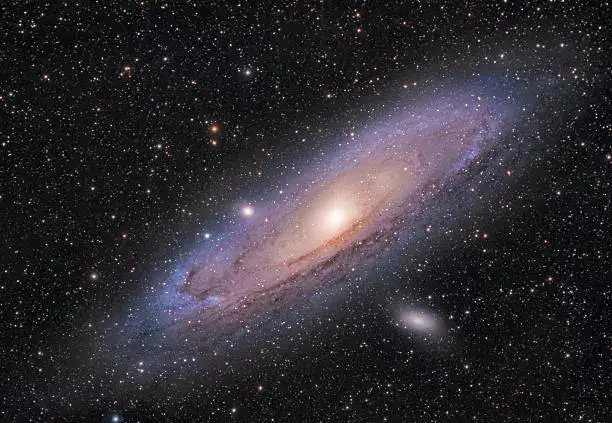
Researchers from King's College London have proposed a new explanation that links the mysterious signals to a phenomenon known as excited dark matter. Their findings suggest that interactions involving dark matter particles could explain several unusual signals observed in the central region of the galaxy. The study was recently published in The Astrophysical Journal.
Strange Signals From the Heart of the Galaxy
The central region of the Milky Way has long been known for producing signals that are difficult to explain using traditional astrophysical models. Over time, scientists have detected several puzzling emissions that appear to originate from this area. These include the 511 keV emission line, a 2 MeV gamma ray continuum, and unusual patterns of gas ionisation within a dense region known as the Central Molecular Zone.
Despite extensive research, common cosmic events such as star explosions and other high energy phenomena have not fully explained these signals. Lead author Dr Shyam Balaji pointed out that the energy patterns and shapes observed in the signals do not perfectly match the behaviour of well known astrophysical processes.
"When we look at well-known astrophysical events, like star explosions, they haven't been able to provide a full explanation for mysteries like the specific energy and shape we've observed coming from the centre of the Milky Way," said lead author Dr Shyam Balaji of the research published on March 5 in The Astrophysical Journal.
"Now, we've shown how one excited dark matter model could account for at least two - possibly even three - of these kinds of unexplained signals at once."
The Mystery of Dark Matter
The proposed explanation centres around Dark Matter, one of the most mysterious components of the universe. Dark matter does not emit, reflect, or absorb light, making it impossible to detect directly with conventional instruments. Yet scientists believe it makes up about a quarter of the universe’s total mass and plays a crucial role in shaping galaxies and cosmic structures.
Because dark matter cannot be observed directly, researchers study it through indirect evidence such as gravitational effects or unexplained cosmic signals. The new study suggests that a special state known as excited dark matter may help explain what is happening at the centre of the Milky Way.
In this theory, dark matter particles collide with each other and briefly store energy. When that energy is released, it produces particles called positrons. These positrons could generate the unusual signals that astronomers have detected, including the specific energy patterns seen in the 511 keV emission line and the gamma ray continuum.
Interestingly, the same mechanism might also explain the unusually high levels of gas ionisation observed in the Central Molecular Zone. If the theory proves accurate, it could connect several long standing cosmic mysteries with a single physical process.
A New Direction for Future Space Research
The researchers believe this explanation could open new paths for understanding the nature of dark matter. By identifying patterns in cosmic signals, scientists may be able to gather more clues about how this invisible substance behaves across the universe.
Future space missions and observatories will play an important role in testing this theory. One of the projects expected to contribute valuable data is the Cherenkov Telescope Array Observatory, which will study high energy cosmic phenomena in greater detail.
"If one mechanism could account for several long-standing unexplained observations in space, it gives a much clearer direction for future research," said Damon Cleaver, PhD Candidate in the Theoretical Particle Physics and Cosmology Group and co-author of the study.
"Within the next generation of space missions, we may finally be able to test the theory of whether dark matter is behind some of the Milky Way's most persistent mysteries and learn more about the mysterious substance itself in the process."
As new telescopes and advanced instruments continue to explore deep space, scientists hope that these mysterious signals will eventually reveal more about the hidden forces shaping our galaxy.
Researchers from King's College London have proposed a new explanation that links the mysterious signals to a phenomenon known as excited dark matter. Their findings suggest that interactions involving dark matter particles could explain several unusual signals observed in the central region of the galaxy. The study was recently published in The Astrophysical Journal.
Strange Signals From the Heart of the Galaxy
The central region of the Milky Way has long been known for producing signals that are difficult to explain using traditional astrophysical models. Over time, scientists have detected several puzzling emissions that appear to originate from this area. These include the 511 keV emission line, a 2 MeV gamma ray continuum, and unusual patterns of gas ionisation within a dense region known as the Central Molecular Zone.Despite extensive research, common cosmic events such as star explosions and other high energy phenomena have not fully explained these signals. Lead author Dr Shyam Balaji pointed out that the energy patterns and shapes observed in the signals do not perfectly match the behaviour of well known astrophysical processes.
"When we look at well-known astrophysical events, like star explosions, they haven't been able to provide a full explanation for mysteries like the specific energy and shape we've observed coming from the centre of the Milky Way," said lead author Dr Shyam Balaji of the research published on March 5 in The Astrophysical Journal.
"Now, we've shown how one excited dark matter model could account for at least two - possibly even three - of these kinds of unexplained signals at once."
The Mystery of Dark Matter
The proposed explanation centres around Dark Matter, one of the most mysterious components of the universe. Dark matter does not emit, reflect, or absorb light, making it impossible to detect directly with conventional instruments. Yet scientists believe it makes up about a quarter of the universe’s total mass and plays a crucial role in shaping galaxies and cosmic structures. Because dark matter cannot be observed directly, researchers study it through indirect evidence such as gravitational effects or unexplained cosmic signals. The new study suggests that a special state known as excited dark matter may help explain what is happening at the centre of the Milky Way.
In this theory, dark matter particles collide with each other and briefly store energy. When that energy is released, it produces particles called positrons. These positrons could generate the unusual signals that astronomers have detected, including the specific energy patterns seen in the 511 keV emission line and the gamma ray continuum.
Interestingly, the same mechanism might also explain the unusually high levels of gas ionisation observed in the Central Molecular Zone. If the theory proves accurate, it could connect several long standing cosmic mysteries with a single physical process.
A New Direction for Future Space Research
The researchers believe this explanation could open new paths for understanding the nature of dark matter. By identifying patterns in cosmic signals, scientists may be able to gather more clues about how this invisible substance behaves across the universe. Future space missions and observatories will play an important role in testing this theory. One of the projects expected to contribute valuable data is the Cherenkov Telescope Array Observatory, which will study high energy cosmic phenomena in greater detail.
"If one mechanism could account for several long-standing unexplained observations in space, it gives a much clearer direction for future research," said Damon Cleaver, PhD Candidate in the Theoretical Particle Physics and Cosmology Group and co-author of the study.
"Within the next generation of space missions, we may finally be able to test the theory of whether dark matter is behind some of the Milky Way's most persistent mysteries and learn more about the mysterious substance itself in the process."
As new telescopes and advanced instruments continue to explore deep space, scientists hope that these mysterious signals will eventually reveal more about the hidden forces shaping our galaxy.
Next Story