
NASA’s Curiosity Rover Investigates Mysterious 'Spiderweb' Patterns on Mars. Here’s What Scientists Say

NASA’s Curiosity rover has uncovered striking spiderweb like patterns etched across the surface of Mars, and scientists believe they could reshape our understanding of the planet’s past. From orbit, these formations look like giant webs stretching over the landscape. Up close, they are low ridges standing about 3 to 6 feet tall, crisscrossing the ground for miles.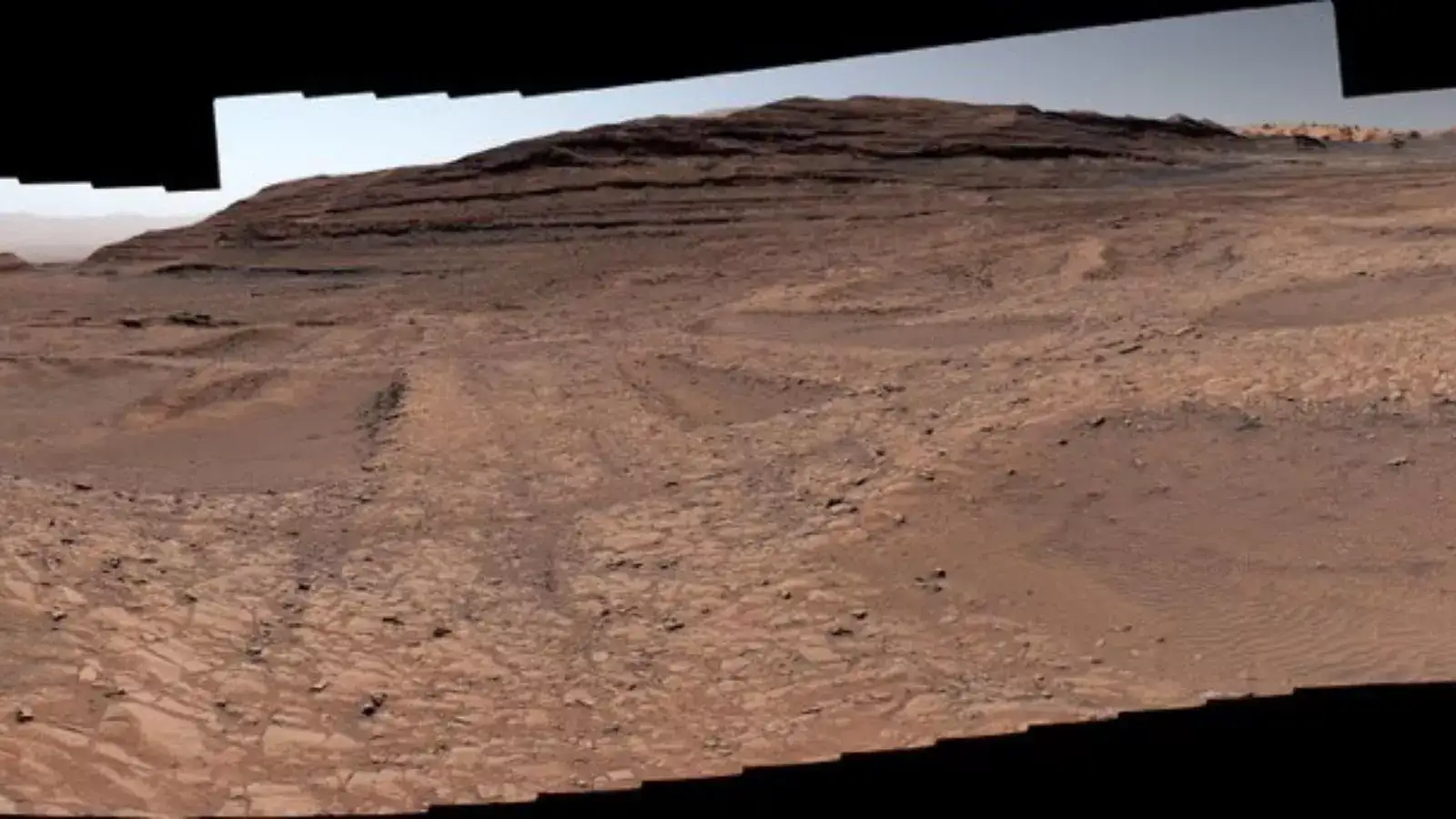
These unusual patterns are more than just visually dramatic. According to scientists, they point toward the presence of groundwater that once flowed beneath the Martian surface. Even more intriguing is the possibility that this water existed much later in the planet’s history than previously thought.
What Exactly Are These 'Spiderwebs'?
The formations are known as boxwork structures. They are believed to have formed when groundwater moved through fractures in underground bedrock. As the water flowed, it left behind minerals that gradually hardened within those cracks. Over millions of years, wind erosion stripped away the softer surrounding rock, leaving behind the tougher mineral rich ridges. The result is a web like pattern that stands out sharply against the landscape.
Curiosity has been exploring this region for nearly six months, carefully studying the terrain and collecting data to better understand how these formations came to be.
A Tough Terrain to Navigate
Reaching these ridges was not easy. The Martian surface in this area is uneven, with sandy dips and rocky patches that pose challenges for the rover’s wheels. Engineers had to guide Curiosity cautiously to avoid getting stuck or damaging its equipment.
"It almost feels like a highway we can drive on. But then we have to go down into the hollows, where you need to be mindful of Curiosity's wheels slipping or having trouble turning in the sand," said operations systems engineer Ashley Stroupe of NASA's Jet Propulsion Laboratory in Southern California, which built Curiosity and leads the mission, said in a statement. "There's always a solution. It just takes trying different paths."
A Stronger Case for Long Lasting Water
The discovery has major implications for understanding Mars’ climate history. The height and spread of these ridges suggest that groundwater levels may once have been relatively high in this region.
"Seeing boxwork this far up the mountain suggests the groundwater table had to be pretty high," said Tina Seeger, a mission scientist from Rice University. "And that means the water needed for sustaining life could have lasted much longer than we thought looking from orbit."
If groundwater remained present for extended periods, it strengthens the argument that Mars may once have had conditions suitable for microbial life. Water is one of the essential ingredients for life as we know it, and signs of its persistence add to the planet’s scientific intrigue.
Mysterious Nodules Add to the Puzzle
Alongside the web like ridges, the rover also spotted small rounded features known as nodules. These bumpy textures have added another layer of mystery.
"We can't quite explain yet why the nodules appear where they do," Seeger said. "Maybe the ridges were cemented by minerals first, and later episodes of groundwater left nodules around them."
Scientists are continuing to analyze these features to determine how they fit into the broader picture of Mars’ geological evolution.
The Journey Continues
Curiosity is steadily making its way up Mount Sharp, examining sulfate rich layers that may preserve records of the planet’s ancient environment. Each discovery helps researchers piece together how Mars transformed from a potentially wetter world into the dry landscape we see today.
With every new image and rock sample, the rover brings us closer to answering one of humanity’s biggest questions about the Red Planet: Did Mars once have the right conditions to support life?
These unusual patterns are more than just visually dramatic. According to scientists, they point toward the presence of groundwater that once flowed beneath the Martian surface. Even more intriguing is the possibility that this water existed much later in the planet’s history than previously thought.
What Exactly Are These 'Spiderwebs'?
The formations are known as boxwork structures. They are believed to have formed when groundwater moved through fractures in underground bedrock. As the water flowed, it left behind minerals that gradually hardened within those cracks. Over millions of years, wind erosion stripped away the softer surrounding rock, leaving behind the tougher mineral rich ridges. The result is a web like pattern that stands out sharply against the landscape.Curiosity has been exploring this region for nearly six months, carefully studying the terrain and collecting data to better understand how these formations came to be.
A Tough Terrain to Navigate
Reaching these ridges was not easy. The Martian surface in this area is uneven, with sandy dips and rocky patches that pose challenges for the rover’s wheels. Engineers had to guide Curiosity cautiously to avoid getting stuck or damaging its equipment."It almost feels like a highway we can drive on. But then we have to go down into the hollows, where you need to be mindful of Curiosity's wheels slipping or having trouble turning in the sand," said operations systems engineer Ashley Stroupe of NASA's Jet Propulsion Laboratory in Southern California, which built Curiosity and leads the mission, said in a statement. "There's always a solution. It just takes trying different paths."
A Stronger Case for Long Lasting Water
The discovery has major implications for understanding Mars’ climate history. The height and spread of these ridges suggest that groundwater levels may once have been relatively high in this region. "Seeing boxwork this far up the mountain suggests the groundwater table had to be pretty high," said Tina Seeger, a mission scientist from Rice University. "And that means the water needed for sustaining life could have lasted much longer than we thought looking from orbit."
If groundwater remained present for extended periods, it strengthens the argument that Mars may once have had conditions suitable for microbial life. Water is one of the essential ingredients for life as we know it, and signs of its persistence add to the planet’s scientific intrigue.
Mysterious Nodules Add to the Puzzle
Alongside the web like ridges, the rover also spotted small rounded features known as nodules. These bumpy textures have added another layer of mystery. "We can't quite explain yet why the nodules appear where they do," Seeger said. "Maybe the ridges were cemented by minerals first, and later episodes of groundwater left nodules around them."
Scientists are continuing to analyze these features to determine how they fit into the broader picture of Mars’ geological evolution.
The Journey Continues
Curiosity is steadily making its way up Mount Sharp, examining sulfate rich layers that may preserve records of the planet’s ancient environment. Each discovery helps researchers piece together how Mars transformed from a potentially wetter world into the dry landscape we see today.With every new image and rock sample, the rover brings us closer to answering one of humanity’s biggest questions about the Red Planet: Did Mars once have the right conditions to support life?
Next Story