
Putin Flags Economic Slowdown, Seeks Urgent Answers from Officials

Russian President Vladimir Putin has publicly expressed concern over Russia’s economic slowdown, signalling a notable shift in tone as the country grapples with mounting fiscal and structural pressures. Speaking during a televised review meeting on economic performance, the Russian president called on senior officials to explain the downturn and outline corrective measures to stabilise growth.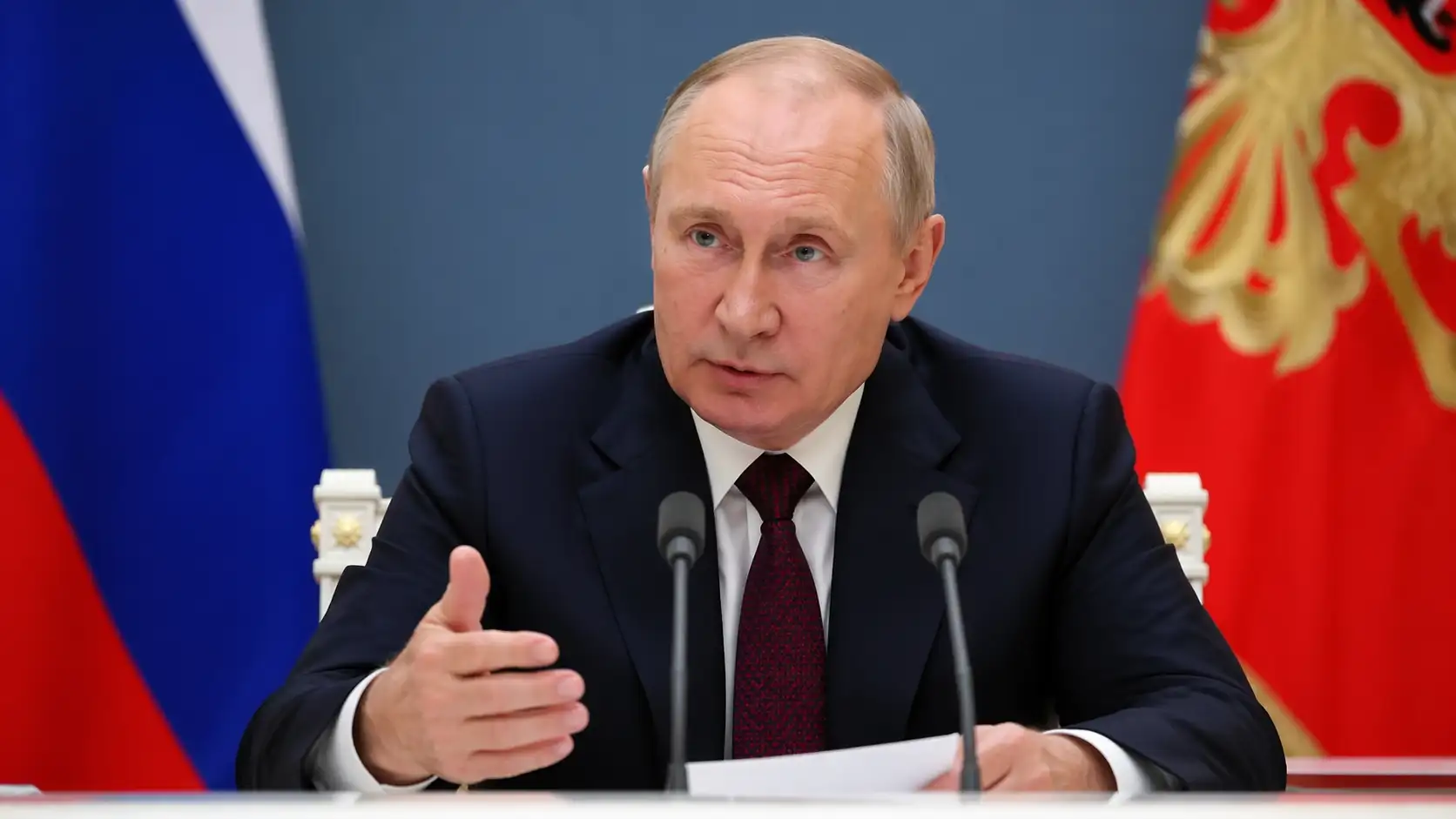
Putin revealed that Russia’s gross domestic product (GDP) contracted by a combined 1.8% in January and February, underscoring a worrying trend across key sectors. Manufacturing, industrial production, and construction all critical pillars of the economy have recorded negative growth, indicating a broad-based slowdown rather than isolated weakness.
He emphasised that current macroeconomic indicators are falling below not only expert projections but also the forecasts issued by the Russian government and central bank. This underperformance has raised questions about the reliability of earlier growth assumptions and the resilience of the wartime-driven economic model.
The meeting was attended by key policymakers, including Prime Minister Mikhail Mishustin, Central Bank Governor Elvira Nabiullina, and senior officials such as Maxim Oreshkin, Denis Manturov, and Alexander Novak. The presence of top leadership highlighted the urgency of the situation and the need for coordinated policy responses.
Putin demanded a detailed breakdown of the causes behind the slowdown, signalling dissatisfaction with existing explanations that framed the deceleration as a controlled transition following years of rapid, defence-led growth.
Russia’s economy has been heavily shaped by its prolonged war with Ukraine. Massive defence spending initially drove strong GDP growth, with expansions of 4.1% in 2023 and 4.9% in 2024. However, this growth model is now showing signs of fatigue.
According to intelligence assessments cited in the Financial Times, the war-driven economic structure is inherently unsustainable. The production of military equipment, much of which is destroyed on the battlefield and does not generate long-term economic value.
As a result, growth slowed sharply to around 1% last year, and projections for the current year remain modest at approximately 1.3%. The shift suggests that the earlier economic boost from wartime expenditure is fading.
Despite the Central Bank of Russia cutting its key interest rate from 21% to 15%, borrowing costs remain high, weighing on both businesses and consumers. Elevated inflation continues to erode purchasing power, while tight monetary conditions limit investment and expansion.
At the same time, the labour market presents a paradox. Unemployment remains at a historic low of around 2%, largely due to labour shortages caused by military mobilisation and demographic pressures. While low unemployment is typically positive, in this case it reflects constrained workforce availability rather than robust economic health.
Russia’s fiscal position has also deteriorated. The budget deficit widened to approximately $58.6 billion in the first quarter, driven in part by declining oil tax revenues. Although global oil prices have risen amid geopolitical tensions involving Iran, Russia has struggled to fully capitalise on these gains.
Operational disruptions, including Ukrainian drone strikes on key export infrastructure, have further limited energy revenues. Intelligence reports suggest that Russia would need oil prices above $100 per barrel for an extended period to meaningfully close its deficit which is an increasingly uncertain prospect.
Some analysts warn that the situation may be more severe than official data indicates. There are concerns about understated inflation, hidden fiscal deficits, and vulnerabilities within the banking sector. These factors could potentially trigger a broader financial crisis if left unaddressed.
Putin’s latest remarks indicate growing awareness within the Kremlin that the economy faces structural challenges beyond short-term fluctuations. His call for accountability and detailed reporting suggests that policymakers may need to rethink their reliance on defence-driven growth and pivot toward a more sustainable economic strategy.
Russia’s economic trajectory is entering a critical phase. While the country has so far weathered sanctions and wartime pressures, the current slowdown exposes deeper systemic weaknesses. Putin’s public criticism of officials reflects rising urgency at the highest levels of government, as Moscow seeks to prevent a slide into recession and stabilise an increasingly fragile economic landscape.
GDP Contraction Raises Alarm
Putin revealed that Russia’s gross domestic product (GDP) contracted by a combined 1.8% in January and February, underscoring a worrying trend across key sectors. Manufacturing, industrial production, and construction all critical pillars of the economy have recorded negative growth, indicating a broad-based slowdown rather than isolated weakness.
He emphasised that current macroeconomic indicators are falling below not only expert projections but also the forecasts issued by the Russian government and central bank. This underperformance has raised questions about the reliability of earlier growth assumptions and the resilience of the wartime-driven economic model.
High-Level Meeting with Economic Leadership
The meeting was attended by key policymakers, including Prime Minister Mikhail Mishustin, Central Bank Governor Elvira Nabiullina, and senior officials such as Maxim Oreshkin, Denis Manturov, and Alexander Novak. The presence of top leadership highlighted the urgency of the situation and the need for coordinated policy responses.
Putin demanded a detailed breakdown of the causes behind the slowdown, signalling dissatisfaction with existing explanations that framed the deceleration as a controlled transition following years of rapid, defence-led growth.
War Economy Losing Momentum
Russia’s economy has been heavily shaped by its prolonged war with Ukraine. Massive defence spending initially drove strong GDP growth, with expansions of 4.1% in 2023 and 4.9% in 2024. However, this growth model is now showing signs of fatigue.
According to intelligence assessments cited in the Financial Times, the war-driven economic structure is inherently unsustainable. The production of military equipment, much of which is destroyed on the battlefield and does not generate long-term economic value.
As a result, growth slowed sharply to around 1% last year, and projections for the current year remain modest at approximately 1.3%. The shift suggests that the earlier economic boost from wartime expenditure is fading.
Inflation, Interest Rates, and Labour Shortages
Despite the Central Bank of Russia cutting its key interest rate from 21% to 15%, borrowing costs remain high, weighing on both businesses and consumers. Elevated inflation continues to erode purchasing power, while tight monetary conditions limit investment and expansion.
At the same time, the labour market presents a paradox. Unemployment remains at a historic low of around 2%, largely due to labour shortages caused by military mobilisation and demographic pressures. While low unemployment is typically positive, in this case it reflects constrained workforce availability rather than robust economic health.
Oil Revenues and Fiscal Pressures
Russia’s fiscal position has also deteriorated. The budget deficit widened to approximately $58.6 billion in the first quarter, driven in part by declining oil tax revenues. Although global oil prices have risen amid geopolitical tensions involving Iran, Russia has struggled to fully capitalise on these gains.
Operational disruptions, including Ukrainian drone strikes on key export infrastructure, have further limited energy revenues. Intelligence reports suggest that Russia would need oil prices above $100 per barrel for an extended period to meaningfully close its deficit which is an increasingly uncertain prospect.
Risk of Deeper Economic Trouble
Some analysts warn that the situation may be more severe than official data indicates. There are concerns about understated inflation, hidden fiscal deficits, and vulnerabilities within the banking sector. These factors could potentially trigger a broader financial crisis if left unaddressed.
Putin’s latest remarks indicate growing awareness within the Kremlin that the economy faces structural challenges beyond short-term fluctuations. His call for accountability and detailed reporting suggests that policymakers may need to rethink their reliance on defence-driven growth and pivot toward a more sustainable economic strategy.
Russia’s economic trajectory is entering a critical phase. While the country has so far weathered sanctions and wartime pressures, the current slowdown exposes deeper systemic weaknesses. Putin’s public criticism of officials reflects rising urgency at the highest levels of government, as Moscow seeks to prevent a slide into recession and stabilise an increasingly fragile economic landscape.
Next Story