
Signs of Life on Mars? Curiosity Rover Finds New Organic Molecules

A new discovery from NASA is adding fresh excitement to the ongoing search for life beyond Earth. The Curiosity rover has identified a range of organic molecules on Mars , including several that have never been detected there before.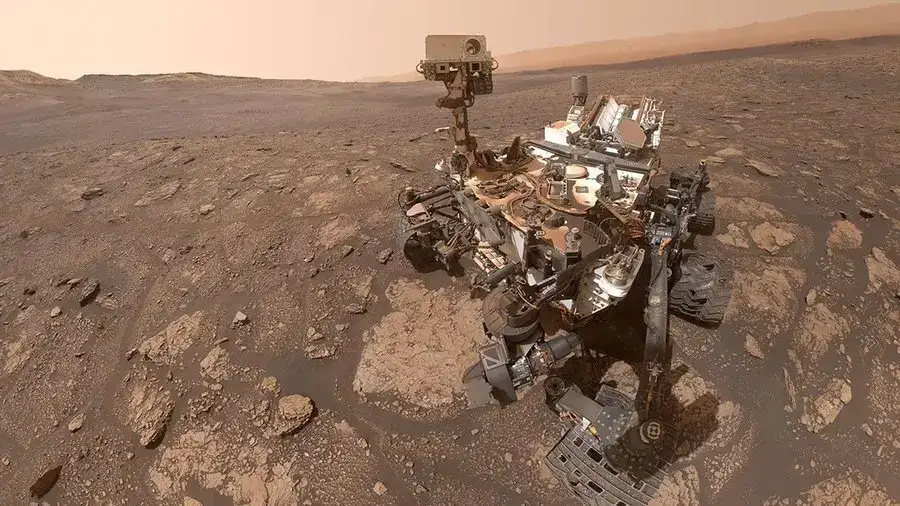
The findings come from a new type of chemical experiment conducted directly on the Martian surface. Scientists say this marks an important step forward in understanding the planet’s past and whether it may once have supported life.
Organic molecules discovered in ancient terrain
The rover detected seven different organic compounds in a dried lakebed near the Martian equator. Out of these, five are completely new discoveries for Mars, making the finding particularly significant.
Organic molecules are considered essential building blocks of life on Earth because they contain carbon and are involved in biological processes. However, their presence alone does not confirm that life existed. These compounds could have formed through natural geological activity or been delivered by meteorites over time.
Still, the discovery raises an important possibility that if life ever existed on Mars, traces of it may still be preserved.
A glimpse into Mars’ distant past
Today, Mars is an extreme environment. Temperatures can drop below minus 100 degrees Celsius at night, and the thin atmosphere offers little protection from intense solar radiation.
But billions of years ago, the planet was very different. Scientists believe it once had flowing water, lakes, and a thicker atmosphere that could have supported microbial life. The area explored by Curiosity, including Gale Crater and the slopes of Mount Sharp, shows strong evidence of this ancient, habitable environment.
What scientists are saying
Researchers estimate that the organic material could be around 3.5 billion years old, making it one of the oldest chemical records ever found on Mars.
"We think we're looking at organic matter that's been preserved on Mars for 3.5 billion years. Is it life? We can't tell, based on this information," said Amy Williams.
This highlights both the excitement and the uncertainty surrounding the discovery. While the molecules are intriguing, they are not proof of life.
Another expert, Andrew Coates, believes early Mars had many of the right conditions for life to begin.
"There's no known reason why life couldn't have started there too," he noted.
Complex chemistry, but not confirmation of life
Among the compounds found is benzothiophene, a sulfur-containing molecule often linked to meteorites. Scientists also detected a nitrogen-bearing compound with a structure similar to molecules that can eventually lead to DNA formation.
"There are several steps between what we found and DNA. It is definitely a building block to how DNA is made now. But it is truly just the bricks, not the house. You can generate these molecules geologically. The same stuff that rained down on Mars from meteorites is what rained down on Earth, and it probably provided the building blocks for life as we know it on our planet," she added.
This means that while the ingredients for life may be present, they do not necessarily confirm that life actually formed.
A surprising level of preservation
One of the most remarkable aspects of this discovery is that these organic compounds have survived for billions of years despite Mars’ harsh surface conditions.
"For a long time, we thought that all organic matter was going to be seriously degraded by that harsh radiation environment. It's really exciting to see that large complex material can survive in the subsurface environment," Prof. Amy Williams added.
This suggests that Mars may still hold many more chemical clues hidden beneath its surface, protected from radiation.
Looking ahead to future missions
The discovery has increased anticipation for the upcoming Rosalind Franklin rover, which is expected to launch in 2028.
Unlike Curiosity, this rover will be able to drill up to two metres below the surface. This is important because organic material is more likely to survive in deeper layers, shielded from radiation. The mission will also carry advanced tools designed to better understand the origin of these compounds.
A step closer to answering a timeless question
While this discovery does not confirm that life once existed on Mars, it significantly strengthens the case that the planet had the right ingredients and conditions.
Each new finding brings scientists closer to answering a question that has fascinated humanity for decades. Was Mars once alive, or did it simply come close to supporting life but never quite reach that stage?
The findings come from a new type of chemical experiment conducted directly on the Martian surface. Scientists say this marks an important step forward in understanding the planet’s past and whether it may once have supported life.
Organic molecules discovered in ancient terrain
The rover detected seven different organic compounds in a dried lakebed near the Martian equator. Out of these, five are completely new discoveries for Mars, making the finding particularly significant.Organic molecules are considered essential building blocks of life on Earth because they contain carbon and are involved in biological processes. However, their presence alone does not confirm that life existed. These compounds could have formed through natural geological activity or been delivered by meteorites over time.
Still, the discovery raises an important possibility that if life ever existed on Mars, traces of it may still be preserved.
A glimpse into Mars’ distant past
Today, Mars is an extreme environment. Temperatures can drop below minus 100 degrees Celsius at night, and the thin atmosphere offers little protection from intense solar radiation. But billions of years ago, the planet was very different. Scientists believe it once had flowing water, lakes, and a thicker atmosphere that could have supported microbial life. The area explored by Curiosity, including Gale Crater and the slopes of Mount Sharp, shows strong evidence of this ancient, habitable environment.
What scientists are saying
Researchers estimate that the organic material could be around 3.5 billion years old, making it one of the oldest chemical records ever found on Mars."We think we're looking at organic matter that's been preserved on Mars for 3.5 billion years. Is it life? We can't tell, based on this information," said Amy Williams.
This highlights both the excitement and the uncertainty surrounding the discovery. While the molecules are intriguing, they are not proof of life.
Another expert, Andrew Coates, believes early Mars had many of the right conditions for life to begin.
"There's no known reason why life couldn't have started there too," he noted.
Complex chemistry, but not confirmation of life
Among the compounds found is benzothiophene, a sulfur-containing molecule often linked to meteorites. Scientists also detected a nitrogen-bearing compound with a structure similar to molecules that can eventually lead to DNA formation."There are several steps between what we found and DNA. It is definitely a building block to how DNA is made now. But it is truly just the bricks, not the house. You can generate these molecules geologically. The same stuff that rained down on Mars from meteorites is what rained down on Earth, and it probably provided the building blocks for life as we know it on our planet," she added.
This means that while the ingredients for life may be present, they do not necessarily confirm that life actually formed.
A surprising level of preservation
One of the most remarkable aspects of this discovery is that these organic compounds have survived for billions of years despite Mars’ harsh surface conditions. "For a long time, we thought that all organic matter was going to be seriously degraded by that harsh radiation environment. It's really exciting to see that large complex material can survive in the subsurface environment," Prof. Amy Williams added.
This suggests that Mars may still hold many more chemical clues hidden beneath its surface, protected from radiation.
Looking ahead to future missions
The discovery has increased anticipation for the upcoming Rosalind Franklin rover, which is expected to launch in 2028. Unlike Curiosity, this rover will be able to drill up to two metres below the surface. This is important because organic material is more likely to survive in deeper layers, shielded from radiation. The mission will also carry advanced tools designed to better understand the origin of these compounds.
A step closer to answering a timeless question
While this discovery does not confirm that life once existed on Mars, it significantly strengthens the case that the planet had the right ingredients and conditions. Each new finding brings scientists closer to answering a question that has fascinated humanity for decades. Was Mars once alive, or did it simply come close to supporting life but never quite reach that stage?
Next Story