
Socialist vs Billionaire: Why Zohran Mamdani's relationship with NYPD chief is key for New York


When New York voters elected Zohran Mamdani, they did not just choose a left-wing firebrand who once called the police “racist” and “a threat to public safety”. They also, perhaps unintentionally, chose Jessica Tisch, the billionaire heir turned hard-nosed police commissioner who embodies everything Mamdani’s political base distrusts.
The pairing now sits at the heart of New York City’s biggest question: can a democratic socialist mayor and a data-driven, business-backed police chief run the city together without tearing each other apart?
Video
The backstory
Mamdani, 34, rode a wave of anti-establishment anger to City Hall, campaigning on taxing the rich, rethinking policing and shifting resources towards housing and mental health. Tisch, 44, is the scion of one of New York’s wealthiest families and a firm believer in proactive policing. She was appointed commissioner in 2024 and quickly earned plaudits from corporate leaders for driving down crime.
On paper, it looked like an impossible alliance. Mamdani had previously supported defunding the police and criticised specialised units like the Strategic Response Group. Tisch, by contrast, speaks of officers as heroes and enjoys deep support from Wall Street, boardrooms and City Hall veterans.
And yet, Mamdani asked her to stay on.
Why Mamdani blinked
The decision was less ideological surrender than political realism. Crime and public safety consistently top voter concerns in New York. A mayor who loses control of the streets rarely survives long enough to pursue an affordability agenda.
Business leaders, unnerved by Mamdani’s rise, privately pushed hard for Tisch’s retention. So did Governor Kathy Hochul. For Jewish leaders wary of Mamdani’s past rhetoric on Israel, keeping Tisch signalled continuity and reassurance.
In short, Mamdani traded ideological purity for governing space. Without Tisch, every spike in crime would have been pinned squarely on him. With her, responsibility is shared.
Why Tisch stayedFor Tisch, staying was also a gamble. She serves at the mayor’s pleasure, but she also commands her own constituency: business leaders, senior officers and political heavyweights who once wished she had run for mayor herself.
Remaining allows her to cement her reputation as the adult in the room. Leaving would have handed Mamdani a symbolic victory over the police establishment. Staying lets her shape policy from the inside and protect the department’s core powers.
It also gives her something more subtle: moral authority. By choosing to work with a mayor who once derided the police, Tisch positions herself as a bridge-builder rather than a partisan warrior.
Early friction pointsThe risks are obvious. Just days after Mamdani’s inauguration, two civilians were killed by police officers in separate incidents. Mamdani’s initial cautious response angered officers who wanted full-throated backing. Tisch’s response was blunt and unequivocal, calling the officers’ actions “heroic”.
The contrast revealed the fault line. Mamdani speaks the language of restraint and reform. Tisch speaks the language of institutional loyalty and enforcement.
Pro-Palestinian and left-wing groups have already accused Mamdani of betrayal for retaining her. Police unions and conservative tabloids, meanwhile, watch closely for any sign that Tisch is being undermined.
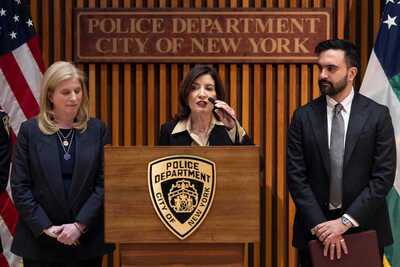
Where it might workAnd yet, there are signs of an uneasy détente. The two now meet weekly. Tisch has been tutoring Mamdani on the realities of running a 50,000-strong police force with a $6 billion budget. At their first joint press conference, she delivered a blizzard of crime statistics. Mamdani followed with a short, emotional appeal about families spared from grief.
It was a revealing division of labour. Tisch handles the numbers. Mamdani handles the narrative.
Crucially, Mamdani has publicly deferred to Tisch on operational policing while carving out his own legacy project: a $1 billion Department of Community Safety focused on prevention and mental health. If it works, he can claim reform without confrontation. If it fails, Tisch still owns traditional policing.
The bigger picture
This is not just a personality clash. It is a live experiment in progressive governance in a city that demands both justice and order.
If crime continues to fall, Mamdani will argue that reform and safety are compatible. Tisch will claim vindication for data-driven policing. If crime rises, the alliance will fracture, and both careers will be on the line.
New York has seen stranger political marriages. Few, however, have been this ideologically stark. For now, the billionaire cop and the socialist mayor are bound by a shared truth: neither can afford for the other to fail.
The pairing now sits at the heart of New York City’s biggest question: can a democratic socialist mayor and a data-driven, business-backed police chief run the city together without tearing each other apart?
Video
The backstory
Mamdani, 34, rode a wave of anti-establishment anger to City Hall, campaigning on taxing the rich, rethinking policing and shifting resources towards housing and mental health. Tisch, 44, is the scion of one of New York’s wealthiest families and a firm believer in proactive policing. She was appointed commissioner in 2024 and quickly earned plaudits from corporate leaders for driving down crime.
On paper, it looked like an impossible alliance. Mamdani had previously supported defunding the police and criticised specialised units like the Strategic Response Group. Tisch, by contrast, speaks of officers as heroes and enjoys deep support from Wall Street, boardrooms and City Hall veterans.
And yet, Mamdani asked her to stay on.
Why Mamdani blinked
The decision was less ideological surrender than political realism. Crime and public safety consistently top voter concerns in New York. A mayor who loses control of the streets rarely survives long enough to pursue an affordability agenda.
Business leaders, unnerved by Mamdani’s rise, privately pushed hard for Tisch’s retention. So did Governor Kathy Hochul. For Jewish leaders wary of Mamdani’s past rhetoric on Israel, keeping Tisch signalled continuity and reassurance.
In short, Mamdani traded ideological purity for governing space. Without Tisch, every spike in crime would have been pinned squarely on him. With her, responsibility is shared.
Why Tisch stayedFor Tisch, staying was also a gamble. She serves at the mayor’s pleasure, but she also commands her own constituency: business leaders, senior officers and political heavyweights who once wished she had run for mayor herself.
Remaining allows her to cement her reputation as the adult in the room. Leaving would have handed Mamdani a symbolic victory over the police establishment. Staying lets her shape policy from the inside and protect the department’s core powers.
It also gives her something more subtle: moral authority. By choosing to work with a mayor who once derided the police, Tisch positions herself as a bridge-builder rather than a partisan warrior.
Early friction pointsThe risks are obvious. Just days after Mamdani’s inauguration, two civilians were killed by police officers in separate incidents. Mamdani’s initial cautious response angered officers who wanted full-throated backing. Tisch’s response was blunt and unequivocal, calling the officers’ actions “heroic”.
The contrast revealed the fault line. Mamdani speaks the language of restraint and reform. Tisch speaks the language of institutional loyalty and enforcement.
Pro-Palestinian and left-wing groups have already accused Mamdani of betrayal for retaining her. Police unions and conservative tabloids, meanwhile, watch closely for any sign that Tisch is being undermined.
Where it might workAnd yet, there are signs of an uneasy détente. The two now meet weekly. Tisch has been tutoring Mamdani on the realities of running a 50,000-strong police force with a $6 billion budget. At their first joint press conference, she delivered a blizzard of crime statistics. Mamdani followed with a short, emotional appeal about families spared from grief.
It was a revealing division of labour. Tisch handles the numbers. Mamdani handles the narrative.
Crucially, Mamdani has publicly deferred to Tisch on operational policing while carving out his own legacy project: a $1 billion Department of Community Safety focused on prevention and mental health. If it works, he can claim reform without confrontation. If it fails, Tisch still owns traditional policing.
The bigger picture
This is not just a personality clash. It is a live experiment in progressive governance in a city that demands both justice and order.
If crime continues to fall, Mamdani will argue that reform and safety are compatible. Tisch will claim vindication for data-driven policing. If crime rises, the alliance will fracture, and both careers will be on the line.
New York has seen stranger political marriages. Few, however, have been this ideologically stark. For now, the billionaire cop and the socialist mayor are bound by a shared truth: neither can afford for the other to fail.
Next Story