
'They'll be killed by their own people or us': Trump says Iran 'afraid' to admit it wants a deal


US President Donald Trump once again took aim at Iran on Thursday, saying that the country wants to negotiate a deal but is afraid to openly pursue one. Targeting the leadership, he further added, “there has never been a head of a country that wanted that job less than being the head of Iran.”
Addressing the NRCC Annual Fundraising Dinner, Trump said, “nobody has seen anything like what we are doing in the Middle East with Iran. They are negotiating, by the way. They want to make a deal so badly, but they are afraid to say it because they figure they will be killed by their own people. They are also afraid they will be killed by us.”
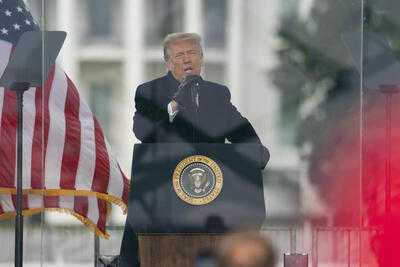
Trump went on to outline what he described as decisive military actions undertaken by his administration, including strikes on key targets and the interception of a large-scale missile attack. Framing Iran’s nuclear ambitions as an urgent threat, he argued that the United States had intervened more than once to halt Tehran’s progress, while criticising previous administrations for failing to act.
“I said we are going to have to do something about Iran because they are going to have a nuclear weapon very soon and they are crazy...We have to stop them. And I say, well, we are going to take a big hit. We're going to go through this certain route, and we will get right back here, but we have to go and stop them.”
On the defence front, Trump claimed US systems had successfully neutralised a major missile barrage. “We had an attack. 100 missiles were shot by Iran at a very important thing that we had... 100 missiles going 2,000 miles an hour were coming at this element of tremendous power and importance. Of the 100 missiles coming at us, 100 missiles were immediately shot down, shot out of the air, and fell into the sea...,” Trump said.
He also turned took a swipe at earlier governments, asserting they had failed to act decisively and that he had scrapped agreements that, in his view, enabled Iran’s nuclear programme. “Every President should have done it... Obama should have done it... I terminated that agreement as soon as I came to office. If I didn't terminate it, that weapon would have been used a long time ago. Then we stopped it a second time... We did attack, and we obliterated the site...,” he said.
Defending his broader strategy, Trump portrayed the situation as one demanding immediate and forceful intervention. “When I went on to do something that for 47 years should have been done by any of the other Presidents. We had no choice... In the short term, what we had to do was get rid of the cancer. We had to cut out the cancer. The cancer was Iran with a nuclear weapon. We have cut it out. Now we are going to finish it off,” he said.
The US President also pointed to other operations as examples of American military capability, including an action involving Nicolas Maduro. “Earlier this year, in a stunning display of American military strength and skill, we apprehended an outlaw from Venezuela, Nicolas Maduro, and brought him to face American justice... We went in, and we got him out of his house...,” he said.
Trump further alleged that his administration had already halted eight wars, suggesting similar outcomes could be achieved in the case of Iran.
Meanwhile, Iran signalled its own readiness as tensions escalated. Speaker of Iran’s Parliament, MB Ghalibaf, said intelligence suggested adversaries could be preparing to seize one of Iran’s islands.
“Based on some intelligence reports, Iran's enemies are preparing to occupy one of the Iranian islands with support from one of the regional countries. Our forces are monitoring all enemy movements, and if they take any step, all the vital infrastructure of that regional country will be targeted with relentless, unceasing attacks,” he said in a post on X.
The conflict is now nearing the end of its fourth week, with tensions continuing to intensify and disruptions to global oil supplies becoming more pronounced. An Iranian military spokesperson has openly mocked US efforts to broker a ceasefire, raising fresh doubts over Washington’s proposed 15-point peace plan.
Lt Col Ebrahim Zolfaghari, speaking on state television on Wednesday, dismissed claims by Donald Trump that talks were under way, suggesting instead that the US was “negotiating with itself.”
Hostilities show little sign of easing. Airstrikes continue to hit Iran, while Iranian missiles and drones are being launched towards Israel and other locations across the region.
At the same time, mounting economic pressure is shaping developments on the ground. Disruptions around the Strait of Hormuz have unsettled global energy markets, pushing oil prices higher and fuelling calls within the United States for a resolution.
Addressing the NRCC Annual Fundraising Dinner, Trump said, “nobody has seen anything like what we are doing in the Middle East with Iran. They are negotiating, by the way. They want to make a deal so badly, but they are afraid to say it because they figure they will be killed by their own people. They are also afraid they will be killed by us.”
Trump went on to outline what he described as decisive military actions undertaken by his administration, including strikes on key targets and the interception of a large-scale missile attack. Framing Iran’s nuclear ambitions as an urgent threat, he argued that the United States had intervened more than once to halt Tehran’s progress, while criticising previous administrations for failing to act.
“I said we are going to have to do something about Iran because they are going to have a nuclear weapon very soon and they are crazy...We have to stop them. And I say, well, we are going to take a big hit. We're going to go through this certain route, and we will get right back here, but we have to go and stop them.”
On the defence front, Trump claimed US systems had successfully neutralised a major missile barrage. “We had an attack. 100 missiles were shot by Iran at a very important thing that we had... 100 missiles going 2,000 miles an hour were coming at this element of tremendous power and importance. Of the 100 missiles coming at us, 100 missiles were immediately shot down, shot out of the air, and fell into the sea...,” Trump said.
He also turned took a swipe at earlier governments, asserting they had failed to act decisively and that he had scrapped agreements that, in his view, enabled Iran’s nuclear programme. “Every President should have done it... Obama should have done it... I terminated that agreement as soon as I came to office. If I didn't terminate it, that weapon would have been used a long time ago. Then we stopped it a second time... We did attack, and we obliterated the site...,” he said.
Defending his broader strategy, Trump portrayed the situation as one demanding immediate and forceful intervention. “When I went on to do something that for 47 years should have been done by any of the other Presidents. We had no choice... In the short term, what we had to do was get rid of the cancer. We had to cut out the cancer. The cancer was Iran with a nuclear weapon. We have cut it out. Now we are going to finish it off,” he said.
The US President also pointed to other operations as examples of American military capability, including an action involving Nicolas Maduro. “Earlier this year, in a stunning display of American military strength and skill, we apprehended an outlaw from Venezuela, Nicolas Maduro, and brought him to face American justice... We went in, and we got him out of his house...,” he said.
Trump further alleged that his administration had already halted eight wars, suggesting similar outcomes could be achieved in the case of Iran.
Meanwhile, Iran signalled its own readiness as tensions escalated. Speaker of Iran’s Parliament, MB Ghalibaf, said intelligence suggested adversaries could be preparing to seize one of Iran’s islands.
“Based on some intelligence reports, Iran's enemies are preparing to occupy one of the Iranian islands with support from one of the regional countries. Our forces are monitoring all enemy movements, and if they take any step, all the vital infrastructure of that regional country will be targeted with relentless, unceasing attacks,” he said in a post on X.
The conflict is now nearing the end of its fourth week, with tensions continuing to intensify and disruptions to global oil supplies becoming more pronounced. An Iranian military spokesperson has openly mocked US efforts to broker a ceasefire, raising fresh doubts over Washington’s proposed 15-point peace plan.
Lt Col Ebrahim Zolfaghari, speaking on state television on Wednesday, dismissed claims by Donald Trump that talks were under way, suggesting instead that the US was “negotiating with itself.”
Hostilities show little sign of easing. Airstrikes continue to hit Iran, while Iranian missiles and drones are being launched towards Israel and other locations across the region.
At the same time, mounting economic pressure is shaping developments on the ground. Disruptions around the Strait of Hormuz have unsettled global energy markets, pushing oil prices higher and fuelling calls within the United States for a resolution.
Next Story