This Day In 1957: Soviets Launch First Artificial Satellite Into Earth's Orbit

On October 4, 1957, the Soviet Union launched Sputnik , the world's first artificial satellite , forever altering the course of history and marking the beginning of the Space Age .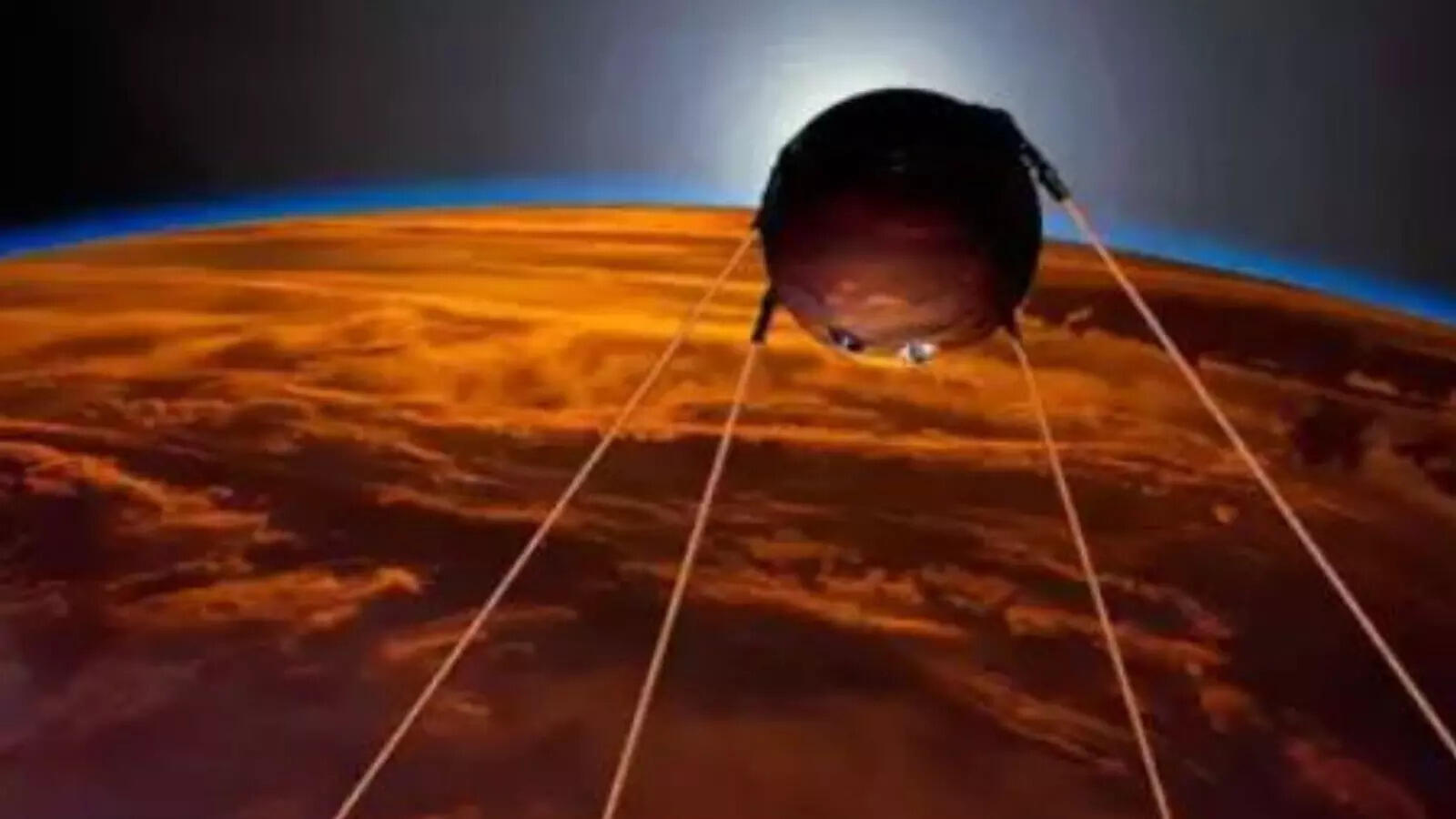
The dream of space travel had been alive for decades. In 1903, Russian scientist Konstantin Tsiolkovsky mathematically proved that an artificial satellite was possible, but his ideas went largely unnoticed in the US. As rocketry advanced over the years, the allure of spaceflight captivated public imagination.
In 1952, the International Council of Scientific Unions launched the International Geophysical Year (IGY), an 18-month scientific extravaganza set to begin in July 1957. The goal was to conduct a series of geophysical experiments, including the launch of Earth-orbiting satellites. The US planned its own satellite, Vanguard, while the Soviets, led by the secretive Sergei Korolev, had their own ambitions.
Korolev, a prisoner-turned-pioneer, developed the R7 intercontinental ballistic missile, which could launch heavy payloads into orbit . Eager to outpace the Americans, he fast-tracked the launch of Sputnik, a small aluminum sphere weighing 184 pounds, on October 4, 1957. It orbited Earth every 96 minutes, sending out radio signals that could be intercepted by amateur radio operators.
Sputnik's launch stunned the American public. The beeping satellite was visible through binoculars and triggered fears of Soviet technological superiority, leading to public anxiety over potential missile attacks and espionage. President Eisenhower's attempts to reassure the nation were met with skepticism and frustration.
In response, the US accelerated its own space efforts. The Defense Department greenlit the Explorer satellite, and despite an initial failure of Vanguard, Explorer I successfully launched on January 31, 1958. It discovered the Van Allen radiation belts, a major scientific breakthrough.
The Soviet Union continued its momentum, launching Sputnik II with the first living creature in space, a dog named Laika, and Sputnik III with scientific instruments. By April 12, 1961, the Soviets sent the first human, Yuri Gagarin, into orbit.
Today, thousands of satellites orbit Earth, a testament to the Space Age's incredible progress. Sputnik's launch not only ignited a global race for space but also spurred the US to bolster its scientific and technological capabilities.
The dream of space travel had been alive for decades. In 1903, Russian scientist Konstantin Tsiolkovsky mathematically proved that an artificial satellite was possible, but his ideas went largely unnoticed in the US. As rocketry advanced over the years, the allure of spaceflight captivated public imagination.
In 1952, the International Council of Scientific Unions launched the International Geophysical Year (IGY), an 18-month scientific extravaganza set to begin in July 1957. The goal was to conduct a series of geophysical experiments, including the launch of Earth-orbiting satellites. The US planned its own satellite, Vanguard, while the Soviets, led by the secretive Sergei Korolev, had their own ambitions.
Korolev, a prisoner-turned-pioneer, developed the R7 intercontinental ballistic missile, which could launch heavy payloads into orbit . Eager to outpace the Americans, he fast-tracked the launch of Sputnik, a small aluminum sphere weighing 184 pounds, on October 4, 1957. It orbited Earth every 96 minutes, sending out radio signals that could be intercepted by amateur radio operators.
Sputnik's launch stunned the American public. The beeping satellite was visible through binoculars and triggered fears of Soviet technological superiority, leading to public anxiety over potential missile attacks and espionage. President Eisenhower's attempts to reassure the nation were met with skepticism and frustration.
In response, the US accelerated its own space efforts. The Defense Department greenlit the Explorer satellite, and despite an initial failure of Vanguard, Explorer I successfully launched on January 31, 1958. It discovered the Van Allen radiation belts, a major scientific breakthrough.
The Soviet Union continued its momentum, launching Sputnik II with the first living creature in space, a dog named Laika, and Sputnik III with scientific instruments. By April 12, 1961, the Soviets sent the first human, Yuri Gagarin, into orbit.
Today, thousands of satellites orbit Earth, a testament to the Space Age's incredible progress. Sputnik's launch not only ignited a global race for space but also spurred the US to bolster its scientific and technological capabilities.
Next Story