
Underwater Volcano Near Japan Reloading With Magma, Scientists Warn

A massive underwater volcano off the coast of Kyushu is showing signs of renewed activity, with scientists warning that it is slowly refilling with magma. The discovery has sparked fresh concerns about the long-term risks linked to one of the planet’s most explosive volcanic systems.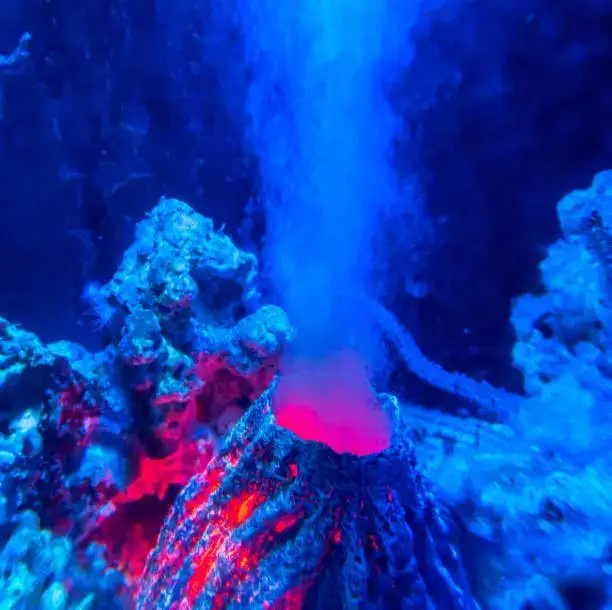
At the centre of this research is the Kikai Caldera, a powerful volcanic structure responsible for the devastating Akahoya eruption around 7,300 years ago. That eruption is considered the largest of the Holocene era, releasing an estimated 160 cubic kilometres of material and reshaping the surrounding region. It was far more intense than well-known eruptions like Novarupta eruption and Mount Pinatubo eruption.
Researchers believe this magma is not leftover from the ancient eruption but newly injected material rising from below. This suggests the volcanic system is still very much alive.
Adding to the evidence, scientists have tracked the slow formation of a lava dome over the past 3,900 years. This gradual build-up points to continuous, low-level activity beneath the surface, even though the volcano has remained relatively quiet in recent history.
The findings also offer valuable insights beyond Japan. Large caldera systems like Yellowstone Caldera and Lake Toba could benefit from similar monitoring approaches. Understanding how magma chambers refill over time may help scientists better predict future eruptions.
Published in Communications Earth and Environment, the study highlights the importance of continuous monitoring. Tracking magma build-up and underground changes can play a crucial role in strengthening early warning systems and reducing the risks posed by powerful volcanoes.
For now, the Kikai Caldera remains quiet on the surface. But deep below, the slow movement of magma is a reminder that Earth’s most powerful forces are always at work.
At the centre of this research is the Kikai Caldera, a powerful volcanic structure responsible for the devastating Akahoya eruption around 7,300 years ago. That eruption is considered the largest of the Holocene era, releasing an estimated 160 cubic kilometres of material and reshaping the surrounding region. It was far more intense than well-known eruptions like Novarupta eruption and Mount Pinatubo eruption.
Fresh Magma, Not Old Remains
In a recent study, scientists from Kobe University and Japan Agency for Marine-Earth Science and Technology used advanced seismic imaging to look deep beneath the caldera. What they found was striking. A large magma chamber still exists beneath the volcano, and it appears to be actively filling again.Researchers believe this magma is not leftover from the ancient eruption but newly injected material rising from below. This suggests the volcanic system is still very much alive.
Adding to the evidence, scientists have tracked the slow formation of a lava dome over the past 3,900 years. This gradual build-up points to continuous, low-level activity beneath the surface, even though the volcano has remained relatively quiet in recent history.
A Warning for the Future
While there have only been minor eruptions in recent decades, experts caution against complacency. The volcano’s past shows it is capable of extreme eruptions, and even a smaller event today could have serious consequences due to the dense population in nearby regions.The findings also offer valuable insights beyond Japan. Large caldera systems like Yellowstone Caldera and Lake Toba could benefit from similar monitoring approaches. Understanding how magma chambers refill over time may help scientists better predict future eruptions.
Published in Communications Earth and Environment, the study highlights the importance of continuous monitoring. Tracking magma build-up and underground changes can play a crucial role in strengthening early warning systems and reducing the risks posed by powerful volcanoes.
For now, the Kikai Caldera remains quiet on the surface. But deep below, the slow movement of magma is a reminder that Earth’s most powerful forces are always at work.
Next Story