
US drops 900kg bomb on Isfahan: How 'bunker buster' dismantled Iran's defences


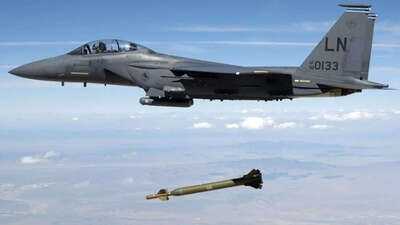
The night skies of the ancient city of Isfahan turned to blinding brightness after an airstrike. It is reported that a 2,000 pound or 900 kg bunker buster bomb hit an Iranian ammunition dump near the city. The current conflict has seen a tremendous use of bunker buster bombs as the Iranian forces have built an elaborate subterranean tunnel network in order to prevent the destruction of vital war waging assets as well as command and control networks under what the perceived would be protection from targeting from the air.
The advantage for the defender here is that a defender who's infrastructure is underground is removed from observation of targeting apparatus and is also protected from the effects of regular bombs. The practice of using underground structures for protection from exploding projectiles was most extensively used during the First World War in which fixed trenches were the targets of heavy artillery and aerial bombing.
In the inter-war period and during the Second World War underground bunkers and defences such as the French Maginot line and the underground bunker complex in Berlin (where Hitler died were) built specifically for protection from threats from air and artillery.
Aware of this extensive network, the American-Israeli coalition has made an extensive use of bunker buster weapons to hit these underground targets. The Israelis have been using bunker buster bombs deployed by air to fight expansive tunnel and bunker networks in both Gaza and Lebanon. The Israelis depend on their vast intelligence network to target these bunkers using specialised bunker buster guided bombs.
In June of last year US Air Force B-2 stealth bombers dropped specialised GBU-57 Massive Ordnance Penetrator (MOP) on the Fardow and Natanz underground nuclear facilities in order to debilitate Iran's nuclear program. The facility was deliberately carved in to a mountain as perceived protection from airstrikes.
These specialised bombs are made of thick metal that helps them penetrate concrete and have a mechanism in their fuses that allows for detonation after a set distance after impacting the surface. Unlike a regular bomb, whose fuse is at the nose of the projectile, the fuse of a bunker buster is kept either in the centre or at the back so as to protect it as it goes through the concrete protecting a target.
Bunker busters are now in the arsenals of most air forces today, as many key pieces of equipment as well as command and control centres are either buried deep underground or are protected by well constructed hardened overground shelters, that are designed to provide protection against regular bombs.
The advantage for the defender here is that a defender who's infrastructure is underground is removed from observation of targeting apparatus and is also protected from the effects of regular bombs. The practice of using underground structures for protection from exploding projectiles was most extensively used during the First World War in which fixed trenches were the targets of heavy artillery and aerial bombing.
In the inter-war period and during the Second World War underground bunkers and defences such as the French Maginot line and the underground bunker complex in Berlin (where Hitler died were) built specifically for protection from threats from air and artillery.
Aware of this extensive network, the American-Israeli coalition has made an extensive use of bunker buster weapons to hit these underground targets. The Israelis have been using bunker buster bombs deployed by air to fight expansive tunnel and bunker networks in both Gaza and Lebanon. The Israelis depend on their vast intelligence network to target these bunkers using specialised bunker buster guided bombs.
In June of last year US Air Force B-2 stealth bombers dropped specialised GBU-57 Massive Ordnance Penetrator (MOP) on the Fardow and Natanz underground nuclear facilities in order to debilitate Iran's nuclear program. The facility was deliberately carved in to a mountain as perceived protection from airstrikes.
These specialised bombs are made of thick metal that helps them penetrate concrete and have a mechanism in their fuses that allows for detonation after a set distance after impacting the surface. Unlike a regular bomb, whose fuse is at the nose of the projectile, the fuse of a bunker buster is kept either in the centre or at the back so as to protect it as it goes through the concrete protecting a target.
Bunker busters are now in the arsenals of most air forces today, as many key pieces of equipment as well as command and control centres are either buried deep underground or are protected by well constructed hardened overground shelters, that are designed to provide protection against regular bombs.
Next Story