
US-Iran Talks Collapse After 21 Hours as Hormuz Blockade Tensions Rise

No Breakthrough After Marathon Talks
The United States and Iran failed to reach an agreement after 21 hours of negotiations in Islamabad, underlining persistent divisions over Tehran’s nuclear ambitions and regional influence. The high-stakes dialogue, seen as a potential step toward easing tensions, instead ended in a familiar deadlock. U.S. Vice President JD Vance stated that Iran had refused to accept Washington’s key conditions, particularly around providing firm guarantees against pursuing nuclear weapons. His remarks reflected growing frustration within the U.S. administration over what it sees as Tehran’s unwillingness to compromise.
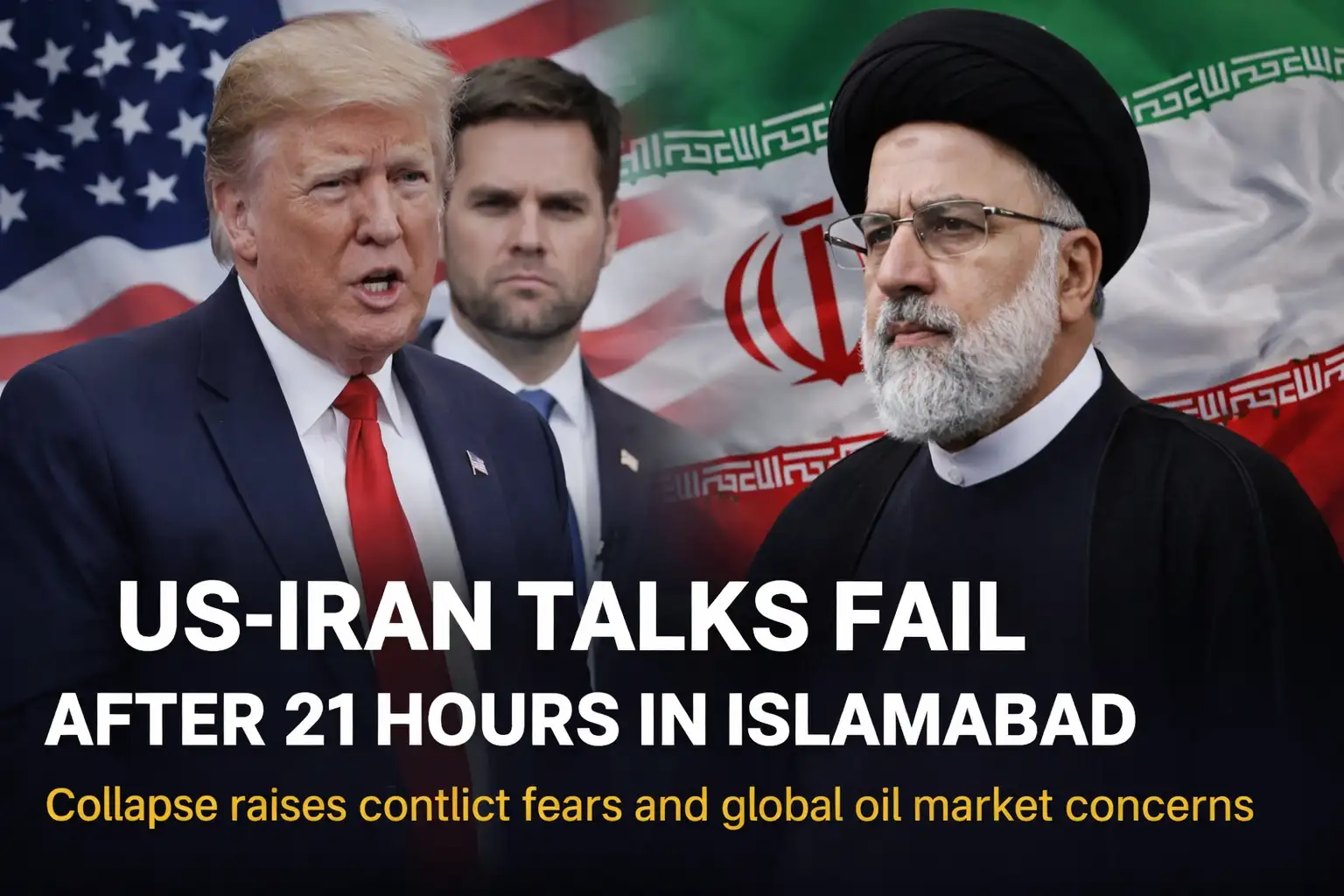
U.S. President Donald Trump further reinforced a hardline stance, suggesting that the United States is not dependent on Iran’s return to negotiations. His comments signal a shift away from diplomatic urgency toward strategic pressure, raising questions about whether future engagement will occur at all.
US Pressure Tactics in the Strait of Hormuz
The collapse of talks comes amid rising tensions in the Strait of Hormuz, where the United States has reportedly increased its naval presence and tightened oversight of maritime activity. While officials have not declared a formal blockade, the current approach resembles a de facto containment strategy focused on monitoring and potentially restricting Iran-linked oil shipments.
This evolving posture is widely seen as an attempt to economically pressure Iran without escalating into direct conflict. By asserting greater control over one of the world’s most critical shipping lanes, Washington is signaling that it can influence global oil flows if diplomatic efforts fail. However, such moves carry significant risks. Iran has repeatedly warned that any attempt to limit its access to the Strait would be met with retaliation, raising the possibility of military confrontation in an already volatile region.
Why Hormuz Is a Global Flashpoint
The importance of the Strait of Hormuz cannot be overstated. Roughly 20-30% of the world's oil supply passes through this narrow corridor, making it one of the most strategically sensitive locations in global trade. Even limited disruptions such as increased inspections, delays, or military signaling can send shockwaves through energy markets.
In the wake of the failed talks, oil prices have already shown signs of volatility, reflecting concerns over supply uncertainty. Shipping costs and insurance premiums are also expected to rise, adding pressure to global trade systems. For economies heavily reliant on energy imports, these developments could translate into inflation and slower growth.
Core Issues Behind the Deadlock
At the heart of the impasse remains a fundamental disagreement over Iran’s nuclear program. The United States continues to demand verifiable commitments that Iran will not pursue nuclear weapons capability, while Tehran rejects these demands as overly restrictive and politically motivated. This long-standing dispute has created a widening trust deficit,both sides unwilling to make concessions without guarantees from the other.
What Lies Ahead
With diplomacy stalled and tensions rising in the Strait of Hormuz, the situation has entered a more uncertain phase. The combination of failed negotiations and increased U.S. pressure tactics raises the risk of escalation, whether through economic measures or military posturing. While backchannel diplomacy remains a possibility, the immediate outlook suggests a prolonged standoff. How both nations navigate this moment will be critical not just for regional stability, but for the global economy.
Next Story