
Virtual Train Experience Helps Seniors Explore 10 Countries Without Moving

A unique travel-like experience is transforming life for elderly residents at St Vincent's Care Toowoomba, where a specially designed virtual train is allowing people to explore the world without stepping outside. Called the “St Vincent’s Express,” this innovative setup recreates international rail journeys inside a care facility, blending technology with comfort and emotional wellbeing.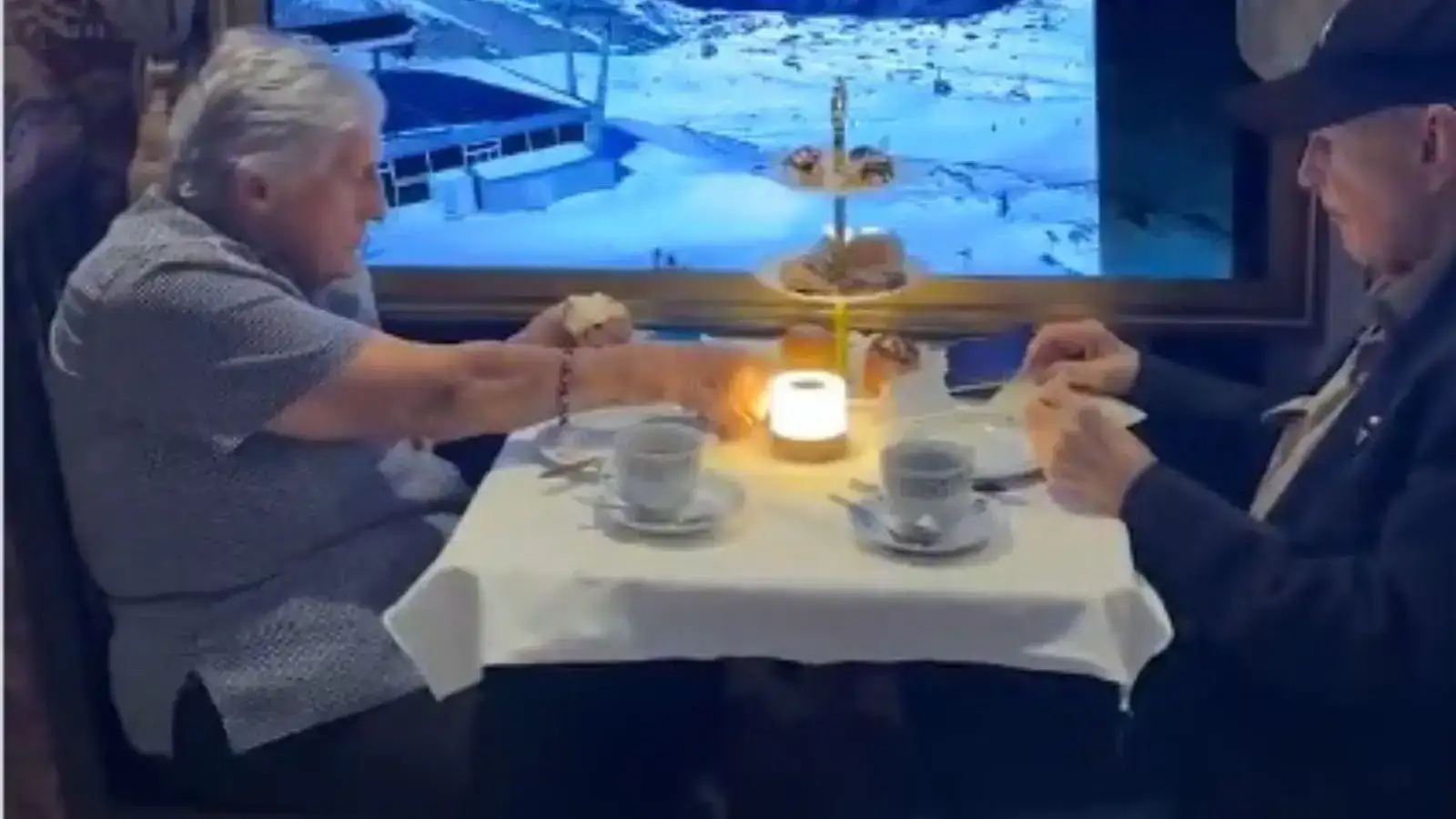
Launched in March 2026, the initiative is designed for residents who are no longer able to travel due to age, mobility limitations, or health conditions, giving them a chance to experience global destinations in a safe and engaging way.
A train journey built on immersion
The “St Vincent’s Express” is not just a screen setup. It is a carefully designed physical space that recreates the feel of a luxury train carriage. Residents sit in arranged seating with table settings, soft lighting, and realistic sound effects that mimic the rhythm of a moving train.
Instead of real windows, large panoramic screens line the walls. These screens display continuous moving visuals of landscapes, cities, mountains, and cultural landmarks. The combination of visuals and motion effects creates the illusion of travelling across long distances.
Surround sound systems add depth to the experience by recreating train announcements, environmental sounds, and track movement. The goal is to make the experience feel natural and familiar, even for residents who are not comfortable with digital tools.
Journeys across 10 countries
Residents are taken on pre-programmed journeys that cover 10 countries, carefully selected to offer variety and emotional engagement. The routes include natural scenery, bustling cities, cultural landmarks, and peaceful countryside views.
Each journey is structured rather than random. It is designed to maintain interest while also evoking memories and curiosity. This helps residents feel connected to places they may have visited in the past or always wished to see.
An AI-powered guide narrates the entire experience, sharing details about geography, history, and culture. In some cases, narration is available in multiple languages, helping residents from different backgrounds feel more included and connected.
Food that adds to the experience
A key part of the immersion is food. Residents are served afternoon tea along with region-inspired snacks that match the destination being shown on screen.
For example, if the journey passes through a particular region, the snacks reflect local flavours and traditions. This pairing of food with visuals and sound helps strengthen the sense of travel and makes the experience more realistic and enjoyable.
Designed for accessibility and comfort
One of the strongest features of the project is its focus on accessibility. Unlike traditional virtual reality systems that require headsets, this experience is fully shared and screen-based.
Residents do not need to wear any devices or learn new technology. They simply sit comfortably and participate. This makes it ideal for individuals with limited mobility, frailty, or cognitive conditions.
The group setting also plays an important role. Residents experience the journey together, which encourages conversation, shared reactions, and a sense of community without any pressure to actively interact with technology.
Supporting memory and emotional wellbeing
The experience has strong relevance for residents living with dementia and other cognitive conditions. Immersive environments like this are increasingly used in reminiscence therapy.
Familiar visuals such as landscapes, trains, and cities can trigger memories and encourage storytelling. This helps residents reconnect with personal experiences and maintain a sense of identity.
Social interaction is another key benefit. Shared experiences help reduce loneliness and improve emotional wellbeing, which is especially important in aged care settings.
A shift toward person-centred care
The “St Vincent’s Express” reflects a wider change in aged care, where emotional wellbeing is becoming just as important as physical health. Instead of focusing only on medical needs, care providers are now prioritising engagement, memory stimulation, and quality of life.
By combining artificial intelligence, immersive visuals, sound design, and hospitality elements, the initiative shows how technology can be used in a simple, human-focused way rather than something complex or isolating.
A scalable model for the future
Around the world, aged care centres are experimenting with digital tools like virtual reality headsets, sensory rooms, and interactive therapy programs. However, many of these are designed for individual use.
What makes this initiative different is its shared experience model. It transforms virtual travel into a group activity, encouraging conversation and collective enjoyment.
Because it does not rely on personal devices, it can also be more easily replicated in other care homes, making it a scalable model for improving resident engagement.
More than just technology
While the St Vincent’s Express is built on advanced systems, its impact goes beyond innovation. For many residents, it restores something deeply meaningful, a sense of movement, curiosity, and connection to the wider world.
Even without leaving their seats, they are once again able to explore, imagine, and share experiences with others, turning everyday care into something far more enriching.
Launched in March 2026, the initiative is designed for residents who are no longer able to travel due to age, mobility limitations, or health conditions, giving them a chance to experience global destinations in a safe and engaging way.
A train journey built on immersion
The “St Vincent’s Express” is not just a screen setup. It is a carefully designed physical space that recreates the feel of a luxury train carriage. Residents sit in arranged seating with table settings, soft lighting, and realistic sound effects that mimic the rhythm of a moving train.Instead of real windows, large panoramic screens line the walls. These screens display continuous moving visuals of landscapes, cities, mountains, and cultural landmarks. The combination of visuals and motion effects creates the illusion of travelling across long distances.
Surround sound systems add depth to the experience by recreating train announcements, environmental sounds, and track movement. The goal is to make the experience feel natural and familiar, even for residents who are not comfortable with digital tools.
Journeys across 10 countries
Residents are taken on pre-programmed journeys that cover 10 countries, carefully selected to offer variety and emotional engagement. The routes include natural scenery, bustling cities, cultural landmarks, and peaceful countryside views. Each journey is structured rather than random. It is designed to maintain interest while also evoking memories and curiosity. This helps residents feel connected to places they may have visited in the past or always wished to see.
An AI-powered guide narrates the entire experience, sharing details about geography, history, and culture. In some cases, narration is available in multiple languages, helping residents from different backgrounds feel more included and connected.
Food that adds to the experience
A key part of the immersion is food. Residents are served afternoon tea along with region-inspired snacks that match the destination being shown on screen.For example, if the journey passes through a particular region, the snacks reflect local flavours and traditions. This pairing of food with visuals and sound helps strengthen the sense of travel and makes the experience more realistic and enjoyable.
Designed for accessibility and comfort
One of the strongest features of the project is its focus on accessibility. Unlike traditional virtual reality systems that require headsets, this experience is fully shared and screen-based. Residents do not need to wear any devices or learn new technology. They simply sit comfortably and participate. This makes it ideal for individuals with limited mobility, frailty, or cognitive conditions.
The group setting also plays an important role. Residents experience the journey together, which encourages conversation, shared reactions, and a sense of community without any pressure to actively interact with technology.
Supporting memory and emotional wellbeing
The experience has strong relevance for residents living with dementia and other cognitive conditions. Immersive environments like this are increasingly used in reminiscence therapy.Familiar visuals such as landscapes, trains, and cities can trigger memories and encourage storytelling. This helps residents reconnect with personal experiences and maintain a sense of identity.
Social interaction is another key benefit. Shared experiences help reduce loneliness and improve emotional wellbeing, which is especially important in aged care settings.
A shift toward person-centred care
The “St Vincent’s Express” reflects a wider change in aged care, where emotional wellbeing is becoming just as important as physical health. Instead of focusing only on medical needs, care providers are now prioritising engagement, memory stimulation, and quality of life. By combining artificial intelligence, immersive visuals, sound design, and hospitality elements, the initiative shows how technology can be used in a simple, human-focused way rather than something complex or isolating.
A scalable model for the future
Around the world, aged care centres are experimenting with digital tools like virtual reality headsets, sensory rooms, and interactive therapy programs. However, many of these are designed for individual use.What makes this initiative different is its shared experience model. It transforms virtual travel into a group activity, encouraging conversation and collective enjoyment.
Because it does not rely on personal devices, it can also be more easily replicated in other care homes, making it a scalable model for improving resident engagement.
More than just technology
While the St Vincent’s Express is built on advanced systems, its impact goes beyond innovation. For many residents, it restores something deeply meaningful, a sense of movement, curiosity, and connection to the wider world. Even without leaving their seats, they are once again able to explore, imagine, and share experiences with others, turning everyday care into something far more enriching.
Next Story