What to Expect During Putin’s High-Stakes India Trip: Defence, Energy and Trade on the Agenda

As Russian President Vladimir Putin arrives in India for the first time since the Ukraine war, New Delhi steps into one of its most sensitive diplomatic moments in recent years. The visit, scheduled for December 4-5, 2025, marks the 23rd India-Russia Annual Summit and brings Putin to New Delhi after nearly four years, at a time when global geopolitics is sharper, alliances are shifting, and every gesture carries weight.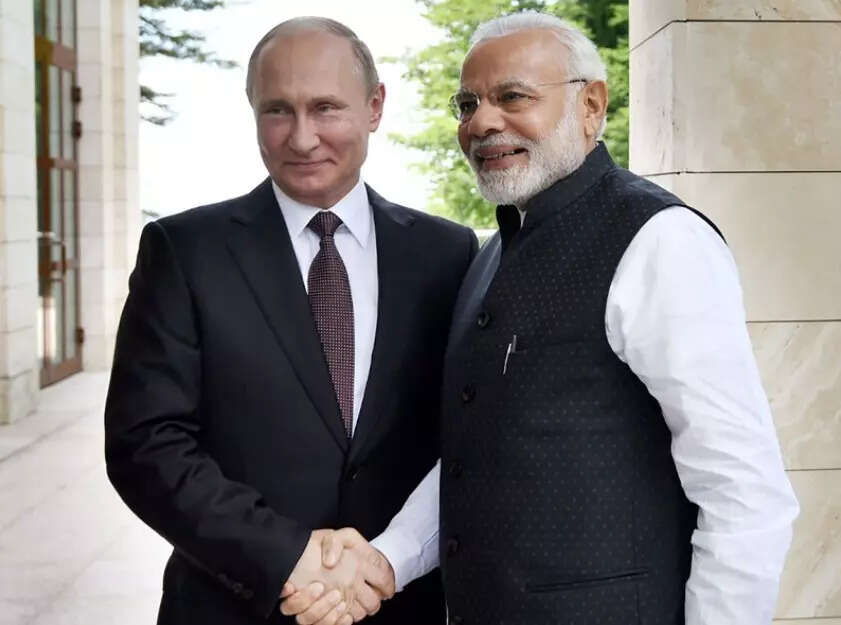
For India, the challenge is clear: protect strategic autonomy while managing U.S. expectations on one side and decades-deep ties with Moscow on the other.
According to the Global Trade Research Initiative (GTRI), the stakes are high. Nearly two-thirds of India’s military hardware still depends on Russian spares, making defence cooperation not just important, but essential. Meanwhile, the trade relationship remains heavily skewed: India exports around $5 billion to Russia while importing nearly $64 billion, mostly crude oil.
Payments have already shifted into a sanctions-proof zone with settlements routed through dirhams, rupees and yuan, a sign of how both nations have adapted to a changing financial landscape.
"India’s export footprint in Russia is narrow, with pharmaceuticals and machinery strong but garments, electronics and consumer goods negligible. Payments are increasingly de-dollarised, routed through UAE dirhams, rupees and yuan, reflecting the workaround economy created by sanctions," said GTRI.
"In energy, New Delhi is expected to pursue long-term crude contracts with Non US sanctioned Russian firms like Lukoil and Roseneft, revival of Indian investments in Russian energy projects, and advancement of nuclear cooperation beyond Kudankulam. Cooperation in critical minerals, manufacturing and maritime connectivity linking India with Russia’s Far East may also be discussed," GTRI noted in its report.
Connectivity initiatives, including maritime links to Russia’s Far East, may also find renewed momentum.
1. A Managed Upgrade (Most Likely)
This scenario strengthens existing ties without dramatically altering India’s global posture. India could secure:
"The two countries may also formalize a new payment framework using the dirham or integrate Russia’s SPFS system with India’s RuPay network. This scenario stabilizes the relationship without significantly raising diplomatic costs," said GTRI.
2. Strategic Deepening (The Bigger Leap)
A more ambitious outcome would signal a sharper alignment between India and Russia. This could include:
Energy: Russia is now India’s largest crude supplier, providing up to 35% of oil imports, deep discounts transforming energy ties into the core of the partnership.
Defence: Russian-origin jets, submarines, tanks and air defence systems remain central to India’s military readiness, keeping maintenance, spares and future upgrades at the heart of every conversation.
Diplomatic Alignment: Despite global turbulence, both countries continue to find common ground in multipolar forums and strategic dialogues.
Putin’s visit comes at a defining moment. For India, it’s not just about reaffirming an old friendship, it’s about navigating a complex world with clarity, balance and strategic confidence.
For India, the challenge is clear: protect strategic autonomy while managing U.S. expectations on one side and decades-deep ties with Moscow on the other.
A Politically Charged Homecoming
During his two-day visit, Putin will meet Prime Minister Narendra Modi and attend a state banquet hosted by the President of India. But beyond ceremonial warmth, the conversations are expected to be dense, strategic and sensitive.According to the Global Trade Research Initiative (GTRI), the stakes are high. Nearly two-thirds of India’s military hardware still depends on Russian spares, making defence cooperation not just important, but essential. Meanwhile, the trade relationship remains heavily skewed: India exports around $5 billion to Russia while importing nearly $64 billion, mostly crude oil.
Payments have already shifted into a sanctions-proof zone with settlements routed through dirhams, rupees and yuan, a sign of how both nations have adapted to a changing financial landscape.
"India’s export footprint in Russia is narrow, with pharmaceuticals and machinery strong but garments, electronics and consumer goods negligible. Payments are increasingly de-dollarised, routed through UAE dirhams, rupees and yuan, reflecting the workaround economy created by sanctions," said GTRI.
What’s on the Table?
Defence will dominate the agenda. India is likely to push for faster delivery of the remaining S-400 Triumf air defence systems and seek clarity on spare parts and upgrades for key Russian-origin platforms. The Su-57 fifth-generation fighter may feature in discussions, though only at a conceptual level for now."In energy, New Delhi is expected to pursue long-term crude contracts with Non US sanctioned Russian firms like Lukoil and Roseneft, revival of Indian investments in Russian energy projects, and advancement of nuclear cooperation beyond Kudankulam. Cooperation in critical minerals, manufacturing and maritime connectivity linking India with Russia’s Far East may also be discussed," GTRI noted in its report.
Connectivity initiatives, including maritime links to Russia’s Far East, may also find renewed momentum.
You may also like
- Why King Charles is more German than British
 Madinah-Hyderabad flight diverted to Ahmedabad after bomb threat
- Bangladesh tribunal issues arrest warrant against deposed PM Sheikh Hasina's son
 BRS accuses Cong govt of Rs 5 lakh crore land 'scam' in Hyderabad
 Delhi HC grants bail to man, says proclaimed offender label not an absolute barrier
What Could the Visit Deliver?
GTRI outlines two potential outcomes for the India-Russia partnership:1. A Managed Upgrade (Most Likely)
This scenario strengthens existing ties without dramatically altering India’s global posture. India could secure:
- Firm timelines for defence deliveries and upgrades
- Long-term energy contracts, including LNG stakes and multi-year crude deals
- Faster construction at nuclear sites
"The two countries may also formalize a new payment framework using the dirham or integrate Russia’s SPFS system with India’s RuPay network. This scenario stabilizes the relationship without significantly raising diplomatic costs," said GTRI.
2. Strategic Deepening (The Bigger Leap)
A more ambitious outcome would signal a sharper alignment between India and Russia. This could include:
- Joint production of defence equipment
- Fresh Indian investment in projects like Arctic LNG 2 and Vostok
- A broader nuclear partnership beyond current reactors
- Accelerated work on the Chennai–Vladivostok maritime corridor and the International North–South Transport Corridor
The Three Pillars Holding the Relationship
India’s Russia policy today rests on three powerful pillars:Energy: Russia is now India’s largest crude supplier, providing up to 35% of oil imports, deep discounts transforming energy ties into the core of the partnership.
Defence: Russian-origin jets, submarines, tanks and air defence systems remain central to India’s military readiness, keeping maintenance, spares and future upgrades at the heart of every conversation.
Diplomatic Alignment: Despite global turbulence, both countries continue to find common ground in multipolar forums and strategic dialogues.
Putin’s visit comes at a defining moment. For India, it’s not just about reaffirming an old friendship, it’s about navigating a complex world with clarity, balance and strategic confidence.






More from our partners


Loving Newspoint? Download the app now
