
Why little was done to head off oil's Strait of Hormuz problem


Of all the risks the global energy system has long faced, none was bigger or better known than the potential closure of the Strait of Hormuz.
The narrow passageway out of the Persian Gulf is both vital - serving as the only gateway to the rest of the world for huge amounts of oil and natural gas - and extremely vulnerable to attacks.
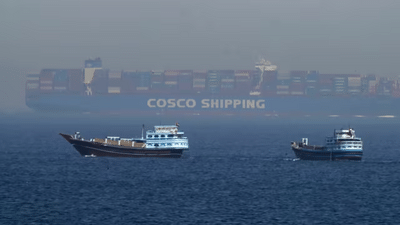
But despite being widely recognized as a potential choke point, the strait remains the only way to export most of the energy produced in the region. That has come into sharp relief heading into the third week of the war in the Middle East, as the near-closure of the waterway sent oil prices soaring above $100 a barrel for the first time in almost four years.
The reason there is no true alternative comes down to a combination of geography, political tensions and economic competition among the region's oil powers. There have been efforts to circumvent the strait, notably by Saudi Arabia and the United Arab Emirates. But the pipelines through those countries can carry only a small fraction of the energy produced in the Persian Gulf.
For many other energy-producing countries in the region, the only way to avoid the strait would be to lay a pipeline across a neighboring country—an expensive and politically fraught endeavor. Take Qatar, one of the world's biggest natural gas exporters. Its only land border is with Saudi Arabia—a country that cut off diplomatic ties and closed that border during a regional spat resolved five years ago. Plus, any pipeline would itself be vulnerable to Iranian attacks.
"There's nothing which is totally secure here," said John Browne, a former CEO of the London-based oil giant BP, once known as the Anglo-Iranian oil company. "In the end, someone with bad intention can do all sorts of things to oil and gas infrastructure."
Some oil analysts also assumed that, if the time came, the United States, which has a keen interest in keeping energy markets stable, would use its military might to keep the strait passable.
"There always has been the nightmare scenario, but it seemed to be a scenario that was not very likely," said Daniel Yergin, a Pulitzer Prize-winning energy historian and vice chair of the research firm S&P Global. "The diversification or security came from the fact that the consumers would be there to protect the oil."
But in this case, the United States, acting with Israel, instigated the conflict by attacking Iran on Feb. 28. While President Donald Trump has floated the possibility of providing U.S. naval escorts for oil and gas tankers, he has not followed through, so far.
With Iran attacking vessels and refineries, oil shipments through the Strait of Hormuz have fallen to less than 10% of their prewar levels, according to the International Energy Agency. And Qatar, the region's gas-exporting powerhouse, has not been cooling natural gas for shipment since the early days of the war. As a result, oil, natural gas and other commodities are stuck. Some countries are putting more fuel in storage tanks, but those are running out of room.
That is forcing countries to cut back. Within little more than a week, oil production fell by several millions of barrels a day collectively in Iraq, Kuwait, the Emirates and Saudi Arabia, according to estimates from the research firm Rystad Energy.
All told, countries across the region slashed production by at least 10 million barrels of oil a day by Tuesday—around 10% of global supply—according to the IEA. Companies are also turning much less oil into fuels like gasoline, diesel and jet fuel as they shut down refineries or operate them at lower levels.
"It doesn't matter where the price of oil gets. If you can't sell any oil, you might as well keep it under the ground," said Shwan Ibrahim Taha, chair of Iraqi bank Rabee Securities.
The six fossil-fuel-rich countries of the Gulf—Saudi Arabia, the UAE, Kuwait, Qatar, Oman and Bahrain—belong to a loose union called the Gulf Cooperation Council, but cooperation is often lacking. Leaders have talked about building a unified passenger and freight rail system for more than a decade to little avail. Building a shared system for exporting energy would be substantially more fraught, and unlikely to surmount political and economic hurdles.
In recent years, Saudi Arabia and the UAE, the two most powerful countries in the region, have often been at odds, pursuing different oil policies and backing different parties in armed conflicts around the region, including in Yemen, a poor and war-torn country that has a long border with Saudi Arabia and sits at the opening of the Red Sea.
More than a quarter of the oil typically exported via the Strait of Hormuz in the form of either crude or fuels like diesel is still able to get out, the IEA estimated. That is because the UAE built a short pipeline from Abu Dhabi to Fujairah that started operating in 2012, circumventing the Strait of Hormuz, though Iran has targeted facilities on both ends.
The biggest alternative is Saudi Arabia's conduit to the Red Sea, which opened in the 1980s during what came to be known as the "tanker wars" between Iran and Iraq. The pipeline can carry up to 7 million barrels of oil a day. But with 2 million barrels headed to refineries within the kingdom, only about 5 million barrels a day of capacity is available to oil that otherwise would be shipped through the strait, Amin H. Nasser, CEO of Saudi Aramco, said last week.
"Immediately, as the Strait of Hormuz starts closing, we ramped up production through the East-West pipeline," he said. Nasser separately warned that global oil markets would face "catastrophic consequences" without access to the strait.
The narrow passageway out of the Persian Gulf is both vital - serving as the only gateway to the rest of the world for huge amounts of oil and natural gas - and extremely vulnerable to attacks.
But despite being widely recognized as a potential choke point, the strait remains the only way to export most of the energy produced in the region. That has come into sharp relief heading into the third week of the war in the Middle East, as the near-closure of the waterway sent oil prices soaring above $100 a barrel for the first time in almost four years.
The reason there is no true alternative comes down to a combination of geography, political tensions and economic competition among the region's oil powers. There have been efforts to circumvent the strait, notably by Saudi Arabia and the United Arab Emirates. But the pipelines through those countries can carry only a small fraction of the energy produced in the Persian Gulf.
For many other energy-producing countries in the region, the only way to avoid the strait would be to lay a pipeline across a neighboring country—an expensive and politically fraught endeavor. Take Qatar, one of the world's biggest natural gas exporters. Its only land border is with Saudi Arabia—a country that cut off diplomatic ties and closed that border during a regional spat resolved five years ago. Plus, any pipeline would itself be vulnerable to Iranian attacks.
"There's nothing which is totally secure here," said John Browne, a former CEO of the London-based oil giant BP, once known as the Anglo-Iranian oil company. "In the end, someone with bad intention can do all sorts of things to oil and gas infrastructure."
Some oil analysts also assumed that, if the time came, the United States, which has a keen interest in keeping energy markets stable, would use its military might to keep the strait passable.
"There always has been the nightmare scenario, but it seemed to be a scenario that was not very likely," said Daniel Yergin, a Pulitzer Prize-winning energy historian and vice chair of the research firm S&P Global. "The diversification or security came from the fact that the consumers would be there to protect the oil."
But in this case, the United States, acting with Israel, instigated the conflict by attacking Iran on Feb. 28. While President Donald Trump has floated the possibility of providing U.S. naval escorts for oil and gas tankers, he has not followed through, so far.
With Iran attacking vessels and refineries, oil shipments through the Strait of Hormuz have fallen to less than 10% of their prewar levels, according to the International Energy Agency. And Qatar, the region's gas-exporting powerhouse, has not been cooling natural gas for shipment since the early days of the war. As a result, oil, natural gas and other commodities are stuck. Some countries are putting more fuel in storage tanks, but those are running out of room.
That is forcing countries to cut back. Within little more than a week, oil production fell by several millions of barrels a day collectively in Iraq, Kuwait, the Emirates and Saudi Arabia, according to estimates from the research firm Rystad Energy.
All told, countries across the region slashed production by at least 10 million barrels of oil a day by Tuesday—around 10% of global supply—according to the IEA. Companies are also turning much less oil into fuels like gasoline, diesel and jet fuel as they shut down refineries or operate them at lower levels.
"It doesn't matter where the price of oil gets. If you can't sell any oil, you might as well keep it under the ground," said Shwan Ibrahim Taha, chair of Iraqi bank Rabee Securities.
The six fossil-fuel-rich countries of the Gulf—Saudi Arabia, the UAE, Kuwait, Qatar, Oman and Bahrain—belong to a loose union called the Gulf Cooperation Council, but cooperation is often lacking. Leaders have talked about building a unified passenger and freight rail system for more than a decade to little avail. Building a shared system for exporting energy would be substantially more fraught, and unlikely to surmount political and economic hurdles.
In recent years, Saudi Arabia and the UAE, the two most powerful countries in the region, have often been at odds, pursuing different oil policies and backing different parties in armed conflicts around the region, including in Yemen, a poor and war-torn country that has a long border with Saudi Arabia and sits at the opening of the Red Sea.
More than a quarter of the oil typically exported via the Strait of Hormuz in the form of either crude or fuels like diesel is still able to get out, the IEA estimated. That is because the UAE built a short pipeline from Abu Dhabi to Fujairah that started operating in 2012, circumventing the Strait of Hormuz, though Iran has targeted facilities on both ends.
The biggest alternative is Saudi Arabia's conduit to the Red Sea, which opened in the 1980s during what came to be known as the "tanker wars" between Iran and Iraq. The pipeline can carry up to 7 million barrels of oil a day. But with 2 million barrels headed to refineries within the kingdom, only about 5 million barrels a day of capacity is available to oil that otherwise would be shipped through the strait, Amin H. Nasser, CEO of Saudi Aramco, said last week.
"Immediately, as the Strait of Hormuz starts closing, we ramped up production through the East-West pipeline," he said. Nasser separately warned that global oil markets would face "catastrophic consequences" without access to the strait.
Next Story