
The fastest woman on Earth had polio: How sheer determination made her achieve the unimaginable


Before Wilma Rudolph became the fastest woman on earth , she was the child doctors thought might never move freely at all. She was born in 1940 near Clarksville, Tennessee, one of 22 children in a family stretched thin by poverty and segregation. As a young girl, she battled pneumonia, scarlet fever and polio, and for years she depended on a leg brace and orthopaedic shoe to get around. Her family made long trips for treatment in Nashville, and the road back to strength was anything but smooth. But that slow, stubborn return to movement became the first chapter of a life that would later seem almost impossible. Scroll down to read more...
A body rebuilt by will
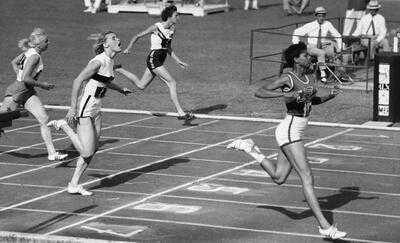
By the time Rudolph was 12, she could walk without the brace. In high school, she was not just recovering; she was exploding into talent. She became a standout basketball player and runner in Clarksville, and at 14, she had already drawn the attention of a Tennessee State track coach. Rudolph later attended Tennessee State University, where she kept sharpening her sprinting until the girl, who once was told she would struggle to walk, had become one of the country’s most promising young athletes. Her first Olympic appearance came at 16, at the 1956 Melbourne Games, where she won bronze in the 4x100 metre relay. That medal was small compared with what came later, but it announced her arrival.
Rome and the sprint that changed everything
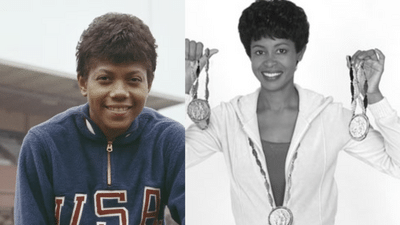
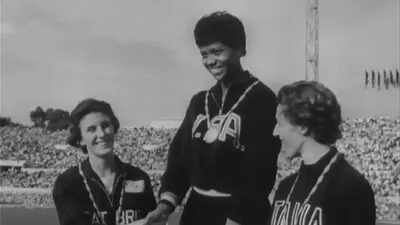
Four years later, the 1960 Rome Olympics turned Rudolph into a global figure. She won the 100 meters, the 200 metres and the 4x100 relay, and according to an official Olympic site, she broke three world records in the process. Britannica and the Olympic movement both describe her as the first American woman to win three track-and-field gold medals in a single Games. That mattered not only because she was winning but also because of how she won: with composure, grace and a kind of almost serene command that made speed look effortless. The press called her “The Black Gazelle", but the nickname only hinted at the deeper truth. Rudolph had not simply become fast. She had become unignorable.
More than medals
Rudolph’s victory in Rome carried a meaning that reached far beyond the track. At a time when Black women were still fighting for visibility, respect and equal access to sport and public life, she was standing on the world’s biggest stage and refusing to be small. Smithsonian and the National Museum of African American History and Culture have both framed her achievements as part of a larger story about Black athletic excellence and visibility in the modern Olympics. Rudolph became not just a champion but also a symbol of recovery, of Black womanhood , and of the sheer force it takes to turn a body marked by illness into one that commands the world’s attention.
The homecoming, she would not accept
When Rudolph returned home to Clarksville, she faced another test of courage. Britannica reports that when her hometown planned a welcome-home parade, she refused to take part unless Black and white residents could attend together. That condition changed the event into the first integrated gathering of its kind in Clarksville. It was a small moment in the official record, but a revealing one: Rudolph understood that medals meant less if dignity was still segregated. Her stand made clear that her sense of victory extended beyond sport. She was not interested in being celebrated on unequal terms.
Life after the finish line
Rudolph retired from running in 1962, and her life after the track was grounded in education, coaching and public service. She earned her degree and went on to work as a teacher and track coach, later serving as a commentator and continuing to support young athletes. Even in retirement, she remained tied to the idea that talent needed structure, mentoring and a chance to grow. Her story did not end with a final race; it widened into a public life shaped by example. When she died in 1994, at 54, she left behind more than records. She left a template for resilience that still feels vivid because it was never polished into myth. It was built from pain, discipline and an almost impossible refusal to stop moving.
Rudolph’s life still resonates because it contains so many truths at once: illness can break a body without breaking a spirit, talent often hides in struggle, and greatness is rarely a straight line. Wilma Rudolph did not simply overcome polio. She outgrew the narrow story other people wrote for her, and in doing so, she helped widen the space for everyone who came after her.
A body rebuilt by will
By the time Rudolph was 12, she could walk without the brace. In high school, she was not just recovering; she was exploding into talent. She became a standout basketball player and runner in Clarksville, and at 14, she had already drawn the attention of a Tennessee State track coach. Rudolph later attended Tennessee State University, where she kept sharpening her sprinting until the girl, who once was told she would struggle to walk, had become one of the country’s most promising young athletes. Her first Olympic appearance came at 16, at the 1956 Melbourne Games, where she won bronze in the 4x100 metre relay. That medal was small compared with what came later, but it announced her arrival.
Rome and the sprint that changed everything
Four years later, the 1960 Rome Olympics turned Rudolph into a global figure. She won the 100 meters, the 200 metres and the 4x100 relay, and according to an official Olympic site, she broke three world records in the process. Britannica and the Olympic movement both describe her as the first American woman to win three track-and-field gold medals in a single Games. That mattered not only because she was winning but also because of how she won: with composure, grace and a kind of almost serene command that made speed look effortless. The press called her “The Black Gazelle", but the nickname only hinted at the deeper truth. Rudolph had not simply become fast. She had become unignorable.
More than medals
Rudolph’s victory in Rome carried a meaning that reached far beyond the track. At a time when Black women were still fighting for visibility, respect and equal access to sport and public life, she was standing on the world’s biggest stage and refusing to be small. Smithsonian and the National Museum of African American History and Culture have both framed her achievements as part of a larger story about Black athletic excellence and visibility in the modern Olympics. Rudolph became not just a champion but also a symbol of recovery, of Black womanhood , and of the sheer force it takes to turn a body marked by illness into one that commands the world’s attention.
The homecoming, she would not accept
When Rudolph returned home to Clarksville, she faced another test of courage. Britannica reports that when her hometown planned a welcome-home parade, she refused to take part unless Black and white residents could attend together. That condition changed the event into the first integrated gathering of its kind in Clarksville. It was a small moment in the official record, but a revealing one: Rudolph understood that medals meant less if dignity was still segregated. Her stand made clear that her sense of victory extended beyond sport. She was not interested in being celebrated on unequal terms.
Life after the finish line
Rudolph retired from running in 1962, and her life after the track was grounded in education, coaching and public service. She earned her degree and went on to work as a teacher and track coach, later serving as a commentator and continuing to support young athletes. Even in retirement, she remained tied to the idea that talent needed structure, mentoring and a chance to grow. Her story did not end with a final race; it widened into a public life shaped by example. When she died in 1994, at 54, she left behind more than records. She left a template for resilience that still feels vivid because it was never polished into myth. It was built from pain, discipline and an almost impossible refusal to stop moving.
Rudolph’s life still resonates because it contains so many truths at once: illness can break a body without breaking a spirit, talent often hides in struggle, and greatness is rarely a straight line. Wilma Rudolph did not simply overcome polio. She outgrew the narrow story other people wrote for her, and in doing so, she helped widen the space for everyone who came after her.
Next Story