
Netflix-Warner Bros. Takeover Faces Political Heat After Trump’s statement

The entertainment industry is on high alert as Netflix’s planned $82.7 billion takeover of Warner Bros. Discovery encounters mounting political resistance, most notably from the U.S. President Donald Trump, who has publicly voiced concerns over the deal’s implications for market competition. The acquisition, one of the largest in entertainment history, would unite Netflix’s global streaming dominance with Warner Bros.’ powerhouse content library, including HBO, DC, and iconic film franchises.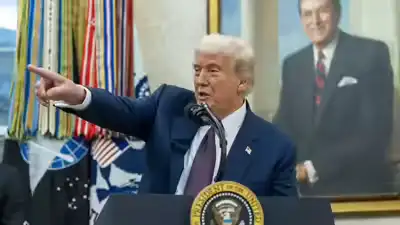
Trump’s comments came during the 2025 Kennedy Center Honors, where he acknowledged recently meeting Netflix co-CEO Ted Sarandos but cautioned that the merger “could be a problem” due to the massive market share Netflix would command after absorbing Warner Bros. His remarks add a significant political dimension to what was already a heavily scrutinized deal.
According to analysts, a combined Netflix-Warner entity could control 30-40% of the U.S. streaming market, a threshold that regulators often view as potentially monopolistic. Trump suggested that he would personally review the merger, signaling that the approval process may be tougher and more politically charged than initially anticipated.
The deal has already triggered pushback from several corners of the industry. Lawmakers such as Senator Elizabeth Warren have labelled it an “anti-monopoly nightmare,” arguing that such consolidation would harm competition, raise prices, and diminish creative diversity. Unions representing writers, actors, and production crews have expressed fears that a mega-platform could wield excessive leverage over wages, working conditions, and contract negotiations.
Industry bodies and rival studios have also raised eyebrows. Some legacy companies claim the sale process itself was unfairly tilted in Netflix’s favor, a claim that may further complicate regulatory evaluations. Meanwhile, consumer advocacy groups warn that the acquisition could reduce choice and lead to streaming price hikes.
Financial analysts have cautioned that Netflix is taking on substantial debt to fund the deal, raising questions about long-term sustainability. The company, traditionally a streaming-first platform, would be shifting into a full-scale entertainment conglomerate with theatres, studios, and vast content responsibilities, a transition not without operational risks.
Supporters of the merger argue that combining resources could produce higher-quality content, enhance global distribution, and strengthen America’s entertainment presence against rising international competitors. However, detractors fear that such a giant could crush smaller studios, limit independent filmmaking, and dominate negotiations with talent.
As the Department of Justice prepares to review the merger, Trump’s remarks have amplified public scrutiny and could influence the regulatory climate significantly. If approved, the deal would reshape the global streaming landscape; if blocked, it may force Warner Bros. Discovery to entertain bids from other interested parties.
For now, industry stakeholders and viewers alike wait to see whether the world’s biggest streaming platform will become the most powerful entertainment empire in modern history.
Trump’s comments came during the 2025 Kennedy Center Honors, where he acknowledged recently meeting Netflix co-CEO Ted Sarandos but cautioned that the merger “could be a problem” due to the massive market share Netflix would command after absorbing Warner Bros. His remarks add a significant political dimension to what was already a heavily scrutinized deal.
According to analysts, a combined Netflix-Warner entity could control 30-40% of the U.S. streaming market, a threshold that regulators often view as potentially monopolistic. Trump suggested that he would personally review the merger, signaling that the approval process may be tougher and more politically charged than initially anticipated.
The deal has already triggered pushback from several corners of the industry. Lawmakers such as Senator Elizabeth Warren have labelled it an “anti-monopoly nightmare,” arguing that such consolidation would harm competition, raise prices, and diminish creative diversity. Unions representing writers, actors, and production crews have expressed fears that a mega-platform could wield excessive leverage over wages, working conditions, and contract negotiations.
Industry bodies and rival studios have also raised eyebrows. Some legacy companies claim the sale process itself was unfairly tilted in Netflix’s favor, a claim that may further complicate regulatory evaluations. Meanwhile, consumer advocacy groups warn that the acquisition could reduce choice and lead to streaming price hikes.
Financial analysts have cautioned that Netflix is taking on substantial debt to fund the deal, raising questions about long-term sustainability. The company, traditionally a streaming-first platform, would be shifting into a full-scale entertainment conglomerate with theatres, studios, and vast content responsibilities, a transition not without operational risks.
Supporters of the merger argue that combining resources could produce higher-quality content, enhance global distribution, and strengthen America’s entertainment presence against rising international competitors. However, detractors fear that such a giant could crush smaller studios, limit independent filmmaking, and dominate negotiations with talent.
As the Department of Justice prepares to review the merger, Trump’s remarks have amplified public scrutiny and could influence the regulatory climate significantly. If approved, the deal would reshape the global streaming landscape; if blocked, it may force Warner Bros. Discovery to entertain bids from other interested parties.
For now, industry stakeholders and viewers alike wait to see whether the world’s biggest streaming platform will become the most powerful entertainment empire in modern history.






More from our partners


Loving Newspoint? Download the app now
