
Fire, Earth, Air and Water Signs: What Each Element Represents in Astrology

Have you ever wondered why some people seem naturally adventurous, while others prefer stability, intellectual conversations or deep emotional connections? In astrology, the four elements, Fire, Earth, Air and Water, offer a traditional way to understand these differences. Each element represents a broad temperament and is associated with three zodiac signs.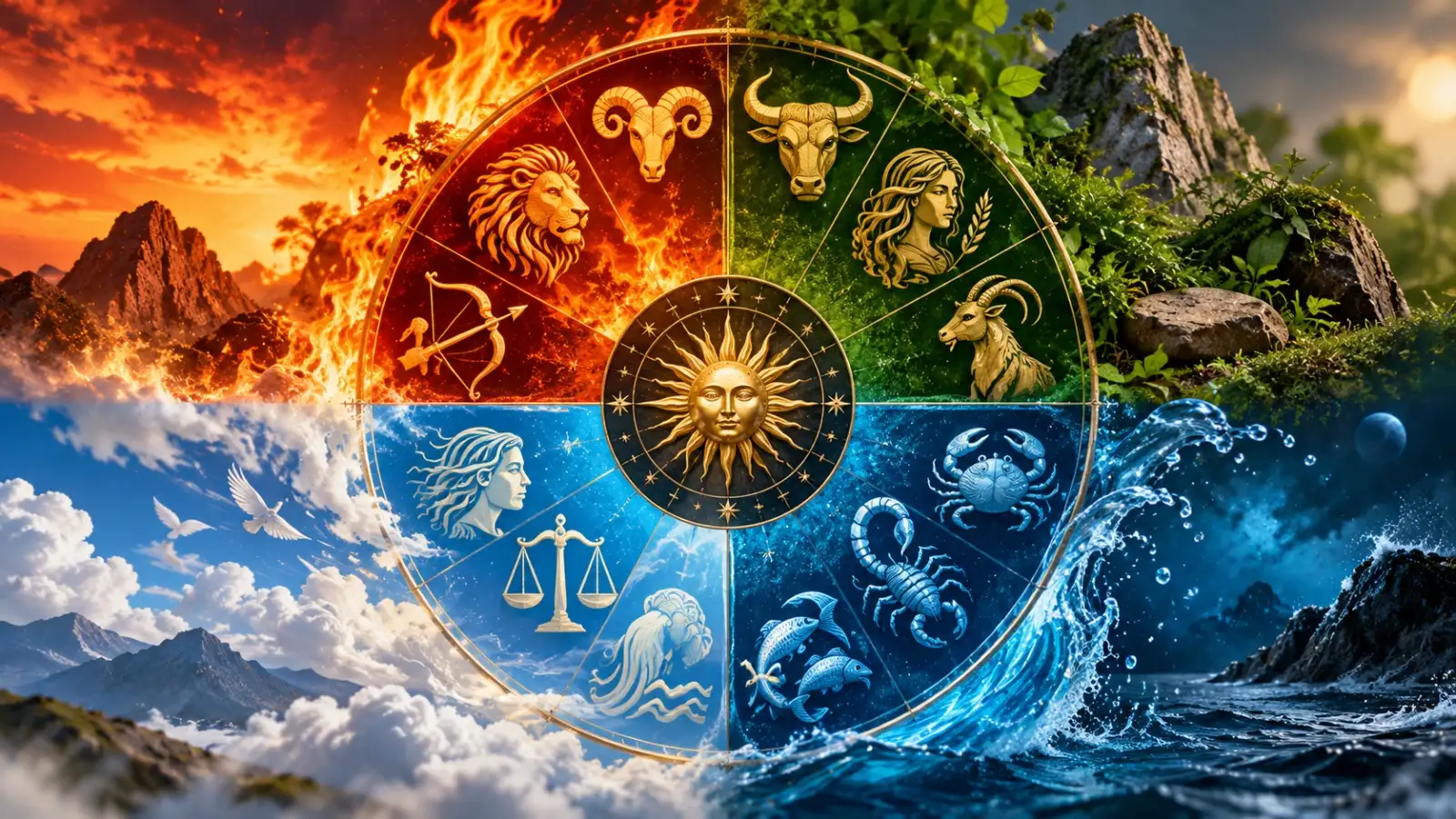
These elements are symbolic rather than scientific explanations of personality. They form part of the traditional astrological framework used to interpret zodiac signs, relationships and individual tendencies. Understanding them can be an interesting starting point for exploring your Sun sign and the wider birth chart.
The element provides a broad symbolic interpretation, but it does not describe every aspect of a person's character. Astrologers also consider other parts of a birth chart, including planetary positions and the qualities assigned to each sign.
People with prominent Fire placements are traditionally described as energetic, expressive and willing to pursue new experiences. They may enjoy taking the lead, starting projects and motivating others. Their enthusiasm can help them approach challenges with confidence.
However, the same symbolism also points to potential difficulties. Acting before thinking, becoming impatient or losing interest when progress slows down are common challenges associated with Fire signs.
In astrology, Earth signs are often associated with people who value consistency and prefer achievable plans over vague promises. They may appreciate routines, financial security and tangible results.
Their practical approach can be useful when solving everyday problems or working towards long-term goals. However, an excessive attachment to familiar routines can sometimes make change difficult.
Air signs are traditionally described as curious and mentally active. They may enjoy discussions, exploring different viewpoints and understanding how people or systems work.
Their ability to consider several perspectives can be a strength, particularly in situations that require negotiation or creative thinking. On the other hand, focusing too heavily on logic or analysis can sometimes make emotional conversations more difficult.
Astrological descriptions often portray Water signs as attentive to the emotional atmosphere around them. They may value close relationships, meaningful conversations and a sense of trust.
This sensitivity is traditionally considered a strength because it can encourage compassion and emotional awareness. However, Water symbolism also points to potential challenges, such as taking situations personally, holding on to past experiences or becoming overwhelmed by difficult feelings.
These are broad astrological associations, not fixed descriptions of individuals. Two people born under the same zodiac sign can have different personalities, experiences and priorities.
Astrologers also use three qualities, known as cardinal, fixed and mutable, to explain why signs belonging to the same element may express it differently. For example, Aries, Leo and Sagittarius are all Fire signs, but traditional astrology describes Aries as initiating, Leo as sustaining and Sagittarius as adapting and exploring.
Signs belonging to the same element are also often described as having a natural understanding of one another. For example, two Air signs may enjoy exchanging ideas, while two Earth signs may share an appreciation for practical planning and stability.
However, these associations should not be treated as rules for choosing a partner or judging a relationship. Communication, trust, respect, shared values and individual behaviour matter far more in real relationships than someone's zodiac element.
Astrological compatibility is a traditional interpretive practice, not a scientifically established method for predicting relationship success.
For example, someone whose Sun sign is Leo belongs to the Fire group, while someone whose Sun sign is Virgo belongs to the Earth group.
People who explore a complete birth chart may also examine the elements associated with their Moon sign, rising sign and planetary placements. Astrologers use these additional positions to develop a more detailed symbolic interpretation.
It is worth distinguishing this Western zodiac framework from other astrological systems. Indian astrology also uses elemental concepts, often discussed through the five great elements, known as the Pancha Mahabhuta: Earth, Water, Fire, Air and Space. These concepts are related to broader Indian philosophical traditions and are not identical to the four-element classification used in Western astrology.
Learning these groups can make the zodiac easier to understand, especially for beginners. However, no single element can define an entire personality. Individual experiences, choices, relationships and circumstances are much more complex than a zodiac category.
The four elements are best approached as a traditional framework for reflection and curiosity, rather than a definitive guide to who someone is or how their future will unfold.
These elements are symbolic rather than scientific explanations of personality. They form part of the traditional astrological framework used to interpret zodiac signs, relationships and individual tendencies. Understanding them can be an interesting starting point for exploring your Sun sign and the wider birth chart.
What Are the Four Elements in Astrology ?
In Western astrology, the 12 zodiac signs are divided into four elemental groups, with three signs belonging to each element. Each group represents a different way of approaching life.- Fire: Aries, Leo and Sagittarius
- Earth: Taurus, Virgo and Capricorn
- Air: Gemini, Libra and Aquarius
- Water: Cancer, Scorpio and Pisces
The element provides a broad symbolic interpretation, but it does not describe every aspect of a person's character. Astrologers also consider other parts of a birth chart, including planetary positions and the qualities assigned to each sign.
1. Fire Signs: Energy, Passion and Action
Fire signs are Aries, Leo and Sagittarius. In astrology, Fire represents enthusiasm, motivation, creativity and the desire to take action.People with prominent Fire placements are traditionally described as energetic, expressive and willing to pursue new experiences. They may enjoy taking the lead, starting projects and motivating others. Their enthusiasm can help them approach challenges with confidence.
However, the same symbolism also points to potential difficulties. Acting before thinking, becoming impatient or losing interest when progress slows down are common challenges associated with Fire signs.
Aries: The Initiator
Aries is associated with courage, independence and taking the first step. In astrological interpretations, Aries energy favours action and new beginnings. Its challenge is to balance enthusiasm with patience and careful decision-making.Leo: The Creative Leader
Leo represents self-expression, confidence, generosity and creativity. It is traditionally associated with a desire to inspire others and make a meaningful contribution. Its challenge can be accepting criticism without taking it personally.Sagittarius: The Explorer
Sagittarius is linked with curiosity, freedom, learning and exploration. This sign is often described as adventurous and interested in discovering new perspectives. Its challenge may be maintaining focus when too many possibilities compete for attention.2. Earth Signs: Stability, Practicality and Reliability
Earth signs include Taurus, Virgo and Capricorn. The Earth element symbolises the material world, practical thinking, patience and the ability to build something lasting.In astrology, Earth signs are often associated with people who value consistency and prefer achievable plans over vague promises. They may appreciate routines, financial security and tangible results.
Their practical approach can be useful when solving everyday problems or working towards long-term goals. However, an excessive attachment to familiar routines can sometimes make change difficult.
Taurus: The Steady Builder
Taurus is associated with patience, comfort, loyalty and stability. It traditionally values security and the pleasures of everyday life. Its challenge is remaining open to change instead of becoming too attached to familiar habits.Virgo: The Careful Organiser
Virgo represents analysis, attention to detail and improvement. In astrological descriptions, Virgo energy is linked with organising information and finding practical solutions. Its challenge is avoiding excessive criticism or perfectionism.Capricorn: The Ambitious Planner
Capricorn is associated with discipline, responsibility and long-term achievement. It symbolises the willingness to work steadily towards a goal. Its challenge is balancing ambition with rest, flexibility and personal relationships.3. Air Signs: Communication, Ideas and Curiosity
Air signs are Gemini, Libra and Aquarius. The Air element represents the intellectual side of life, including communication, learning, social interaction and the exchange of ideas.Air signs are traditionally described as curious and mentally active. They may enjoy discussions, exploring different viewpoints and understanding how people or systems work.
Their ability to consider several perspectives can be a strength, particularly in situations that require negotiation or creative thinking. On the other hand, focusing too heavily on logic or analysis can sometimes make emotional conversations more difficult.
Gemini: The Curious Communicator
Gemini is associated with curiosity, adaptability and communication. It represents the desire to gather information, ask questions and explore different subjects. Its challenge is maintaining focus rather than constantly switching interests.Libra: The Diplomatic Thinker
Libra represents balance, cooperation and fairness. It is traditionally linked with relationships and the ability to consider different sides of an argument. Its challenge is making decisions without becoming overly concerned about pleasing everyone.Aquarius: The Independent Thinker
Aquarius is associated with originality, independence and wider social ideas. In astrology, it represents unconventional thinking and an interest in how communities can improve. Its challenge may be appearing emotionally distant or becoming too attached to an ideal.4. Water Signs: Emotions, Intuition and Connection
Water signs include Cancer, Scorpio and Pisces. The Water element symbolises feelings, sensitivity, imagination and emotional connection.Astrological descriptions often portray Water signs as attentive to the emotional atmosphere around them. They may value close relationships, meaningful conversations and a sense of trust.
This sensitivity is traditionally considered a strength because it can encourage compassion and emotional awareness. However, Water symbolism also points to potential challenges, such as taking situations personally, holding on to past experiences or becoming overwhelmed by difficult feelings.
Cancer: The Nurturer
Cancer is associated with care, home, belonging and emotional security. It traditionally values close relationships and protecting loved ones. Its challenge is avoiding excessive worry or withdrawing when it feels vulnerable.Scorpio: The Intense Observer
Scorpio represents depth, privacy, determination and transformation. It is often described as interested in understanding what lies beneath the surface. Its challenge may involve managing suspicion, emotional intensity or a desire for control.Pisces: The Imaginative Dreamer
Pisces is associated with imagination, empathy and creativity. It symbolises sensitivity to the experiences of others and an interest in the less tangible aspects of life. Its challenge is maintaining boundaries and distinguishing hopeful expectations from practical realities.How Do the Four Elements Differ From One Another?
The easiest way to understand the four elements is to consider the broad approach each represents in traditional astrology.| Element | Associated signs | Main symbolism | Common challenge |
| Fire | Aries, Leo, Sagittarius | Energy and action | Impulsiveness |
| Earth | Taurus, Virgo, Capricorn | Stability and practical results | Rigidity |
| Air | Gemini, Libra, Aquarius | Ideas and communication | Overthinking |
| Water | Cancer, Scorpio, Pisces | Feelings and intuition | Emotional overwhelm |
Astrologers also use three qualities, known as cardinal, fixed and mutable, to explain why signs belonging to the same element may express it differently. For example, Aries, Leo and Sagittarius are all Fire signs, but traditional astrology describes Aries as initiating, Leo as sustaining and Sagittarius as adapting and exploring.
Are Zodiac Elements Important for Compatibility?
Astrology often uses elemental groups when discussing relationships. Fire and Air are traditionally considered compatible because Air symbolically fuels Fire, while Earth and Water are paired because Water nourishes Earth.Signs belonging to the same element are also often described as having a natural understanding of one another. For example, two Air signs may enjoy exchanging ideas, while two Earth signs may share an appreciation for practical planning and stability.
However, these associations should not be treated as rules for choosing a partner or judging a relationship. Communication, trust, respect, shared values and individual behaviour matter far more in real relationships than someone's zodiac element.
Astrological compatibility is a traditional interpretive practice, not a scientifically established method for predicting relationship success.
How to Find Your Zodiac Element
In Western astrology, your Sun sign is usually determined by your date of birth. Once you know your sign, you can identify its corresponding element.For example, someone whose Sun sign is Leo belongs to the Fire group, while someone whose Sun sign is Virgo belongs to the Earth group.
People who explore a complete birth chart may also examine the elements associated with their Moon sign, rising sign and planetary placements. Astrologers use these additional positions to develop a more detailed symbolic interpretation.
It is worth distinguishing this Western zodiac framework from other astrological systems. Indian astrology also uses elemental concepts, often discussed through the five great elements, known as the Pancha Mahabhuta: Earth, Water, Fire, Air and Space. These concepts are related to broader Indian philosophical traditions and are not identical to the four-element classification used in Western astrology.
What the Four Elements Ultimately Represent
Fire, Earth, Air and Water offer four different symbolic lenses through which astrology interprets human tendencies. Fire represents enthusiasm and action, Earth focuses on stability and practical matters, Air emphasises ideas and communication, while Water explores feelings and emotional connections.Learning these groups can make the zodiac easier to understand, especially for beginners. However, no single element can define an entire personality. Individual experiences, choices, relationships and circumstances are much more complex than a zodiac category.
The four elements are best approached as a traditional framework for reflection and curiosity, rather than a definitive guide to who someone is or how their future will unfold.
Next Story