
What Is a Kundli and What Information Does It Contain?

In Vedic astrology, a Kundli is a birth chart prepared using a person's date, time and place of birth. Also known as a Janam Kundli or horoscope, it represents the positions of the planets and other astrological points at the time of birth. Traditionally, astrologers use this chart to interpret different aspects of life, including personality, relationships, education, career and important life periods. A Kundli is also commonly consulted during marriage matching and other traditional ceremonies. Understanding its basic components can help explain how this ancient astrological system organises and interprets planetary positions .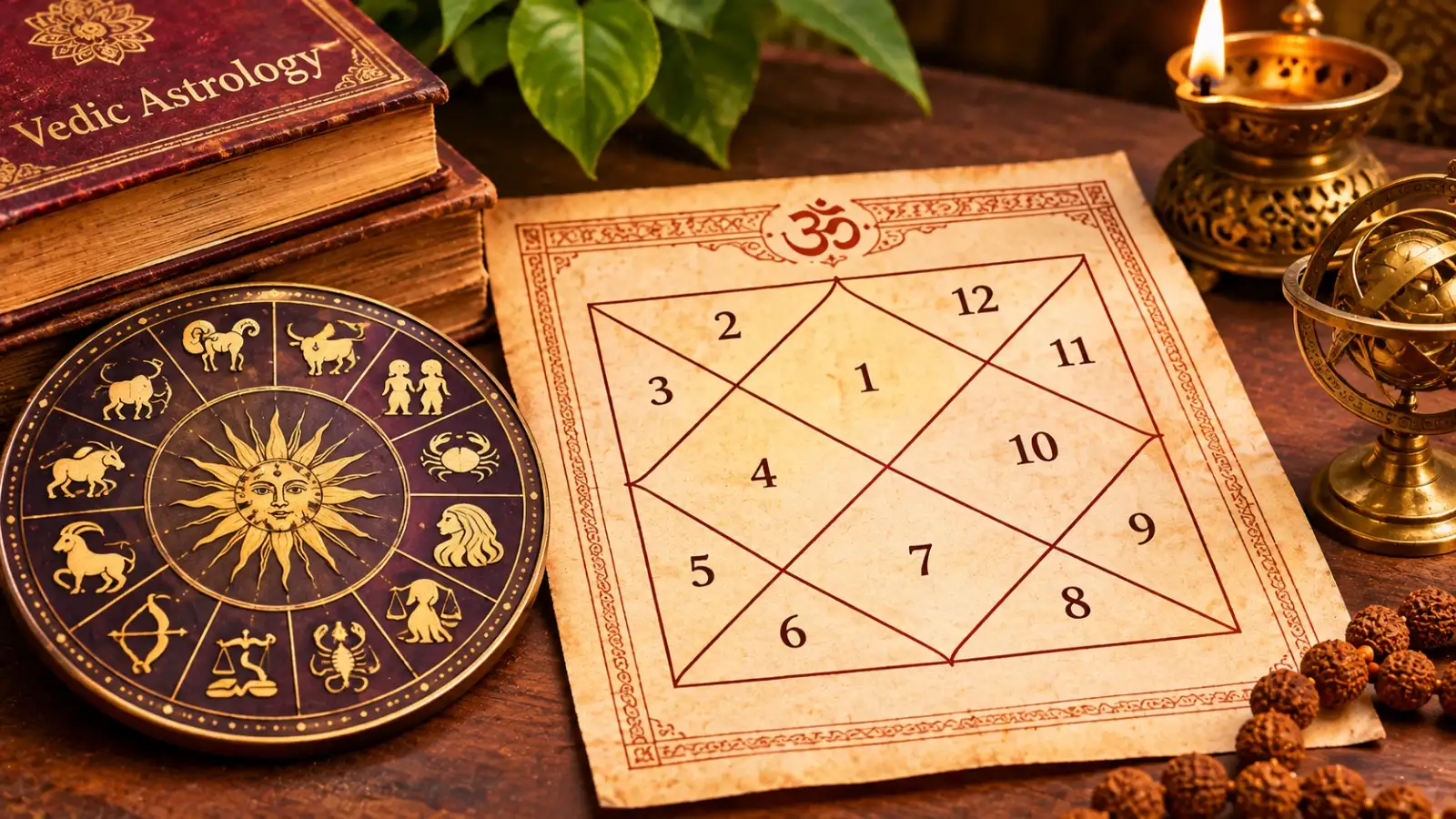
Even a small difference in birth time can change the Ascendant and house placements. This is why accurate birth details are considered important in traditional Vedic astrology.
For example, the first house is linked with personality and physical appearance, while the seventh house is traditionally associated with marriage and partnerships. The tenth house is commonly examined for career, profession and public reputation.
Each sign is associated with particular characteristics in traditional astrological interpretations. The placement of planets in different Rashis is used to interpret their influence within the chart.
Rahu and Ketu are lunar nodes rather than physical planets, but they hold an important place in Vedic astrology. Each Graha is associated with particular themes, such as communication, relationships, ambition, discipline, wisdom and emotional tendencies.
Astrologers consider the Lagna an important factor because it provides the framework for interpreting the entire birth chart. Its ruling planet, known as the Lagna lord, is also examined during traditional readings.
The Moon's position at the time of birth determines a person's Janma Nakshatra. Astrologers use it to interpret emotional tendencies and other traditional astrological factors. It is also important in several Hindu naming and ceremonial customs.
They also study planetary aspects, conjunctions and relationships. For example, two or more planets occupying the same house may form a conjunction, which is interpreted according to the planets involved and other chart conditions.
Doshas are combinations that some astrological traditions interpret as challenging influences. Mangal Dosha is one commonly discussed example, particularly during marriage matching. Interpretations can differ between astrologers and schools of astrology, so individual combinations are not generally assessed in isolation.
Each major period, known as Mahadasha, is further divided into smaller periods called Antardashas. Astrologers examine these cycles to interpret the timing of different life events and changing planetary influences.
A Kundli may also be used for traditional marriage compatibility assessments. These can include Guna Milan, Ashtakoota matching and examination of factors such as Manglik status. Such assessments are part of astrological tradition rather than scientifically established methods of predicting relationship success.
Some people also consult astrologers for interpretations related to career, education, relationships and personal decisions. However, astrology is a belief-based system and should not replace practical judgement, professional advice or evidence-based decision-making.
A Kundli is a detailed astrological chart containing information about planetary positions, zodiac signs, houses, Nakshatras and other traditional elements associated with a person's birth. Each component has a specific role in Vedic astrology, helping astrologers interpret different aspects of life through an established symbolic system. Understanding these elements makes it easier to read a birth chart and recognise the traditional concepts used in horoscope analysis.
1. Date, Time and Place of Birth
The first information required to prepare a Kundli includes the person's date, exact time and place of birth. These details help determine the positions of celestial bodies and the arrangement of houses in the birth chart.Even a small difference in birth time can change the Ascendant and house placements. This is why accurate birth details are considered important in traditional Vedic astrology.
2. The Twelve Houses (Bhavas)
A Kundli is divided into 12 houses, traditionally called Bhavas. Each house represents a different area of life and is interpreted according to the planets and signs associated with it.For example, the first house is linked with personality and physical appearance, while the seventh house is traditionally associated with marriage and partnerships. The tenth house is commonly examined for career, profession and public reputation.
3. The Twelve Zodiac Signs (Rashis)
The twelve zodiac signs, known as Rashis, form an important part of a Vedic birth chart. These include Mesh (Aries), Vrishabh (Taurus), Mithun (Gemini), Karka (Cancer), Simha (Leo), Kanya (Virgo), Tula (Libra), Vrishchik (Scorpio), Dhanu (Sagittarius), Makar (Capricorn), Kumbh (Aquarius) and Meen (Pisces).Each sign is associated with particular characteristics in traditional astrological interpretations. The placement of planets in different Rashis is used to interpret their influence within the chart.
4. The Nine Grahas (Planets)
Vedic astrology traditionally considers nine Grahas when interpreting a Kundli. These include the Sun, Moon, Mars, Mercury, Jupiter, Venus, Saturn, Rahu and Ketu.Rahu and Ketu are lunar nodes rather than physical planets, but they hold an important place in Vedic astrology. Each Graha is associated with particular themes, such as communication, relationships, ambition, discipline, wisdom and emotional tendencies.
5. Lagna or Ascendant
Lagna, also known as the Ascendant, is the zodiac sign rising on the eastern horizon at the time and place of birth. It determines the starting point of the first house in a Kundli.Astrologers consider the Lagna an important factor because it provides the framework for interpreting the entire birth chart. Its ruling planet, known as the Lagna lord, is also examined during traditional readings.
6. Nakshatras or Birth Stars
The zodiac is divided into 27 Nakshatras, or lunar constellations, in the commonly used Vedic system. Each Nakshatra covers a specific portion of the zodiac and is further divided into four sections called Padas.The Moon's position at the time of birth determines a person's Janma Nakshatra. Astrologers use it to interpret emotional tendencies and other traditional astrological factors. It is also important in several Hindu naming and ceremonial customs.
7. Planetary Positions and Relationships
A Kundli records the zodiac signs and houses occupied by different planets at the time of birth. Astrologers examine these placements to understand how different planetary influences are interpreted within the chart.You may also like
- Daily Astrology News Alert - 5 Nov 2026 Moon Transits Virgo, Focus on Health Regimes and Work Remaining at Office
- Tarot Card of the Day, November 5: Temperance on Rama Ekadashi Shows How a Slower Pace Restores Balance
- Diwali Vastu: 9 Things to Throw Out Before Dhanteras, and 5 to Never Discard
- Numerology horoscope today, November 05, 2026: What your name's first letter reveals today
- Love Horoscope Today, November 05, 2026: What the stars say about your love life
They also study planetary aspects, conjunctions and relationships. For example, two or more planets occupying the same house may form a conjunction, which is interpreted according to the planets involved and other chart conditions.
8. Yogas and Doshas
Yogas are specific planetary combinations that are traditionally believed to carry particular meanings in Vedic astrology. Examples include Gaj Kesari Yoga, Budhaditya Yoga and Dhan Yoga.Doshas are combinations that some astrological traditions interpret as challenging influences. Mangal Dosha is one commonly discussed example, particularly during marriage matching. Interpretations can differ between astrologers and schools of astrology, so individual combinations are not generally assessed in isolation.
9. Vimshottari Dasha and Planetary Periods
Dasha systems are used in Vedic astrology to divide life into planetary periods. The Vimshottari Dasha system is one of the most commonly used methods and follows a 120-year sequence associated with nine Grahas.Each major period, known as Mahadasha, is further divided into smaller periods called Antardashas. Astrologers examine these cycles to interpret the timing of different life events and changing planetary influences.
10. Divisional Charts and Kundli Matching Details
Apart from the main birth chart, astrologers may examine additional charts called divisional charts or Vargas. The Navamsa chart, also known as D9, is commonly used to study marriage, partnerships and certain aspects of planetary strength.A Kundli may also be used for traditional marriage compatibility assessments. These can include Guna Milan, Ashtakoota matching and examination of factors such as Manglik status. Such assessments are part of astrological tradition rather than scientifically established methods of predicting relationship success.
Why Is a Kundli Prepared?
In Hindu traditions, a Kundli is often prepared soon after a child's birth and may be consulted at different stages of life. Families traditionally use it for naming ceremonies, marriage compatibility discussions and selecting auspicious dates for certain occasions.Some people also consult astrologers for interpretations related to career, education, relationships and personal decisions. However, astrology is a belief-based system and should not replace practical judgement, professional advice or evidence-based decision-making.
A Kundli is a detailed astrological chart containing information about planetary positions, zodiac signs, houses, Nakshatras and other traditional elements associated with a person's birth. Each component has a specific role in Vedic astrology, helping astrologers interpret different aspects of life through an established symbolic system. Understanding these elements makes it easier to read a birth chart and recognise the traditional concepts used in horoscope analysis.
Loving Newspoint? Download the app now
