
Why Diwali Falls on Amavasya: The Astrology Behind the Festival of Lights

Amavasya is the night when the moon is entirely absent from the sky. In Vedic astrology, this is considered a time when the veil between the visible and the unseen world thins. Of the twelve Amavasya nights in a year, the one falling in the month of Kartik, roughly the October-November window of the Hindu calendar, is held to be the most potent. Jyotish tradition describes this particular new moon as a point when the energy of Lakshmi, the goddess of abundance and light, is said to move most freely. The darkness of the sky is not an absence in this reading; it is a canvas that makes every small flame visible.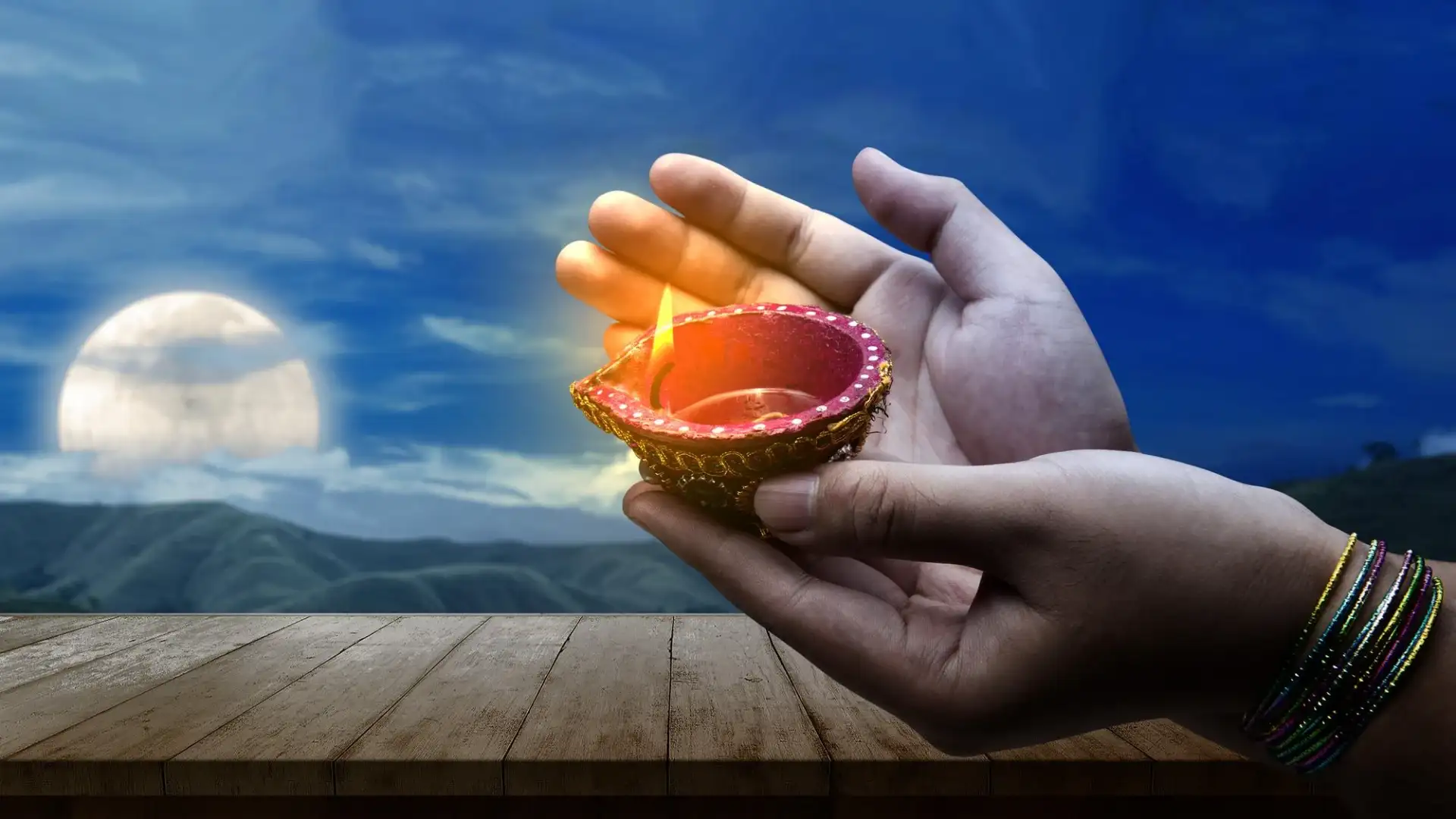
What Kartik Means in Vedic Astrology
In the Hindu lunar calendar, Kartik is the eighth month. Vedic astrology associates it with a transition: the sun has moved into Libra, a sign ruled by Venus, and the nights grow longer. Venus in Vedic astrology governs beauty, material prosperity, and the pleasures of the home. Jyotish practitioners regard this solar placement as one reason the tradition chose this month for a festival centred on the home, the lamp, and the welcoming of Lakshmi. The alignment of a Venus-ruled solar month with the deepest night of that month creates what the tradition describes as a convergence of darkness and the planet most associated with light and grace.The Moon, the Mind, and the Symbolism of Lighting a Diya
In Vedic astrology, the moon governs the mind and the emotions. On Amavasya, the moon's light is withdrawn. Traditional texts describe this as a moment when the mind is less distracted by reflected light and more open to what is within. The act of lighting a diya on this night carries a specific symbolic weight in this framework: it is the individual choosing to generate light rather than borrow it. Ank jyotish, the numerological strand of Vedic tradition, also associates the Kartik Amavasya with the number of completion, since it marks the end of one lunar cycle and the beginning of the next. The lamp is understood not as decoration but as an assertion, light made by hand on the night when no light comes from above.Lakshmi Puja and Planetary Symbolism
The Lakshmi puja performed on Diwali night is traditionally timed to the pradosh kaal, the period just after sunset. In Vedic astrology, this hour is associated with Shiva and with the threshold between states, day and night, the old and the new. Jyotish tradition holds that during this window, the energy of prosperity and auspiciousness is most receptive to intention. The puja itself involves light, water, flowers, and grain, elements that correspond in the tradition to the five elements and to the planets governing material life. The lamp, in particular, is associated with the sun, whose light Amavasya temporarily withholds. Lighting it is, in this reading, a symbolic act of restoring solar energy to the home on the night it is most absent from the sky.Why the Astrology and the Festival Fit Each Other
What Vedic astrology offers to Diwali is not a set of predictions. It offers a vocabulary for why this particular night was chosen out of three hundred and sixty-five. The darkest night of the most Venus-aligned month, when the moon withdraws and the mind is quietest, is when the tradition asks people to make light themselves. The astrology does not tell anyone what will happen. It describes what the sky is doing and what the tradition decided that means. The diya burns the same either way. The astrology is the explanation for why it was always this night and not another.Next Story