
Why Do People Wear Gemstones According to Astrology?

Gemstones have been associated with astrology, spirituality and traditional healing practices for centuries. In Vedic astrology, certain stones are linked to specific planets and are traditionally believed to strengthen favourable planetary influences or balance challenging ones. People often wear gemstones as rings, pendants or bracelets after consulting an astrologer who studies their birth chart. Each stone is associated with particular colours, planetary energies and symbolic meanings. While these beliefs remain popular in several cultures, there is no established scientific evidence that gemstones can change planetary influences or determine a person's future. Understanding their astrological significance helps explain why people continue to wear them.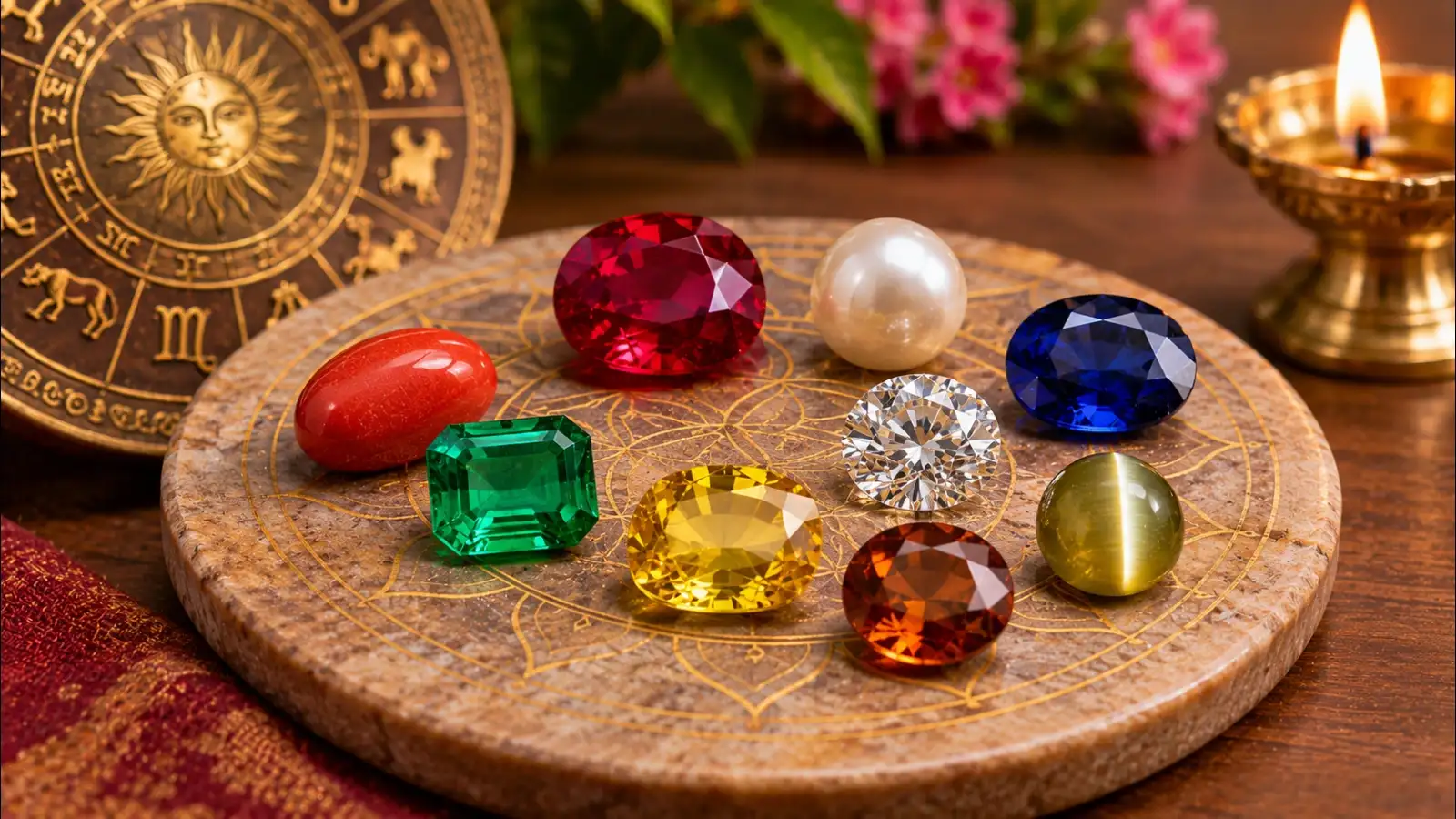
For example, ruby is linked with the Sun, pearl with the Moon and red coral with Mars. Astrologers traditionally recommend these stones based on planetary placements in a person's Kundli.
For instance, yellow sapphire is traditionally connected with Jupiter, which is associated with wisdom, knowledge and prosperity. People who follow these beliefs may wear the stone to encourage qualities linked to Jupiter.
However, recommendations depend on the astrologer's interpretation of the complete Kundli. A gemstone is not universally considered suitable for everyone simply because it is associated with a particular planet.
People who follow gemstone astrology may wear ruby to strengthen qualities associated with the Sun. It is commonly worn as a ring or pendant.
Pearls are therefore traditionally recommended by some astrologers to support emotional balance and calmness. Their soft appearance and natural lustre also make them popular in jewellery.
Some astrological traditions consider blue sapphire a powerful gemstone and recommend careful birth-chart analysis before wearing it. However, claims that it can bring sudden fortune or misfortune are matters of belief rather than scientifically established facts.
Some people wear this gemstone based on the belief that it may support educational, professional or personal growth. Its recommendation generally depends on the astrologer's interpretation of Jupiter's position in the Kundli.
This is why two people with similar birth dates may receive different gemstone recommendations. In traditional astrology, the suitability of a stone is considered more important than simply choosing one based on its colour or popularity.
Some people wear them because they have been passed down through generations, while others choose them for their appearance or sentimental value. Their continued popularity reflects the combination of jewellery, tradition and astrology.
These practices vary between astrologers and regional traditions. Anyone purchasing a gemstone should also check its authenticity, treatment status and quality through a reliable seller rather than relying only on astrological claims.
People wear gemstones according to astrology because of their traditional associations with planets, symbolic meanings and cultural significance. From ruby and pearl to yellow sapphire and blue sapphire, each stone has a specific place in Vedic astrological practices. While many people find personal or cultural meaning in wearing these stones, their supposed planetary effects are not scientifically established. Understanding the traditional associations can help explain why gemstone recommendations remain an important part of astrology for many people.
1. The Connection Between Gemstones and Planets
In Vedic astrology, nine primary gemstones are traditionally associated with the nine Grahas, or planetary influences. Each stone is believed to correspond with a particular celestial body.For example, ruby is linked with the Sun, pearl with the Moon and red coral with Mars. Astrologers traditionally recommend these stones based on planetary placements in a person's Kundli.
2. Gemstones Are Believed to Strengthen Planetary Influences
One of the main reasons people wear gemstones according to astrology is the belief that certain stones can enhance the positive qualities associated with a planet.For instance, yellow sapphire is traditionally connected with Jupiter, which is associated with wisdom, knowledge and prosperity. People who follow these beliefs may wear the stone to encourage qualities linked to Jupiter.
3. They Are Associated With Balancing Challenging Planets
Some people consult astrologers when they believe a particular planetary placement is unfavourable in their birth chart. In certain astrological traditions, gemstones are recommended as possible remedies.However, recommendations depend on the astrologer's interpretation of the complete Kundli. A gemstone is not universally considered suitable for everyone simply because it is associated with a particular planet.
4. Each Gemstone Has a Specific Planetary Association
The nine traditional gemstones, commonly known as Navratna, have individual planetary connections.- Ruby (Manik): Associated with the Sun.
- Pearl (Moti): Associated with the Moon.
- Red Coral (Moonga): Associated with Mars.
- Emerald (Panna): Associated with Mercury.
- Yellow Sapphire (Pukhraj): Associated with Jupiter.
- Diamond (Heera): Associated with Venus.
- Blue Sapphire (Neelam): Associated with Saturn.
- Hessonite (Gomed): Associated with Rahu.
- Cat's Eye (Lehsunia): Associated with Ketu.
5. Ruby Is Traditionally Linked to the Sun
Ruby, known as Manik in Hindi, is associated with the Sun in Vedic astrology. The Sun is traditionally connected with authority, confidence, leadership and self-expression.People who follow gemstone astrology may wear ruby to strengthen qualities associated with the Sun. It is commonly worn as a ring or pendant.
6. Pearl Is Associated With the Moon
Pearl, traditionally called Moti, is linked with the Moon. In Vedic astrology, the Moon represents emotions, the mind, intuition and inner comfort.Pearls are therefore traditionally recommended by some astrologers to support emotional balance and calmness. Their soft appearance and natural lustre also make them popular in jewellery.
7. Blue Sapphire Is Connected With Saturn
Blue sapphire, or Neelam, is associated with Saturn, known as Shani in Vedic astrology. Saturn is traditionally linked with discipline, responsibility, patience and hard work.You may also like
- Diwali Vastu: 9 Things to Throw Out Before Dhanteras, and 5 to Never Discard
- Numerology horoscope today, November 05, 2026: What your name's first letter reveals today
- Love Horoscope Today, November 05, 2026: What the stars say about your love life
- November 05, 2026, Birthday Forecast: Discover what the next 12 months hold for you
- Diwali 2026: 3 Most important astrological Lakshmi Pooja rituals to follow this Deepavali
Some astrological traditions consider blue sapphire a powerful gemstone and recommend careful birth-chart analysis before wearing it. However, claims that it can bring sudden fortune or misfortune are matters of belief rather than scientifically established facts.
8. Yellow Sapphire Is Linked to Jupiter
Yellow sapphire, also known as Pukhraj, is traditionally associated with Jupiter or Guru. Jupiter represents knowledge, wisdom, guidance, expansion and prosperity in Vedic astrology.Some people wear this gemstone based on the belief that it may support educational, professional or personal growth. Its recommendation generally depends on the astrologer's interpretation of Jupiter's position in the Kundli.
9. Gemstones Are Chosen According to the Kundli
Astrologers generally study several elements of a birth chart before recommending a gemstone. These may include the Ascendant, planetary positions, house placements, planetary strength and ongoing Dasha periods.This is why two people with similar birth dates may receive different gemstone recommendations. In traditional astrology, the suitability of a stone is considered more important than simply choosing one based on its colour or popularity.
10. Cultural Traditions and Personal Beliefs Influence Gemstone Use
Gemstones are not worn only for astrological reasons. In many cultures, they are associated with traditional customs, family practices, spiritual symbolism and personal beliefs.Some people wear them because they have been passed down through generations, while others choose them for their appearance or sentimental value. Their continued popularity reflects the combination of jewellery, tradition and astrology.
How Do People Traditionally Wear Astrological Gemstones ?
In Vedic astrology, recommendations may include the type of gemstone, its weight, metal, finger and day of wearing. Some traditions also prescribe specific rituals before a stone is worn.These practices vary between astrologers and regional traditions. Anyone purchasing a gemstone should also check its authenticity, treatment status and quality through a reliable seller rather than relying only on astrological claims.
People wear gemstones according to astrology because of their traditional associations with planets, symbolic meanings and cultural significance. From ruby and pearl to yellow sapphire and blue sapphire, each stone has a specific place in Vedic astrological practices. While many people find personal or cultural meaning in wearing these stones, their supposed planetary effects are not scientifically established. Understanding the traditional associations can help explain why gemstone recommendations remain an important part of astrology for many people.
Loving Newspoint? Download the app now
