Hyundai India's factories get smarter with 2k+ machines: Details

Hyundai Motor India has announced a major step in its digital manufacturing journey, revealing that more than 2,000 critical machines across its operations are now connected through an industrial data network . The company says the move is helping improve predictive maintenance , automated quality checks and faster decision-making on the production floor.
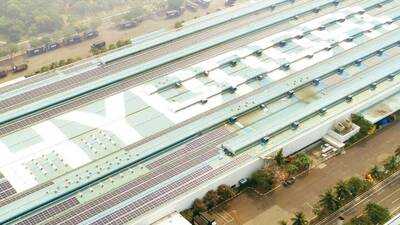
The announcement comes as Hyundai celebrates 30 years in India. The carmaker said its Chennai and Pune manufacturing facilities are playing a key role in supporting future growth, with a greater focus on intelligent automation, connected technologies and data-driven production.
Hyundai said its manufacturing facilities currently produce 15 models, including N Line cars, across hatchback, sedan, SUV, taxi and electric vehicle segments. The company offers more than 60 powertrain combinations spanning petrol, diesel, CNG and EVs, while producing over 450 variants every month. It also stated that one passenger vehicle rolls off its production line every 30 seconds, with cumulative production crossing 13.5 million units as of March 31, 2026.
As part of its digital transformation, Hyundai has expanded its Industrial Internet of Things (IIoT) ecosystem with real-time dashboards that monitor more than 400 critical production parameters. It has also introduced the E Forest Factory BI system, which combines production, quality and equipment data into a single analytics platform to enable real-time equipment monitoring and quicker decision-making.
At its Pune plant, Hyundai has deployed AI-based monitoring systems that analyse 1,366 critical production parameters to improve predictive maintenance and operational efficiency. The facility also uses predictive maintenance systems powered by machine learning, along with IoT-enabled equipment and connected shopfloor systems to reduce downtime and improve manufacturing efficiency.
The company has further strengthened quality control by introducing AI-based crack detection systems, intelligent inspection lighting, collaborative robots, Smart Tag systems and torque management solutions. Hyundai is also investing in workforce training through augmented reality (AR) and virtual reality (VR)-based modules to support the adoption of advanced manufacturing technologies.
The announcement comes as Hyundai celebrates 30 years in India. The carmaker said its Chennai and Pune manufacturing facilities are playing a key role in supporting future growth, with a greater focus on intelligent automation, connected technologies and data-driven production.
Hyundai said its manufacturing facilities currently produce 15 models, including N Line cars, across hatchback, sedan, SUV, taxi and electric vehicle segments. The company offers more than 60 powertrain combinations spanning petrol, diesel, CNG and EVs, while producing over 450 variants every month. It also stated that one passenger vehicle rolls off its production line every 30 seconds, with cumulative production crossing 13.5 million units as of March 31, 2026.
As part of its digital transformation, Hyundai has expanded its Industrial Internet of Things (IIoT) ecosystem with real-time dashboards that monitor more than 400 critical production parameters. It has also introduced the E Forest Factory BI system, which combines production, quality and equipment data into a single analytics platform to enable real-time equipment monitoring and quicker decision-making.
At its Pune plant, Hyundai has deployed AI-based monitoring systems that analyse 1,366 critical production parameters to improve predictive maintenance and operational efficiency. The facility also uses predictive maintenance systems powered by machine learning, along with IoT-enabled equipment and connected shopfloor systems to reduce downtime and improve manufacturing efficiency.
The company has further strengthened quality control by introducing AI-based crack detection systems, intelligent inspection lighting, collaborative robots, Smart Tag systems and torque management solutions. Hyundai is also investing in workforce training through augmented reality (AR) and virtual reality (VR)-based modules to support the adoption of advanced manufacturing technologies.
Next Story
