
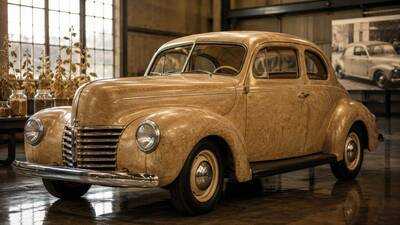
In 1941, Henry Ford introduced an experimental soybean car that used plant-based plastic body panels and challenged the future of steel automobiles


Long before "bio-based materials" entered the lexicon of the car industry, Henry Ford was trying to answer a different question. Could farms supply more than food? Could fields also provide the raw materials for manufacturing? That idea reached its most unusual expression in the summer of 1941, when Ford unveiled an experimental vehicle with a lightweight plastic body derived partly from crops. It arrived at a time when American industry was searching for alternatives to steel, while Ford himself was investing heavily in research that linked farming with manufacturing. The project never became a production car and was soon overtaken by World War II . Even so, it remains one of the earliest attempts to rethink what an automobile could be made from, decades before plant-based composites became part of mainstream engineering. Although the prototype never entered mass production, its vision anticipated many modern sustainability efforts, demonstrating that renewable agricultural materials could play a meaningful role in manufacturing and inspiring later innovations in lightweight, eco-friendly automotive design.
Next Story