
Front vs Rear Brake: Why Does the Front Brake Do Most of the Work on a Motorcycle?

Squeeze the front brake lever on a motorcycle and the nose dips. That dip is not a warning sign, it is the physics of stopping doing exactly what it should. The front brake on a well-maintained motorcycle can account for roughly 70 to 80 percent of total stopping force. The rear brake handles the rest. Knowing why this split exists makes every braking decision on the road more deliberate.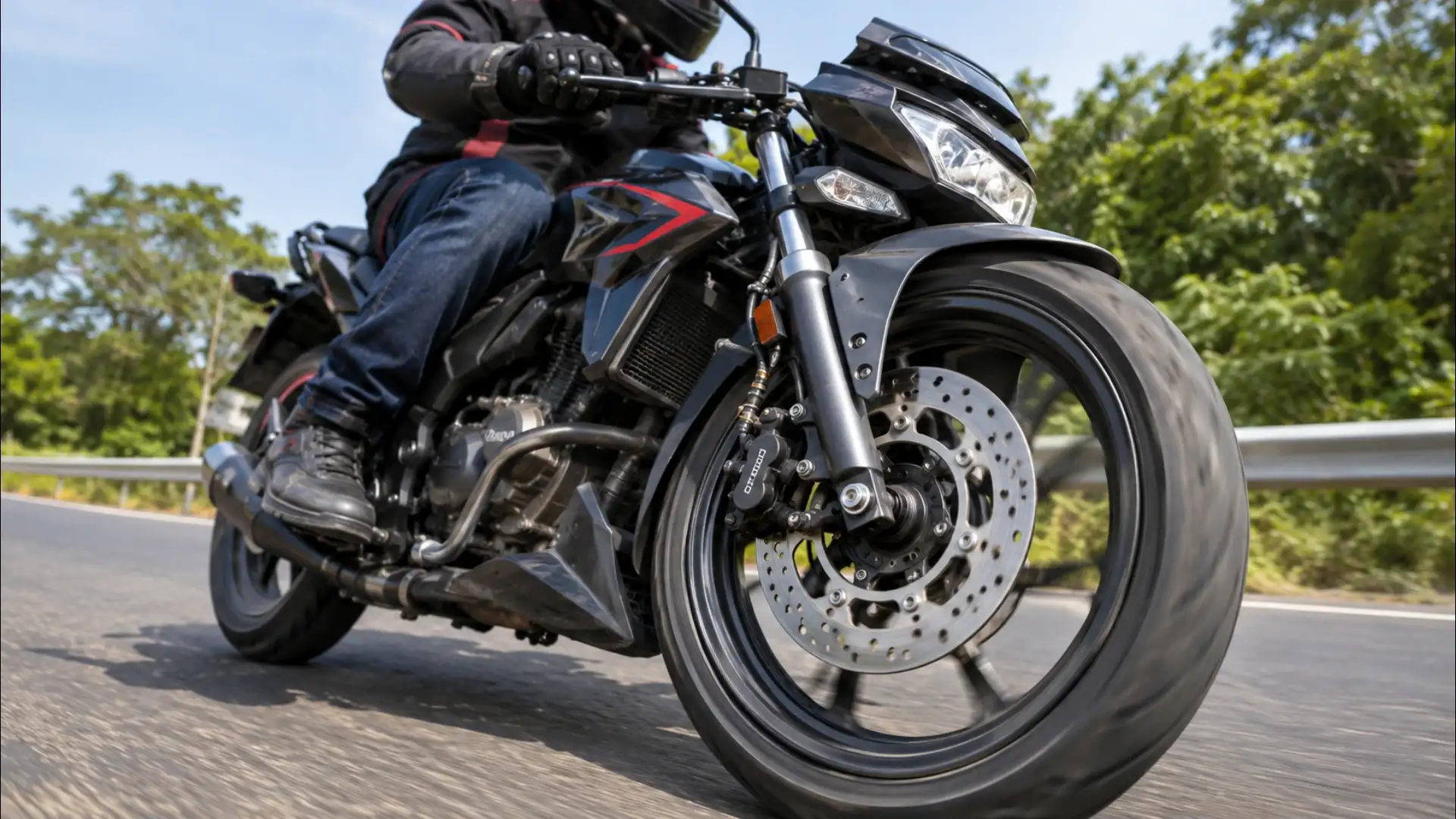
More weight on the front tyre means more friction available at that tyre. Friction is what converts wheel rotation into a slowing force, and friction increases with the load pressing the tyre into the road surface. The front tyre, carrying the extra weight during braking, can handle far more braking force before it skids than the rear tyre can.
The rear tyre does the opposite under hard braking. As weight transfers forward, the rear lightens. A lighter rear tyre has less grip available. Push the rear brake hard in a panic stop and the rear wheel can lock and skid, because the brake is asking for more friction than the tyre can generate with so little weight on it.
Under hard braking, the front contact patch grows slightly as the tyre squashes down with increased load. A larger, more loaded contact patch generates more friction. The rear contact patch shrinks as weight lifts off it. This is a physical consequence of how rubber and road interact, not a design choice. It is why the front brake is not merely a preference, it is where the stopping capacity actually lives during deceleration.
There is also the fear of the front wheel washing out. A locked front wheel on a motorcycle does lose steering control, which feels catastrophic. But a front wheel locks only when the rider applies far more force than the available grip allows, usually a sudden, unmodulated grab rather than a progressive squeeze. A progressive squeeze gives the tyre time to build braking force without breaking traction.
Trail braking, carrying front brake pressure into the entry of a corner, is a technique that extends this principle further, but the foundation is the same: the front tyre, loaded by deceleration, is where braking capacity concentrates.
In an emergency, the instinct to grab the front lever hard and stab the rear pedal simultaneously is understandable but counterproductive. The rear locks easily when it is light. The front, squeezed hard without progressive build-up, can also lock. The habit worth building in normal riding is a smooth, firm, progressive front squeeze, so that when the moment demands it, the hand already knows what to do.
The front brake does most of the stopping because physics loads the front tyre during deceleration, and a loaded tyre grips harder. The rear brake is not redundant, it is the balance half of the equation. Used together, progressively and in proportion, they are the reason a modern motorcycle can stop in a distance that would have seemed impossible on the machines of forty years ago.
Weight Shifts Forward When You Slow Down
Weight transfer is the starting point. When a motorcycle decelerates, inertia keeps the mass of the bike and rider moving forward while the tyres push back against the road. That forward momentum loads the front tyre. The harder the braking, the more weight presses down onto the front contact patch.More weight on the front tyre means more friction available at that tyre. Friction is what converts wheel rotation into a slowing force, and friction increases with the load pressing the tyre into the road surface. The front tyre, carrying the extra weight during braking, can handle far more braking force before it skids than the rear tyre can.
The rear tyre does the opposite under hard braking. As weight transfers forward, the rear lightens. A lighter rear tyre has less grip available. Push the rear brake hard in a panic stop and the rear wheel can lock and skid, because the brake is asking for more friction than the tyre can generate with so little weight on it.
What the Contact Patch Actually Does
The contact patch is the small area where the tyre meets the road, roughly the size of a palm for a standard motorcycle tyre at normal inflation. All of the braking, cornering, and acceleration forces a motorcycle generates pass through these two small patches.Under hard braking, the front contact patch grows slightly as the tyre squashes down with increased load. A larger, more loaded contact patch generates more friction. The rear contact patch shrinks as weight lifts off it. This is a physical consequence of how rubber and road interact, not a design choice. It is why the front brake is not merely a preference, it is where the stopping capacity actually lives during deceleration.
Why Riders Instinctively Favour the Rear
The rear brake is operated by the right foot, a natural resting position. The front brake requires a deliberate squeeze of the right hand. In a sudden scare, the foot often stabs down before the hand reacts. This instinct made sense on older, lighter motorcycles with drum brakes and narrow tyres, where the front brake was genuinely unpredictable. On a modern motorcycle with disc brakes and wider tyres, it works against the rider.There is also the fear of the front wheel washing out. A locked front wheel on a motorcycle does lose steering control, which feels catastrophic. But a front wheel locks only when the rider applies far more force than the available grip allows, usually a sudden, unmodulated grab rather than a progressive squeeze. A progressive squeeze gives the tyre time to build braking force without breaking traction.
How to Use Both Brakes Well
The correct technique is not to ignore the rear brake but to use both in proportion. The front lever does the heavy work: applied progressively, with increasing pressure as weight transfers forward and grip builds. The rear pedal adds a stabilising force, keeps the rear tyre loaded just enough to prevent it from bouncing, and helps control speed at low speeds and in slow manoeuvres where the front brake alone can feel abrupt.Trail braking, carrying front brake pressure into the entry of a corner, is a technique that extends this principle further, but the foundation is the same: the front tyre, loaded by deceleration, is where braking capacity concentrates.
In an emergency, the instinct to grab the front lever hard and stab the rear pedal simultaneously is understandable but counterproductive. The rear locks easily when it is light. The front, squeezed hard without progressive build-up, can also lock. The habit worth building in normal riding is a smooth, firm, progressive front squeeze, so that when the moment demands it, the hand already knows what to do.
The front brake does most of the stopping because physics loads the front tyre during deceleration, and a loaded tyre grips harder. The rear brake is not redundant, it is the balance half of the equation. Used together, progressively and in proportion, they are the reason a modern motorcycle can stop in a distance that would have seemed impossible on the machines of forty years ago.
Next Story