
Why Your Rear-View Mirror Has a Day and Night Tab

Every driver has reached up to flick that small plastic tab on the rear-view mirror at least once, usually after a truck behind them lit up the cabin at midnight. But almost nobody knows what the tab actually does, because the mirror looks the same either way. The mechanism is older than most cars on the road today, and it is a neat piece of optics hiding in plain sight.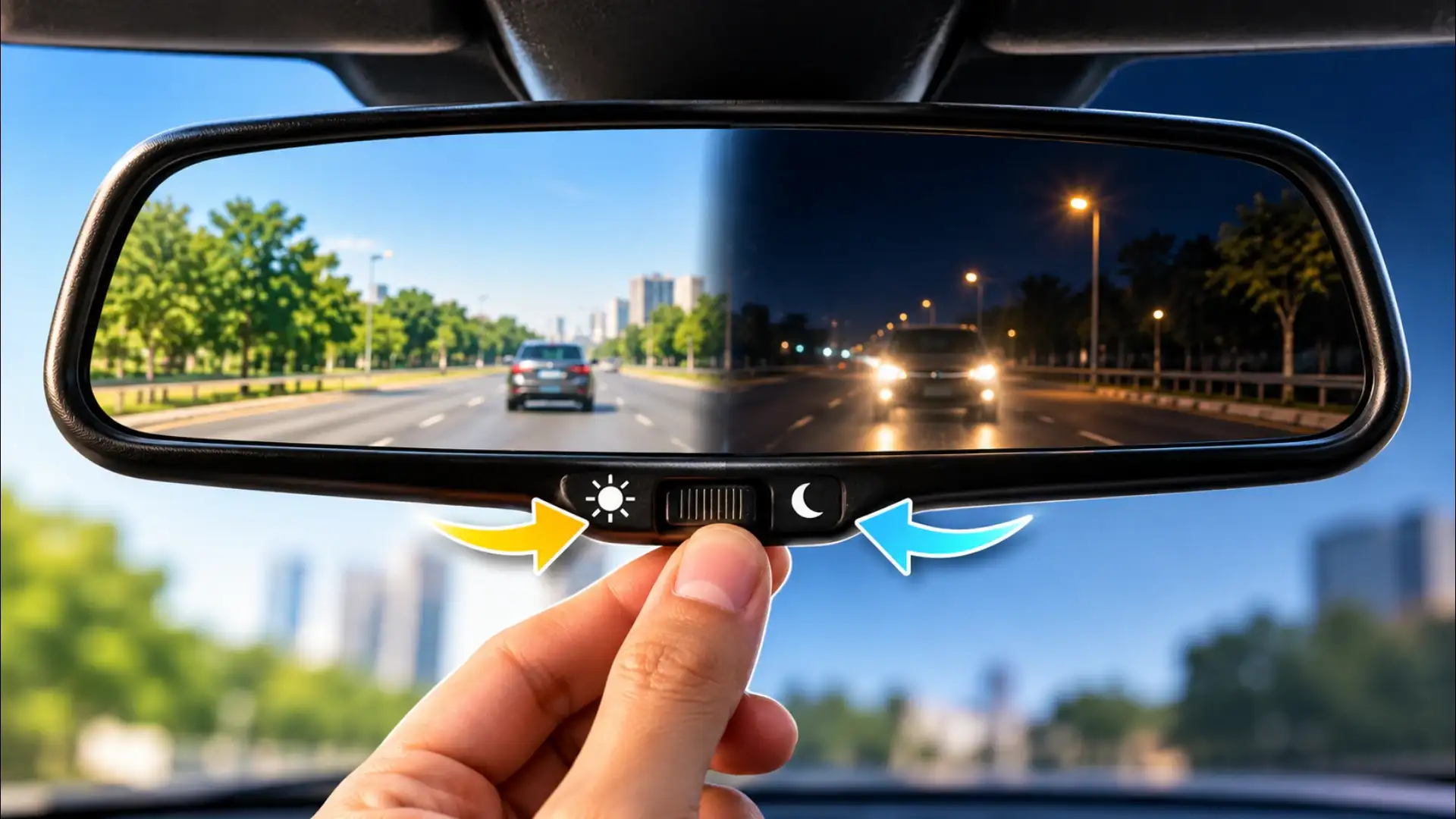
In day mode, the mirror sits angled so that light from behind travels through the front face, bounces off the silver rear surface, and returns to your eyes at full brightness. That gives you a sharp, bright image of what is behind the car, exactly what you need in daylight.
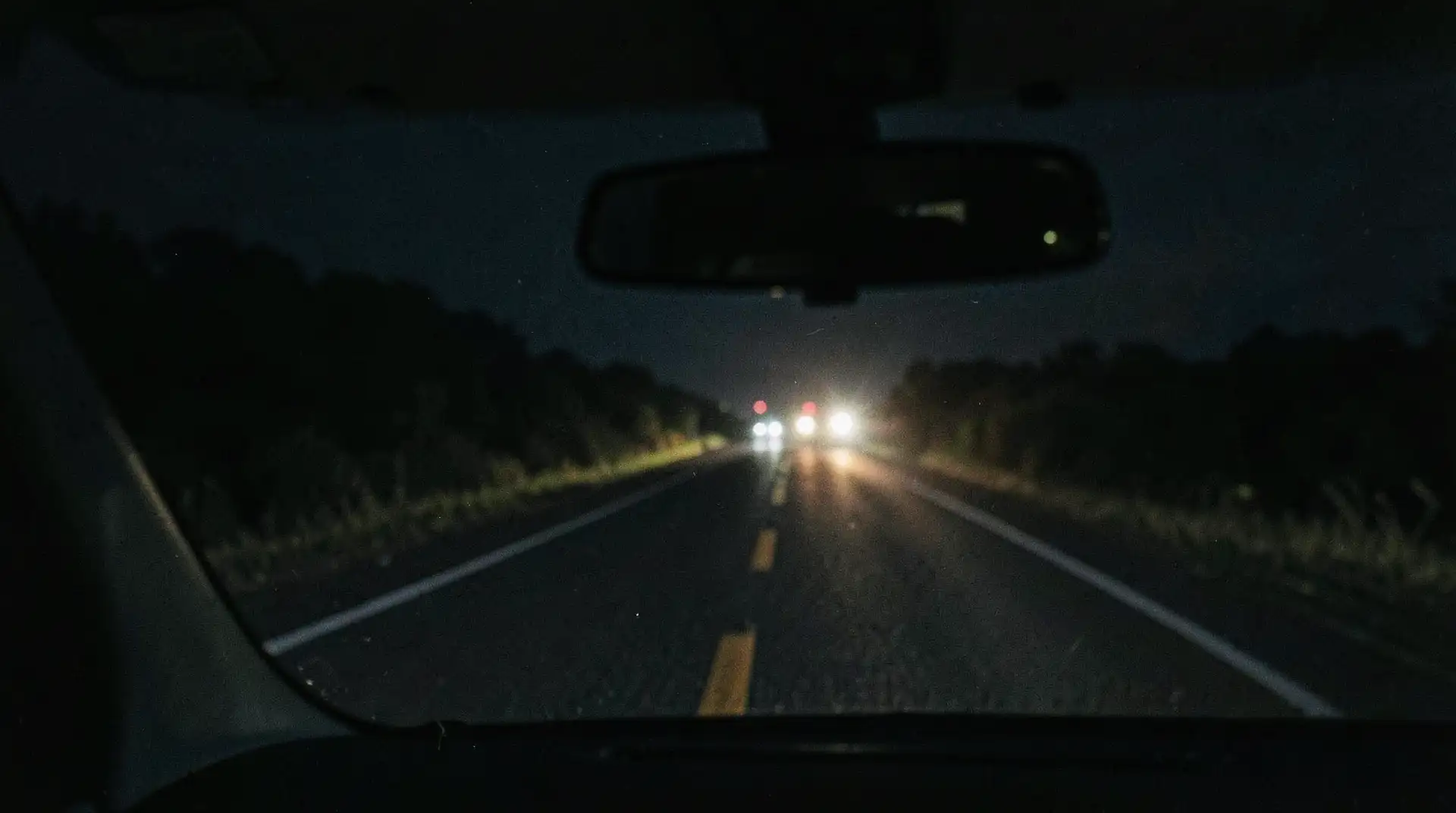
The image in night mode is noticeably dimmer. That is the point. A truck's high beams behind you carry enough energy to temporarily blind you at the moment you most need to see where you are going. The dimmed reflection lets you keep track of traffic without the glare overwhelming your night-adapted eyes.
The night tab solves this by cutting the reflected intensity before it reaches the eye. You still see the vehicles behind you, because four percent of a very bright source is still enough light to form a useful image. You just do not get the full force of the beam.
The physics is the same as the manual tab, reduce the reflected intensity before it reaches the driver's eyes, but the response is faster and requires no hand to reach up at the right moment.
Two Reflective Surfaces, Not One
A standard rear-view mirror is not a flat piece of silvered glass. It is a wedge, a prism with two reflecting surfaces. The front face of the glass is partially reflective, bouncing back roughly four percent of the light that hits it. The rear face, which is the fully silvered surface, reflects about eighty percent.In day mode, the mirror sits angled so that light from behind travels through the front face, bounces off the silver rear surface, and returns to your eyes at full brightness. That gives you a sharp, bright image of what is behind the car, exactly what you need in daylight.
What the Tab Actually Does
When you push the tab, you tilt the prism. The silver rear surface now angles away from your line of sight. Instead of reflecting the bright rear image to your eyes, it reflects the ceiling of your car, which is dark, or sends that bright light off to one side where it does nothing. What your eyes now receive is the weak reflection off the front face of the glass: that four-percent bounce.The image in night mode is noticeably dimmer. That is the point. A truck's high beams behind you carry enough energy to temporarily blind you at the moment you most need to see where you are going. The dimmed reflection lets you keep track of traffic without the glare overwhelming your night-adapted eyes.
You may also like
- Harley-Davidson's New 440cc Cruiser Takes Aim at Royal Enfield: Retro Design, Powerful Engine and Premium Features
- 5 Exciting New Cars Coming to India in November 2026: Mercedes-Benz, Toyota and MINI Models to Watch
- Nissan Sales Surge 50% in October 2026: New Tekton SUV Expected to Boost Company's Growth in India
- Honda Cars India: 19% sales rise in October, but can the momentum last?
- Can Your Electric Car Replace a Home Inverter During a Power Cut? Know How EV Batteries Can Power Household Appliances
Why Your Eyes Are Especially Vulnerable at Night
In darkness, the pupil opens wide to gather as much light as possible. A sudden bright source, headlights in the mirror, a flash, oncoming high beams, hits an eye that is fully dilated and causes a bloom of light that takes several seconds to fade. During those seconds, the road ahead is effectively invisible.The night tab solves this by cutting the reflected intensity before it reaches the eye. You still see the vehicles behind you, because four percent of a very bright source is still enough light to form a useful image. You just do not get the full force of the beam.
When the Mirror Does It Automatically
Many cars now carry auto-dimming mirrors that handle the switch without any tab. These use a small electrochromic gel sandwiched between two panes of glass. A sensor at the front of the mirror reads ambient light; a sensor at the back reads light coming from behind. When the rear sensor detects significantly more light than the front, a small electric current darkens the gel, reducing reflectivity within a fraction of a second. When the bright source moves away, the current stops and the gel clears.The physics is the same as the manual tab, reduce the reflected intensity before it reaches the driver's eyes, but the response is faster and requires no hand to reach up at the right moment.
The One Habit Worth Keeping
Drivers who never use the night tab are not wrong that they can see through the glare eventually. The eye does adapt. But that adaptation takes time, and the road ahead does not wait. The tab costs nothing, takes one second, and removes a genuine distraction at the moment driving demands the most attention. The wedge prism in that small rectangle of glass was designed for exactly that trade-off: a slightly dimmer image behind you, in exchange for a clear view of what is in front.





Loving Newspoint? Download the app now
