
Be a gharjamai: Is asking this cruelty by wife?


Can a wife wishing her husband to come live with her parents at her maternal home and be a ‘gharjamai’ (househusband) amount to cruelty? The answer can be found in a recent judgment by the Jharkhand High Court in a case wherein the husband sought a divorce on grounds of cruelty.
The couple got married in November 2008 in Patna, Bihar, as per Hindu customs and traditions, and became parents to a girl in July 2011. According to the details of the case, the couple started their matrimonial life in peace and love. However, after a few days, the wife started going to Patna frequently.
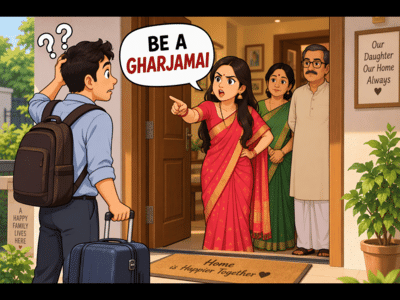
Later, the wife revealed that her parents want the husband to leave his parents and to live with them in Patna as “gharjamai”. The husband, however, rejected this because his parents are already old and ailing.
In less than 5 years of their marriage, the wife left for Patna in 2013 and never returned to her matrimonial house. When asked, she would ask her husband to live as a gharjamai, a demand he always declined.
Citing mental pressure and social stigma because of this, the husband filed for a divorce on the grounds of matrimonial cruelty in a family court. His appeal was, however, dismissed in 2022. The husband then approached the Jharkhand HC, challenging the family court’s decision.
ALSO READ | Husband claims annual salary fell to Rs 36 lakh, cites Rs 1.7 crore home loan; court orders Rs 2 lakh monthly maintenance to wife
The judgment delivered there answered whether a wife asking her husband to leave his parents and become a gharjamai is cruelty.
Divorce on matrimonial cruelty grounds: What did both the sides claim?
According to the husband:
On the issue of cruelty, the Jharkhand HC cited a 1988 Supreme Court ruling in which the top court had said that cruelty is the “conduct in relation to or in respect of matrimonial conduct in respect of matrimonial obligations”. It can be either “mental” or “physical”, intentional or unintentional.
A division bench of Justice Sujit Narayan Prasad and Justice Sanjay Prasad observed that “cruelty” under matrimonial law consists of conduct so grave and weighty as to lead one to the conclusion that one of the spouses cannot reasonably be expected to live with the other spouse.
ALSO READ | Husband with Rs 11,000/month income ordered to pay Rs 25,000 monthly maintenance to wife, child with 5% annual increase; here's what Delhi HC said
“It must be more serious than the ordinary wear and tear of married life,” the bench stated, adding that it must be of such a type that the relationship between the parties has deteriorated to such an extent that it has become impossible for them to live together without mental agony.
In many marriages each party can, if it so wills, discover many a cause for complaint but such grievances arise mostly from temperamental disharmony. Such disharmony or incompatibility is not cruelty and will not furnish a cause for the dissolution of marriage, the court underscored.
The bench clarified that the practice of ‘gharjamai’ is a very old custom prevailing in our society but it remains to be absolute choice of groom to agree or not.
In this particular case, the HC observed, that there is no case that the husband was compelled or forced to live as a gharjamai. “Mere wish of respondent-wife that the appellant-husband should live as Gharjamai will not constitute cruelty for the purpose of Hindu Marriage Act.”
With this, the Jharkhand HC also sided with the family court judgement, in which it was said that visiting the parental house is as good as a right to every bride and it cannot be termed cruelty for the purpose of divorce.
The High Court dismissed the husband’s appeal as he had failed to substantiate the alleged cruelty and upheld the family court’s order.
Why did the husband lose the cruelty claim?
Explaining what worked in the husband’s favour in this case, Sonam Chandwani, Managing Partner, KS Legal & Associates, described this as a reminder that marital unhappiness, prolonged separation and incompatibility are not automatically the same as legal cruelty.
“A spouse may genuinely feel frustrated or distressed by the other spouse’s choices, particularly where there are disagreements about residence, family responsibilities or the future of the relationship, but for divorce on the ground of cruelty, the conduct must cross a much higher legal threshold.”
ALSO READ | Wife pressuring husband to leave parents and live separately in rented house amounts to cruelty, rules Madras HC and upholds divorce on this ground
Section 13(1)(ia) of the Hindu Marriage Act requires cruelty to be established through facts and circumstances showing that the conduct has become sufficiently serious to make continuation of the matrimonial relationship unreasonable, Chandwani underscored.
Does this mean the couple must continue with the marriage?
Nandini Gore, Senior Partner at Karanjawala & Co Advocates, stated that since the HC upheld the dismissal, the marriage therefore continues. The parties, however, have other recourses.
Since both parties have been living separately for a considerable period, they may seek divorce by mutual consent under Section 13B of the Act, which requires that they have been living separately for at least one year.
Gore further suggested the husband could have filed a petition on the ground of desertion under Section 13(1)(i-b), which is available where a spouse has deserted the other for a continuous period of not less than 2 years.
Key takeaways from this judgment
This order marks a welcome departure from the patriarchal notion that a wife must remain confined to her matrimonial home, according to Gore.
For husbands, it clarifies that personal expectations as to where the spouse should reside do not amount to cruelty.
For wives, it affirms that visiting the parental home and expressing a preference as to residence does not constitute cruelty.
Chandwani also highlighted that the “practical lesson for both husbands and wives is that a divorce petition cannot be built merely on allegations that the marriage has failed; it has to be built on evidence of legally actionable conduct. Equally, a spouse cannot assume that remaining separated for years gives them an automatic right to divorce or, conversely, an automatic right to prevent the other spouse from moving on.”
The couple got married in November 2008 in Patna, Bihar, as per Hindu customs and traditions, and became parents to a girl in July 2011. According to the details of the case, the couple started their matrimonial life in peace and love. However, after a few days, the wife started going to Patna frequently.
Later, the wife revealed that her parents want the husband to leave his parents and to live with them in Patna as “gharjamai”. The husband, however, rejected this because his parents are already old and ailing.
In less than 5 years of their marriage, the wife left for Patna in 2013 and never returned to her matrimonial house. When asked, she would ask her husband to live as a gharjamai, a demand he always declined.
Citing mental pressure and social stigma because of this, the husband filed for a divorce on the grounds of matrimonial cruelty in a family court. His appeal was, however, dismissed in 2022. The husband then approached the Jharkhand HC, challenging the family court’s decision.
ALSO READ | Husband claims annual salary fell to Rs 36 lakh, cites Rs 1.7 crore home loan; court orders Rs 2 lakh monthly maintenance to wife
The judgment delivered there answered whether a wife asking her husband to leave his parents and become a gharjamai is cruelty.
Divorce on matrimonial cruelty grounds: What did both the sides claim?
According to the husband:
- the wife is working in Patna and earning a lot, so she wants to live there; therefore, he is being mentally and physically tortured.
- the family court order is palpably wrong, manifestly erroneous and demonstrably unsustainable.
- the court failed to appreciate that the wife has deserted him since 2013 and does not wish to continue her matrimonial life with him.
- the court did not consider that asking the husband to leave his old and ailing parents (dependent on his income) and live as gharjamai amounts to mental cruelty.
- the wife refused time and again to start matrimonial life afresh and the matrimonial accord has been severed to the point of irretrievability.
- she never committed any cruelty against the husband and her in laws; rather, it is the in laws who committed cruelty against her.
- after marriage, she performed all marital obligations but she was being abused by the father-in-law and husband in a drunken state in front of her daughter.
- after the birth of the girl child, she was not happy and was being physically, mentally and economically tortured.
- the husband intended to solemnise a second marriage. Consequently, the wife filed an application before the concerned Police Station.
On the issue of cruelty, the Jharkhand HC cited a 1988 Supreme Court ruling in which the top court had said that cruelty is the “conduct in relation to or in respect of matrimonial conduct in respect of matrimonial obligations”. It can be either “mental” or “physical”, intentional or unintentional.
A division bench of Justice Sujit Narayan Prasad and Justice Sanjay Prasad observed that “cruelty” under matrimonial law consists of conduct so grave and weighty as to lead one to the conclusion that one of the spouses cannot reasonably be expected to live with the other spouse.
ALSO READ | Husband with Rs 11,000/month income ordered to pay Rs 25,000 monthly maintenance to wife, child with 5% annual increase; here's what Delhi HC said
“It must be more serious than the ordinary wear and tear of married life,” the bench stated, adding that it must be of such a type that the relationship between the parties has deteriorated to such an extent that it has become impossible for them to live together without mental agony.
In many marriages each party can, if it so wills, discover many a cause for complaint but such grievances arise mostly from temperamental disharmony. Such disharmony or incompatibility is not cruelty and will not furnish a cause for the dissolution of marriage, the court underscored.
The bench clarified that the practice of ‘gharjamai’ is a very old custom prevailing in our society but it remains to be absolute choice of groom to agree or not.
In this particular case, the HC observed, that there is no case that the husband was compelled or forced to live as a gharjamai. “Mere wish of respondent-wife that the appellant-husband should live as Gharjamai will not constitute cruelty for the purpose of Hindu Marriage Act.”
With this, the Jharkhand HC also sided with the family court judgement, in which it was said that visiting the parental house is as good as a right to every bride and it cannot be termed cruelty for the purpose of divorce.
The High Court dismissed the husband’s appeal as he had failed to substantiate the alleged cruelty and upheld the family court’s order.
Why did the husband lose the cruelty claim?
Explaining what worked in the husband’s favour in this case, Sonam Chandwani, Managing Partner, KS Legal & Associates, described this as a reminder that marital unhappiness, prolonged separation and incompatibility are not automatically the same as legal cruelty.
“A spouse may genuinely feel frustrated or distressed by the other spouse’s choices, particularly where there are disagreements about residence, family responsibilities or the future of the relationship, but for divorce on the ground of cruelty, the conduct must cross a much higher legal threshold.”
ALSO READ | Wife pressuring husband to leave parents and live separately in rented house amounts to cruelty, rules Madras HC and upholds divorce on this ground
Section 13(1)(ia) of the Hindu Marriage Act requires cruelty to be established through facts and circumstances showing that the conduct has become sufficiently serious to make continuation of the matrimonial relationship unreasonable, Chandwani underscored.
Does this mean the couple must continue with the marriage?
Nandini Gore, Senior Partner at Karanjawala & Co Advocates, stated that since the HC upheld the dismissal, the marriage therefore continues. The parties, however, have other recourses.
Since both parties have been living separately for a considerable period, they may seek divorce by mutual consent under Section 13B of the Act, which requires that they have been living separately for at least one year.
Gore further suggested the husband could have filed a petition on the ground of desertion under Section 13(1)(i-b), which is available where a spouse has deserted the other for a continuous period of not less than 2 years.
Key takeaways from this judgment
This order marks a welcome departure from the patriarchal notion that a wife must remain confined to her matrimonial home, according to Gore.
For husbands, it clarifies that personal expectations as to where the spouse should reside do not amount to cruelty.
For wives, it affirms that visiting the parental home and expressing a preference as to residence does not constitute cruelty.
Chandwani also highlighted that the “practical lesson for both husbands and wives is that a divorce petition cannot be built merely on allegations that the marriage has failed; it has to be built on evidence of legally actionable conduct. Equally, a spouse cannot assume that remaining separated for years gives them an automatic right to divorce or, conversely, an automatic right to prevent the other spouse from moving on.”
Next Story