
EPF wage ceiling since 1952: Why it is important


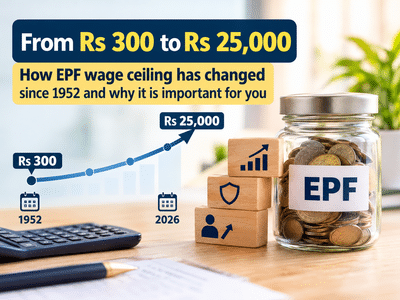
The Employees’ Provident Fund (EPF) wage ceiling has seen many revisions since the scheme’s launch in 1952. From Rs 300 a month when the EPF scheme was first introduced, the wage ceiling has been increased to Rs 25,000 in its latest revision this month.
The government increased the EPF wage ceiling from Rs 15,000 to Rs 25,000 through a notification on September 17, 2026. It was the first such increase in more than 12 years as it was last revised from Rs 6,500 to Rs 15,000 in August 2014, and came into effect on September 1, 2026.
The EPF wage ceiling change is significant for employees because it is used to determine mandatory EPF, Employees’ Pension Scheme (EPS) and the Employees' Deposit Linked Insurance Scheme (EDLI) membershipfor organised sector employees. Existing EPF, EPS and EDLI employees also benefit from the ceiling hike as their contributions to the EPF and their employer’s contribution to the EPF and EPS also increases, helping them to get potentially higher retirement benefits. Employees’ maximum EDLI cover of Rs 7.5 lakh is also expected to rise soon after the ceiling hike.
While the latest EPF wage ceiling rise came after 12 years, there has been an occasion when it was raised in nearly 14 years, as per the Employees’ Provident Fund Organisation’s data.
Have a look at how the EPF wage ceiling has risen from Rs 300 to Rs 25,000 in its nearly 74 years of history.
EPS wage ceiling was Rs 300 in 1952
The EPF wage ceiling has been revised several times since the EPF scheme came into force. It was Rs 300 per month in November 1952, when the EPF scheme was launched.
The data shows that the first two ceiling hikes came in five years each. The government raised the ceilings from Rs 300 to Rs 500 in June 1957, while the raise from Rs 500 to Rs 1,000 came in December 1962.
However, the wage ceiling increase took its longest pause as it was next raised in December 1976 from Rs 1,000 to Rs 1,600.
The next EPF wage ceiling jump came nearly 11 years later when the government raised it from Rs 1,600 to Rs 2,500 in September 1985.
The next three wage ceiling hikes were quick. The government raised the limit to Rs 3,500 in November 1990, to Rs 5,000 in October 1994 and to Rs 6,500 in June 2001.
However, the next EPF wage ceiling raise came in August 2014 when the government raised it from Rs 6,500 to Rs 15,000. The latest wage ceiling hike has come in after 12 years.
PF wage ceiling from 1952 to 2026
Why the higher EPF ceiling matters
The increase is not limited to the higher EPF, EPS and ELDI contribution amount. A higher wage ceiling can lead to higher retirement benefits.
How high wage ceiling may impact your EPF contributions
Under the revised EPF wage ceiling, employees with a basic salary up to Rs 25,000 will come under mandatory EPF, EPS and EDLI coverage, subject to the applicable rules.
For employees who have a basic pay of Rs 25,000 or higher, the monthly EPF contribution from their and their employer’s side will be a minimum of Rs 3,000 per month each, which at the Rs 15,000 wage ceiling, was Rs 1,800 per month. A higher contribution may result in less in-hand salary, but it will lead to higher retirement corpus.
Similarly, under the Rs 15,000 wage ceiling, the monthly EPS contribution from the employer’s side of an EPS subscriber employee’s EPS corpus was a maximum of Rs 1,250 per month. Under the Rs 25,000 wage ceiling, it will increase to approximately Rs 2,083/month.
The EDLI cover is also calculated at the wage ceiling. Since the wage ceiling has increased, the maximum cover is also expected to rise soon.
The government increased the EPF wage ceiling from Rs 15,000 to Rs 25,000 through a notification on September 17, 2026. It was the first such increase in more than 12 years as it was last revised from Rs 6,500 to Rs 15,000 in August 2014, and came into effect on September 1, 2026.
The EPF wage ceiling change is significant for employees because it is used to determine mandatory EPF, Employees’ Pension Scheme (EPS) and the Employees' Deposit Linked Insurance Scheme (EDLI) membershipfor organised sector employees. Existing EPF, EPS and EDLI employees also benefit from the ceiling hike as their contributions to the EPF and their employer’s contribution to the EPF and EPS also increases, helping them to get potentially higher retirement benefits. Employees’ maximum EDLI cover of Rs 7.5 lakh is also expected to rise soon after the ceiling hike.
While the latest EPF wage ceiling rise came after 12 years, there has been an occasion when it was raised in nearly 14 years, as per the Employees’ Provident Fund Organisation’s data.
Have a look at how the EPF wage ceiling has risen from Rs 300 to Rs 25,000 in its nearly 74 years of history.
EPS wage ceiling was Rs 300 in 1952
The EPF wage ceiling has been revised several times since the EPF scheme came into force. It was Rs 300 per month in November 1952, when the EPF scheme was launched.
The data shows that the first two ceiling hikes came in five years each. The government raised the ceilings from Rs 300 to Rs 500 in June 1957, while the raise from Rs 500 to Rs 1,000 came in December 1962.
However, the wage ceiling increase took its longest pause as it was next raised in December 1976 from Rs 1,000 to Rs 1,600.
The next EPF wage ceiling jump came nearly 11 years later when the government raised it from Rs 1,600 to Rs 2,500 in September 1985.
The next three wage ceiling hikes were quick. The government raised the limit to Rs 3,500 in November 1990, to Rs 5,000 in October 1994 and to Rs 6,500 in June 2001.
However, the next EPF wage ceiling raise came in August 2014 when the government raised it from Rs 6,500 to Rs 15,000. The latest wage ceiling hike has come in after 12 years.
PF wage ceiling from 1952 to 2026
Why the higher EPF ceiling matters
The increase is not limited to the higher EPF, EPS and ELDI contribution amount. A higher wage ceiling can lead to higher retirement benefits.
How high wage ceiling may impact your EPF contributions
Under the revised EPF wage ceiling, employees with a basic salary up to Rs 25,000 will come under mandatory EPF, EPS and EDLI coverage, subject to the applicable rules.
For employees who have a basic pay of Rs 25,000 or higher, the monthly EPF contribution from their and their employer’s side will be a minimum of Rs 3,000 per month each, which at the Rs 15,000 wage ceiling, was Rs 1,800 per month. A higher contribution may result in less in-hand salary, but it will lead to higher retirement corpus.
Similarly, under the Rs 15,000 wage ceiling, the monthly EPS contribution from the employer’s side of an EPS subscriber employee’s EPS corpus was a maximum of Rs 1,250 per month. Under the Rs 25,000 wage ceiling, it will increase to approximately Rs 2,083/month.
The EDLI cover is also calculated at the wage ceiling. Since the wage ceiling has increased, the maximum cover is also expected to rise soon.
Next Story