
Government Focuses on Boosting Manufacturing with Changes to PLI Scheme


New Delhi, November 12 (Daily Kiran) : The Indian government is intensifying its focus on boosting domestic manufacturing capabilities by revising the Production Linked Incentive (PLI) scheme. Anurag Jain, CEO of NITI Aayog, shared this update during discussions with various ministries aimed at addressing shortcomings in current PLI initiatives. The primary goal is to enhance manufacturing within the country and reduce reliance on imports.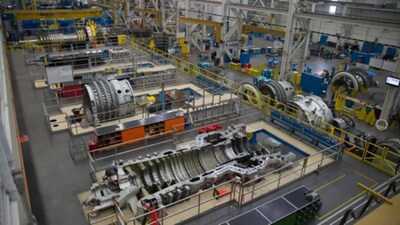 Jain remarked, “Overall, we are still dependent on imports. Therefore, we are attempting to make changes to the PLI schemes.” As of March 31, 2026, the PLI schemes have attracted investments totaling ₹2.4 lakh crore, leading to a reported increase of ₹22.66 lakh crore in production and sales, according to Ashok Lahiri, Vice Chairman of NITI Aayog. However, he noted that there remains significant potential for improving India's manufacturing capabilities. A recent impact assessment from NITI Aayog indicated that PLI schemes have generated approximately 8.49 lakh jobs to date.The government has disbursed ₹35,354 crore in incentives, which accounts for 18.5% of the total allocated funds. About 70% of the targeted schemes are progressing largely as planned. The implementation of these schemes has varied across industries. The electronics and pharmaceuticals sectors have shown strong performance, while the Advanced Chemistry Cell (ACC) battery initiative is lagging behind. The electronics manufacturing sector has emerged as a standout performer, with substantial growth in production, exports, sales, and employment.Similarly, the pharmaceuticals and food processing sectors have reported encouraging results in terms of investment, production, and job creation. Under the white goods initiative, investments of ₹6,409 crore have been attracted, resulting in production worth ₹43,150 crore. Domestic value addition in this sector has surged from 20% to 55%. Additionally, the medical devices scheme has recorded sales of ₹14,945 crore. The PLI scheme for solar energy has significantly increased domestic manufacturing capacity from 8 gigawatts to approximately 116 gigawatts.Progress has also been noted in the drone initiative, with 77.5% of the allocated funds already distributed. However, the ACC battery scheme remains a weak link. It aimed for a manufacturing capacity of 50 gigawatt-hours but has only developed 1.4 gigawatt-hours so far. Commercial production has yet to commence, and no incentive funds have been disbursed. NITI Aayog has identified technological shortcomings, dependency on imported machinery, and project delays as major obstacles.Other schemes are also facing challenges. The IT hardware PLI scheme is still in its early stages, while the telecommunications manufacturing sector continues to rely heavily on imports for high-value components. The automobile sector has successfully attracted investment and increased production, but job creation remains below targets. The assessment concludes that financial incentives alone do not guarantee success in the manufacturing sector. The effectiveness of PLI investments in enhancing India's long-term industrial capacity will depend on technological readiness, domestic supply chains, and the timely execution of projects.
Next Story